Portugal’s Health Minister said on Monday that the national health service (SNS) will be under “enormous pressure” this winter due to a new strain of flu.
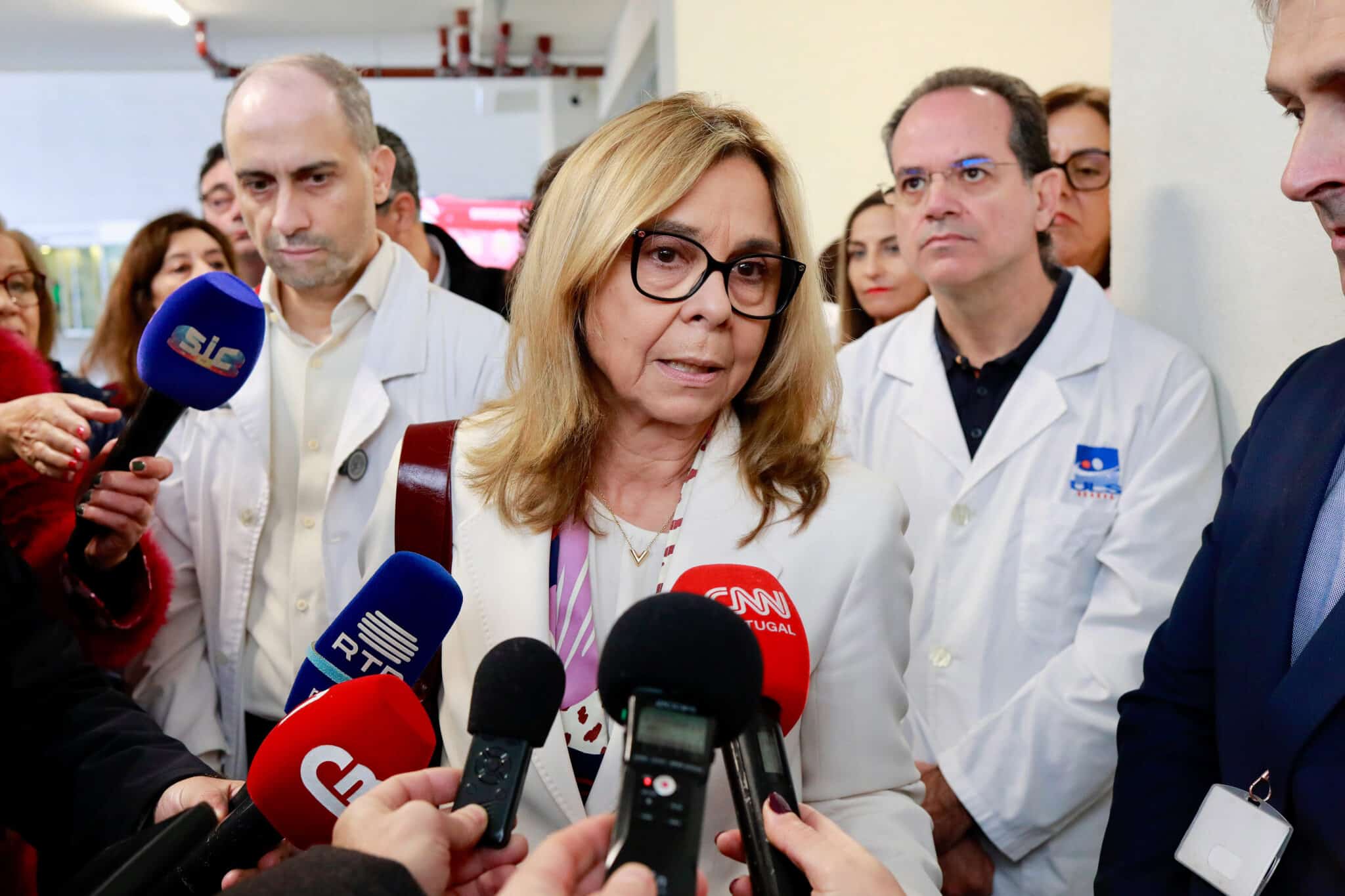
“We have very, very high vaccination coverage rates and we will continue to insist, insist, insist, because, as all the authorities in Europe have said, flu will be a major challenge this year,” said Ana Paula Martins in Guarda as part of a national tour to see firsthand how well Local Health Units are preparing for the upcoming winter season.
The minister announced that hospitals have winter and contingency plans in place but warned that “the pressure will be very great”, especially as pre-hospital medical emergencies are expected to rise. INEM, the national emergency medical service, is also reinforcing teams and resources, particularly in inland regions.
“The winter will be very hard,” Martins told reporters.
As for the country’s vaccination campaign, the minister considered that the SNS continues to promote “mass vaccination” which has attracted “very high demand,” especially in health centres, nursing homes and the national long-term care network.
“Through Portugal’s national health authority (DGS), we have already made several appeals for those who should be vaccinated to continue to be vaccinated,” the minister said, adding that this is the only way Portugal can reduce visits to A&E departments and mortality due to the flu.
The ministry of health is visiting Local Health Units to find out “in detail how they are responding to the increased challenges that arise at this time of year, particularly with regard to the response to seasonal illnesses, the management of hospital accident and emergency departments and the coordination between different levels of care”.
In addition to visits to A&E departments, the minister of health is meeting with boards of directors and health professionals. During the visits, “concrete measures to strengthen human and material resources, as well as strategies for coordination between primary, hospital and continuing care, to ensure an integrated and efficient response to the needs of the population” will also be discussed.
The minister’s efforts come at a time when health officials across Europe are warning of the dangers of the new flu strain, which is spreading “unusually early”.
A new strain of influenza A, known as H3N2 subclade K, is driving the spread of the virus, which is being detected three to four weeks earlier than in the past two years, according to a new report from the European Centre for Disease Prevention and Control (ECDC).
“We are seeing influenza detections increasing much earlier than usual this year, and that means time is critical,” Edoardo Colzani, a respiratory virus expert at the ECDC, said in a statement.
“Getting vaccinated now is one of the most effective ways to protect yourself and those around you from serious illness this winter,” he added.
The recommendation is especially important for older adults, pregnant women, people with chronic health issues or compromised immune systems, health workers, and those living in long-term care or other group settings.
While it is still unclear how well existing vaccines will work against the new subclade K, health officials insist that vaccination is still the best way to prevent serious illness.
“If you are eligible for vaccination, please don’t wait,” Colzani said.