A small heads-up for anyone thinking of signing up next year – when a friend of mine registered later on, I found out that they charge more if you sign up from outside Portugal. The normal price is around €60, but if you register abroad or use a VPN, it jumps to €100. However, after emailing them, they reimbursed me the difference.
Leading up to the marathon, I didn’t follow any training plan or structured programme. I just tried to put in as many kilometres as I could whenever I had the time. I remember my first 15km run after signing up – I felt so close to my limit that I wondered how I was ever going to run almost three times that distance.
However, over time, it gradually got easier. Each week, the runs felt a little less intimidating, and I stayed motivated by mixing things up – listening to music on some runs, podcasts on others, taking different routes, varying my distances and paces, and occasionally running with a friend to keep it interesting.
Along the way, I learned a few important things: how crucial it is to fuel during long runs, how helpful carb-loading can be in the days before, and why a good pacing strategy matters so much. Despite all that, any pacing plan I thought I had went out of the window on race day. I started imagining what it would be like to run a sub-four-hour marathon for my first official race, and once the idea took hold, it was hard to shake.
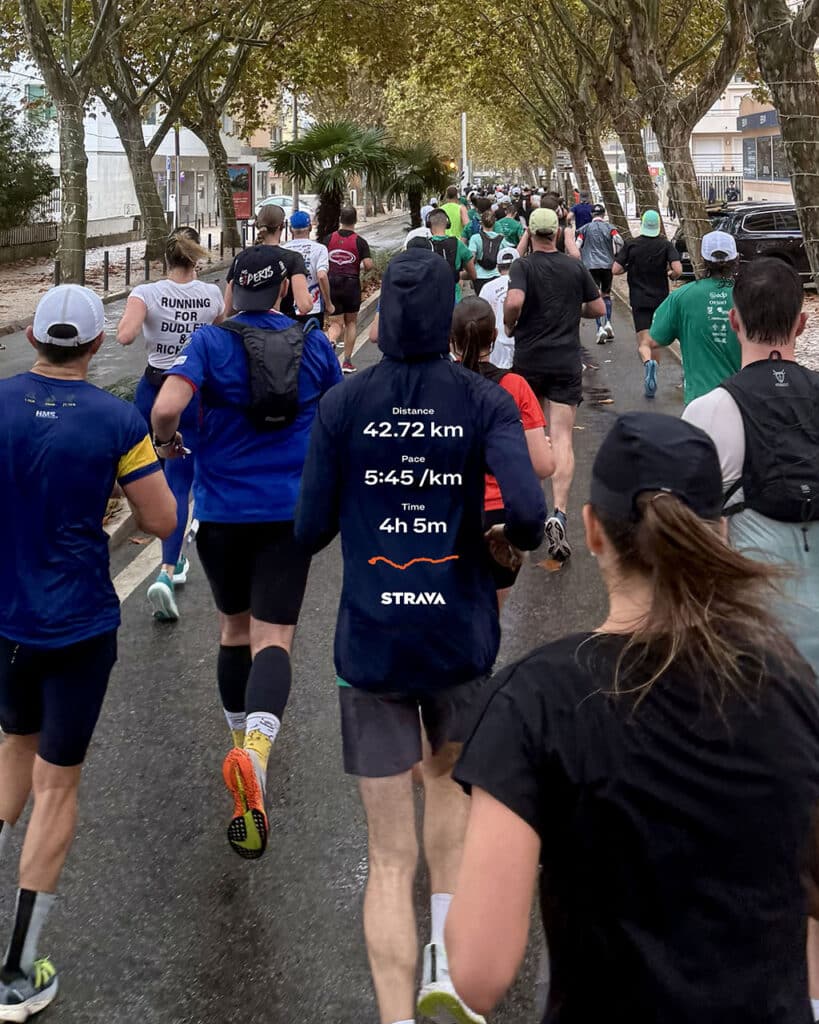
The race started at eight in the morning on October 25, which meant sleeping around four hours and catching an early train to Carcavelos with thousands of other runners. When we arrived, everyone was buzzing with energy. There were speakers playing music at the starting area, and a general feeling of excitement in the air. It felt like being part of something big.
The route began in Carcavelos and headed west towards Cascais before looping back along the Atlantic coastline to Terreiro do Paço. I felt so good that I didn’t even put my headphones in until the second half of the race. I wanted to enjoy the moment, take in the views, run with the crowd, and watch the supporters along the road. Some people held creative signs, some shouted encouragement, and some offered high-fives. It was one of the best parts of the whole experience.
There were aid stations spread out along the route with bottles of water, cups of Powerade, and even energy gels. I took advantage of all of them, and by the 30km mark, I realised I was on track for a very good personal time. I felt strong, and I was certain I would finish in under four hours. However, six kilometres later, things quickly changed, and I hit the wall – hard.
My legs stiffened and ached so much that even walking was difficult. I’m not sure if I under-fuelled or had gone out at too fast a pace, but for a kilometre or two, I could only hobble along, as it felt like my body had run out of everything it had – both fuel and motivation.
Eventually, I found the will to pick up the pace again. I managed to run the last four kilometres, but the damage had already been done, and I crossed the finish line with a time of four hours and five minutes. Still, I was happy with the result, and it gave me a clear goal to aim for next time.
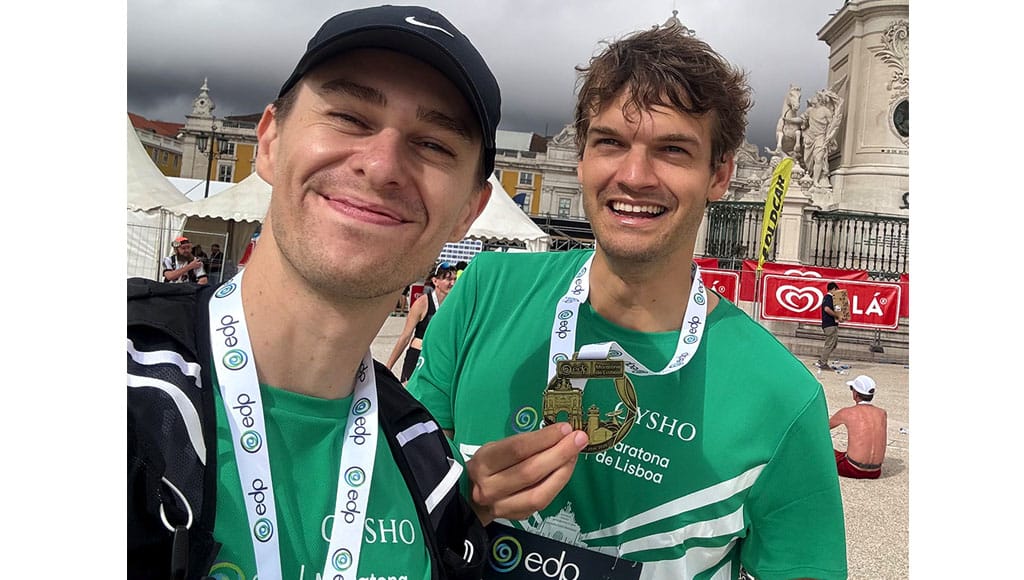
My friend also finished before the cut-off time, in around five and a half hours, which was a big achievement for him. He used to be a professional high-jump athlete, but his career ended a few years back after he was diagnosed with arthritis. Finishing a marathon is tough, but finishing one under those circumstances is even more impressive.
Looking back, from the 36th kilometre onwards, the race felt like hell. It was pure survival at that point. However, the suffering fades, and what stays with you are the highlights – the views, the crowd, the feeling of moving in a huge wave of runners. That is why I am already looking forward to doing it again.
Running can be a form of therapy. When you are deep into a long run, all kinds of emotions rise to the surface: happiness, misery, moments when you feel close to tears, and times when you feel back on top of the world.
After I crossed the finish line, I sat near the final stretch and watched other runners come in. People from all backgrounds passed by, each dealing with their own mix of suffering and joy. Watching them became one of my favourite parts of the day. It was both funny and deeply emotional, as I knew exactly what each of them was going through because I had just gone through it myself.
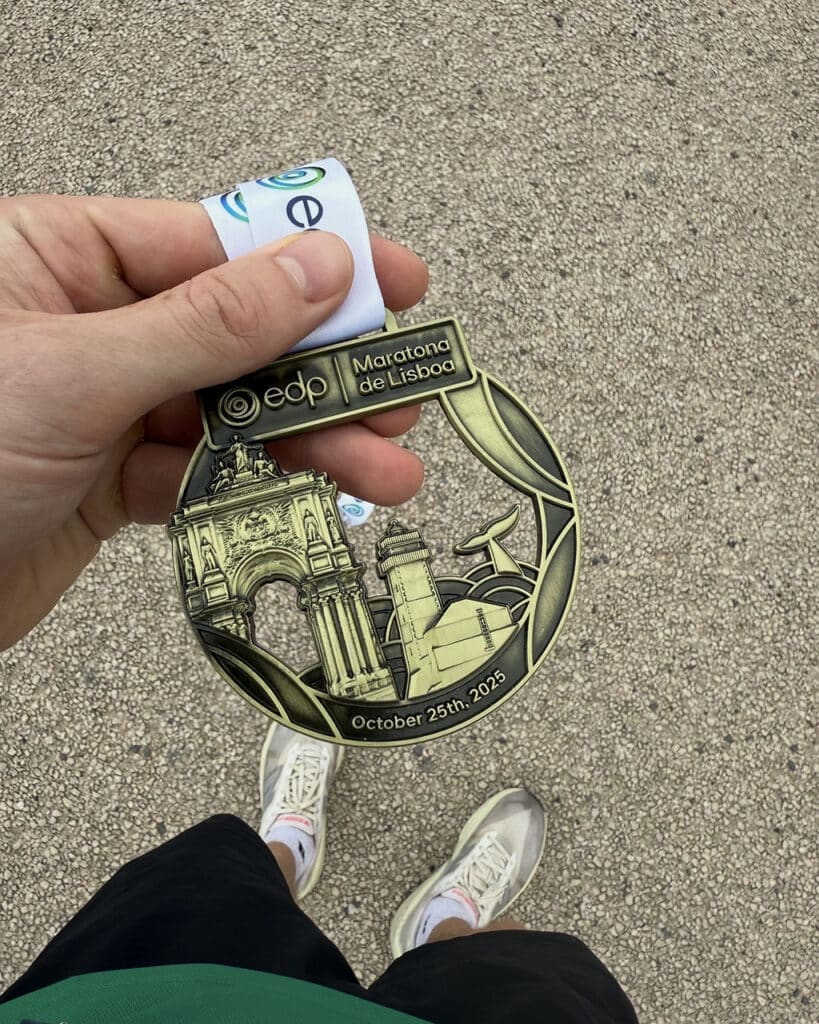
At the end, the organisers handed out medals, ice creams, and bottles of Powerade to help with recovery. Running my first official marathon taught me many things: about training, resilience, pacing, and the way my mind and body work. I was still walking strangely for a few days afterward, but the sense of achievement made it all worth it.