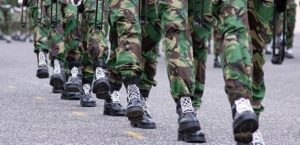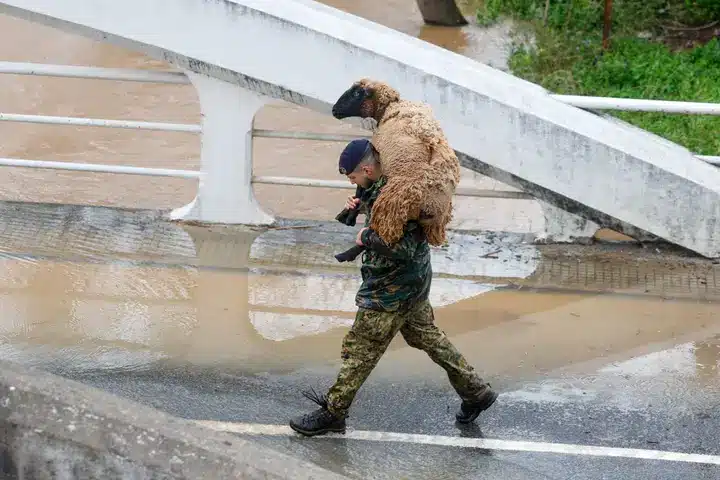
Two extremely unusual surprises came today: first, the accusation by former admiral Henrique Gouveia e Melo that the government failed across the board in dealing with the ‘carousel of storms’ that have devastated large swathes of the country. Second, a press conference held by the Armed Forces – ostensibly to give a general update on the military’s extraordinary level of support ‘on the ground’ since Storm Kristin.
Could the two surprises be linked? If so, what is the general intention?
Commentators have been discussing how rare (for that read: ‘this has never happened before’) it is for the Armed Forces to organise a press conference of this type. Press conferences ‘of this type’ are generally organised ‘by the authorities’ – meaning agencies of government.
And the apparent reason for the press conference seemed more of an excuse to tackle other ‘criticisms’ that have appeared in the press over the course of the last week – namely that the military didn’t respond ‘quickly enough’ after Kristin hit, and that certain members were unable to vote in the presidential elections because they were on missions outside their voting jurisdictions.
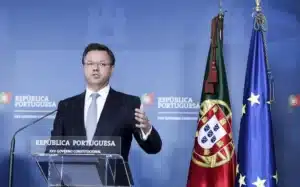
Lieutenant-Colonel Susana Pinto led the press conference, and explained how and why the military had acted as it did. “Since we are not primary agents, the system does not foresee that, immediately after the approval of a new state of alert, we have to comply automatically,” she said.
The first formal request for intervention occurred on January 28 (the moment Kristin arrived) – and from January 29 military boots on the ground were “progressively reinforced”.
Since that time, “the Armed Forces have been monitoring the state of readiness continuously and according to the evolution of the situation”. They have no plans to stop their interventions: “We will remain committed for as long as necessary, to save lives, protect property and infrastructure, and accelerate the return to normality”.
As for concerns about soldiers unable to vote – in an election with comparatively low rates of abstention, and a new president voted in with the highest number of votes in history – the message was that no soldier was forbidden from leaving his or her post in order to ‘exercise his/ her democratic right’.
“The military was told to go and vote if they wished to”, came the reply.
But there seemed something ‘odd’ about the press conference – coming as it did the evening before parliament is due to discuss the government’s performance in this latest crisis.
Commentators watching it unfold were divided over whether the Armed Forces did the right thing in calling the press to hear their side of this story, or whether they were rather unusually ‘out of line’.
The understanding is that tomorrow in parliament will not be pleasant.
Gouveia e Melo’s article, appearing in Público this morning, seems to set the scene for bitter debate: “We failed in planning, in providing early warning, in issuing clear alerts to the population, in communicating the danger, and in providing practical advice on what should be done. We failed in the desired readiness and response capacity. But above all, we failed in what should never be failed: in leadership – capable, committed, attentive, and empathetic,” he wrote, referring to a “simulation” of “frenetic governmental activity” that hid “incapacity, disorganisation, and lack of direction, ”causing abandonment, frustration, and disbelief on the ground – which can lead to “radicalisation.”
Readers may need to think here: ‘Why is Gouveia e Melo saying these things? Didn’t he just lose his bid for the Portuguese presidency? Didn’t he say at some point towards the end of the campaign that if he did not win, he would go back to his life/ have a holiday? Perhaps he is writing his opinion piece on holiday? But still, it’s a little odd.
Expresso writes: “Calling for “political consequences” for the failure, the admiral warns the prime minister that he “should reflect on whether, given the evident lack of preparation and capacity of the Minister of Internal Administration, she is fit to remain in her position.” He suggests a “top-to-bottom” overhaul of Civil Protection and the creation of an Army unit for situations of this type. He also expects the creation of a task force to coordinate recovery operations – which, in fact, already exists, coordinated by Paulo Fernandes, the former mayor of Fundão”, the paper points out
What were today’s surprise interventions really all about?
We may find out later as the former admiral is due to be interviewed by SIC Notícias at some point this evening.
And before that happened, news bulletins reported that Maria Lúcia Amaral has resigned her position as Minister of Internal Administration.
Source material: SIC/ Expresso.