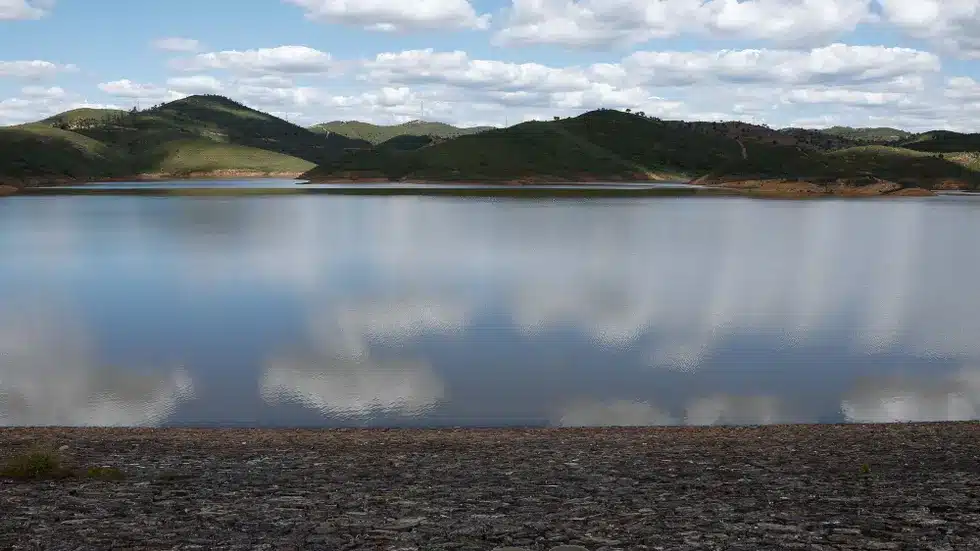
Following the ever-changing predictions, this year’s autumn rains have left dams in the Algarve at their “best ever levels”.
Even if it doesn’t rain any more this winter (which is unlikely), the region “has enough water for four years” – albeit aquifers are not in such a healthy position, essentially due to the amount drawn from them by large monocultures/ traditional agriculture.
As reports admit, the situation is completely different to this same moment in 2024 when things were described as ‘critical’, to the point that public mains supplies were ‘at risk’.
A year ago, the Funcho dam was at little more than 35% capacity, writes SIC Notícias. Now it has already reached 84% and is having to release ‘preventive discharges’ of water.
“Soon, for the same security reasons, the same will be done at Odeleite dam”.
Taking the six dams in the Algarve as a whole (which last year didn’t hold enough water to see out more than a few months), there is now more than 191 cubic hectometers (191 million cubic metres of water) stored – which means levels are already at 77%.
The way the current government sees it is that the situation gives ample time for the implementation of projects either underway or planned – a kind of cushion against future drought.
Says SIC: “Between the desalination plant (planned), the extraction of water from the Guadiana (planned), interventions in the mains supply network (underway), reuse of waste water (underway) and other interventions, the investment allocated is around €800 million”.
Maria da Graça Carvalho, Minister for the Environment and Energy, stresses that she believes that in the next three years “we will have all these projects ready, so that the Algarve can breathe for 20/ 25 years. We have to do these projects,” she adds – largely because in spite of rainfall and nicely filling dams, the situation of the aquifers (which used to be so rich in water) is not improving (and may never improve, given the huge quantities withdrawn by ever-increasing agricultural projects).
It is this point that divides the government’s way of thinking from that of environmentalists/ groups focused on sustainability. The former wants to create water in order to supply the expanding needs of agribusiness, while the latter insists it is much more sustainable to manage the region according to its natural resources.
Source: LUSA/ SIC