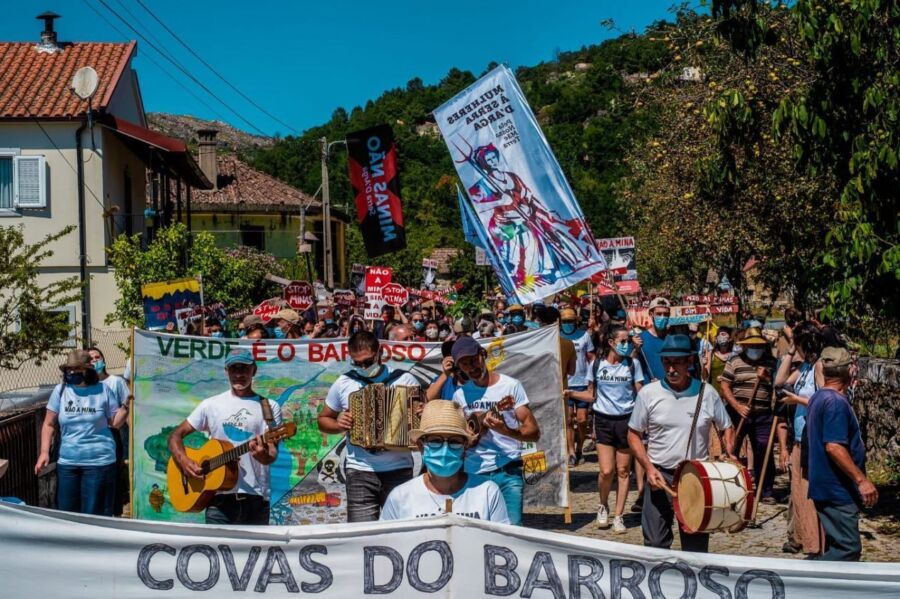
The subject of lithium mining that has enraged local communities in the borough of Boticas is a campaign issue in the municipal elections coming up on October 12.
With citizens’ groups already saying they feel abandoned by the government, the truth is that the local PSD opposes exploration – and the CDU (communists) and CHEGA parties are also in favour of independent monitoring of the project.
As Lusa stresses today “lithium has been a controversial issue in the municipality in the north of the Vila Real district” since at least 2018.
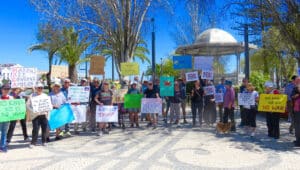
Locals claim mining will drain and pollute underground water sources; destroy heritage landscape, and take with it umpteen livelihoods as well as the area’s sustainability. Their fears and concerns have been upheld by scientists and environmentalists. So many articles have attested to the fact that this is a rich, agricultural area of Portugal that is being ‘sacrificed’ to the EU’s questionable ‘energy transition’.
The Barroso mine was granted a conditional Environmental Impact Statement in 2023 and British based company Savannah Resources plans to start producing lithium in 2027.
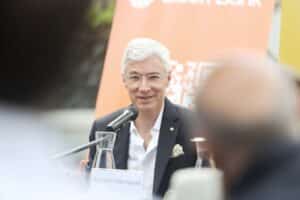
Social Democrat Guilherme Pires has been mayor since June, following the departure of Fernando Queiroga, now an MP, and fiercely anti-mining in the area.
Pires is carrying on Queiroga’s legacy. He tells Lusa that he opposes lithium mining for environmental, ecological, rural/ nature tourism reasons, as well as for the socio-economic impacts, air pollution, property devaluation and lack of transparency evident in the process.
Pires is also questioning the “announced creation of jobs in the area”, since the necessary labour is qualified and will probably come from abroad.
“I believe that lithium mining consumes huge quantities of water, the destination and treatment of which is dubious,” he says, stressing exactly as locals have said before: the mine could “irreversibly affect the quality of water for human or agricultural consumption”, as well as lead to “the irreparable loss of biodiversity”, pointing out that the exploitation will take place in the Barroso World Agricultural Heritage Site.
“We will be vigilant and will use all legal means to oppose this project. We are on the side of the people of Covas do Barroso, and that alone is a very strong reason for our position to remain unyielding and unchanged,” he told Lusa this week. Guilherme Pires, has been on the council for 12 years.
For José Miguel Fernandes, head of the CDU list (communist PCP/PEV coalition), a project of this size (remember, Savannah keeps suggesting it will expand), due to the social, economic and environmental impacts it will have on the region, cannot be subject to a simple response of “in favour” or “against” the mine, and cannot “only satisfy the interests of a few, but of the majority”.
The “defence of economic development, the public interest, the environment and the interests of the population is not compatible with concessions of base metal reserves to foreign capital and their non-valorisation in the country”, he added.
Thus, the “first step” should have been to set up a working group with representatives from the local community, parish council, town hall, government and the company”, liaising with an independent multidisciplinary team for a “rigorous technical assessment” of the project’s impacts, which did not happen.
Isabel da Veiga Cabral heads the CHEGA election list and is taking a “somewhat cautious” stance on lithium, stating that “flags are not made at the expense of the population”, insisting “respect is needed”.
She recalled that the company has announced that it has confirmed larger quantities of lithium and that the project could exceed 100 million tonnes of lithium mineralisation over the years, which, for the CHEGA list leader, could be “exponentially serious” because the DIA (favourable environmental ruling) “didn’t take this into account”.
“If (the process) wasn’t already transparent, it is now more opaque”, Cabral warns. “And so what we need to do is try to review everything that has been done so far, but seriously”,” she said, suggesting that “. The creation of an independent commission to monitor this project is therefore now “essential”.
Boticas is a traditionally PSD borough. In 2021, the party won the municipal elections with 2,958 votes (73.55%) and secured four seats, while an independent party won 643 votes (15.99%) and one seat.
Source : LUSA