CARE Algarve delivers call-to-arms to everyone who loves region
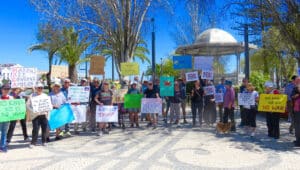
A group of environmentally conscious residents (foreign and Portuguese nationals) living in the Algarve have banded together under the acronym CARE to stitch together what they see as a patchwork of so-called ‘green projects’ which, taken as a whole, threaten the region’s environmental stability, and long-term sustainability.
Issuing a carefully-researched press release this weekend, CARE (standing for the Committee for Awareness of Responsible Energy) maps the gamut of expediently-packaged projects for the energy transition which they see as threatening the Algarve, in one form or other.
As the committee points out: “billions of euros in public funding are fuelling the green infrastructure boom, but so are lawsuits, protests and mounting demands for accountability”.
In other words, there IS a way to ensure the Algarve remains ‘protected’, but it needs the critical mass of public support (and awareness) – hence this call to arms before ‘there is no way back’.
CARE outlines complicated picture:
- A Wind Farm Rejected But Not Defeated
In June 2025, Portugal’s environmental agency (APA) delivered an unfavourable verdict on a 12- turbine wind farm proposed in the Serra do Caldeirão, a rugged mountain range in the eastern Algarve.
Officially, the project has been blocked due to the lack of a grid connection and interference with IPMA’s weather radar. But for conservationists, this was more than a technical dismissal, “it was a rare pushback against a broader wave of industrial energy development creeping into Portugal’s last wild interior.
“The project, led by Madoqua Renewables, would have fractured one of the country’s last intact mountain corridors, a region overlapping protected habitats, threatened migratory flyways, and rural communities already under strain.
“And yet, the danger hasn’t passed” warns the committee. “Grid infrastructure planning was already underway before the project was rejected. APA’s documents confirm that Madoqua has proposed three transmission line routes through Tavira, Estoi, and Tunes, all ecologically and socially sensitive.
“This isn’t just a wind farm that failed, it is a door left ajar.
“The project didn’t need to succeed. It just needed to justify the grid,” says the committee.
Now any “other player can pick up where Madoqua left off.”
- Finerge in the Wings
That “other player” may already be moving in. Finerge, Portugal’s second-largest wind operator and owned by UK-based Igneo Infrastructure Partners, already has projects in Almodôvar, São Brás de Alportel, and Tavira. All within strategic reach of the Serra do Caldeirão.
Their approach? Incremental, low-visibility expansion, developing turbines near existing or proposed infrastructure to avoid triggering full environmental assessments.
“If grid access is secured, the Serra becomes the next logical step, one turbine at a time”.
- The Ring of Death: A Broken Flyway
“The Serra do Caldeirão lies along a vital migratory flyway connecting Europe and Africa. Eagles, vultures, and swifts rely on its thermal currents to cross the continent. But turbines already surround the region from Monchique to Alcoutim and Mértola, forming what conservationists now call the “Ring of Death.” And it’s closing in fast.
According to SPEA, the Portuguese Society for the Study of Birds, southern Portugal is facing a massive wave of renewable energy development in areas that are ecologically irreplaceable.
Current proposals, including the Solara4 hybrid project and multiple wind farms in Pereiro, Viçoso, and São Marcos, would place over 110 turbines across 500 km², much of it in Natura 2000 and priority conservation zones.
“The energy transition cannot come at the expense of biodiversity,” warns Rita Ferreira, Senior Conservation Technician at SPEA. “The way these projects are being planned threatens decades of conservation efforts”.
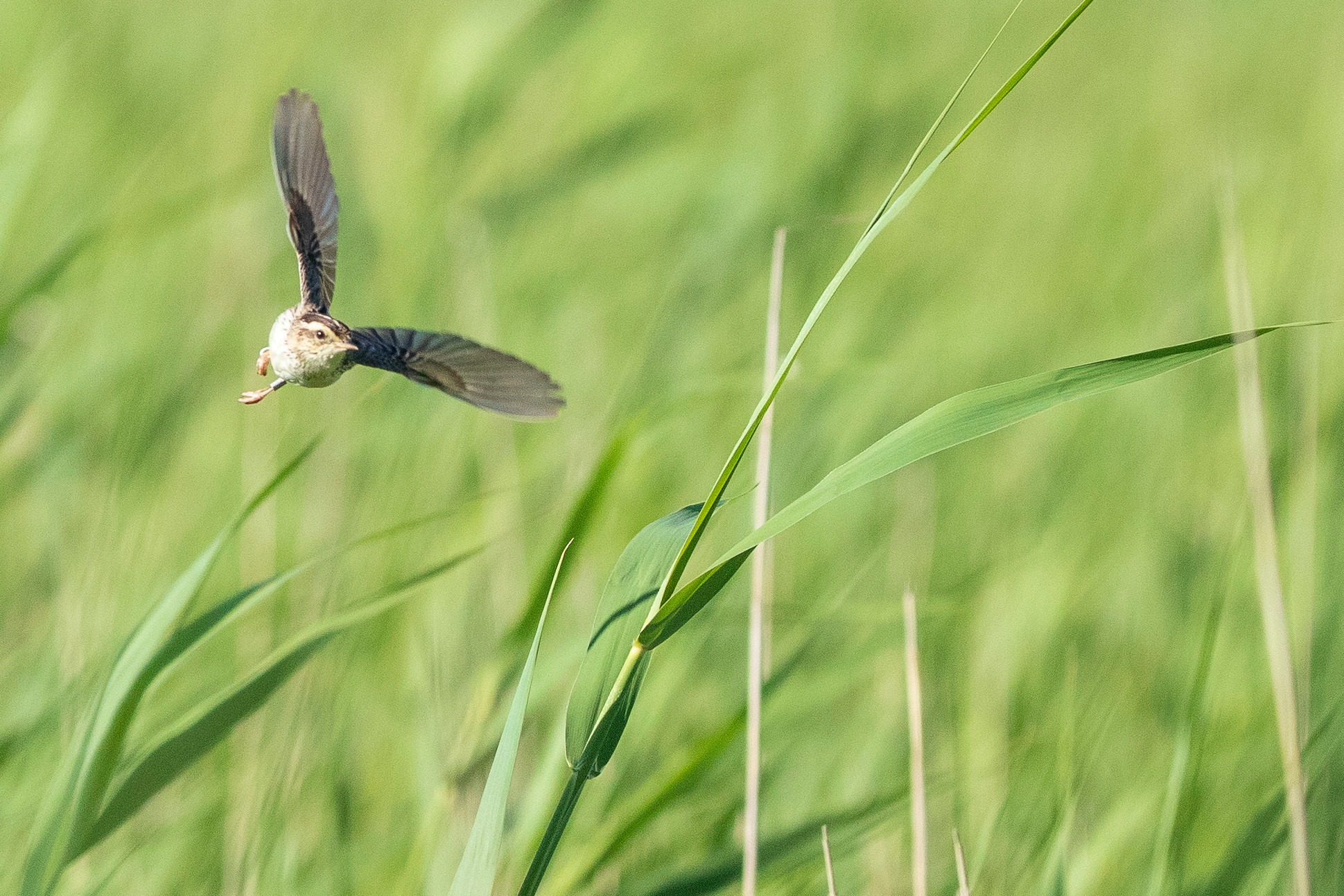
Birds of prey, particularly the Bonelli’s eagle and the critically endangered Iberian imperial eagle face high risks from turbine collisions and electrocution from associated power lines. These raptors depend on the Algarve’s mountainous terrain for breeding, dispersal, and migration. Yet the current EIAs (Environmental Impact Assessments) fail to address cumulative risks, offer no viable alternatives, and propose mitigation measures of unproven effectiveness, insists CARE..
- Public Money, Private Gain, Again and Again
Portugal’s energy transition is powered by massive public investment, but serious questions are growing about who benefits and who bears the cost.
- €1.1 billion from the PRR (Portugal’s Recovery and Resilience Plan) is going toward hydrogen production and green energy hubs.
- €2.5 billion+ in grid upgrades, co-funded by public money through REN (Portugal’s national electricity transmission operator), the European Investment Bank (EIB), and national environmental funds, is being used to modernise and expand high-voltage infrastructure across the country.
- In July 2025, the government also announced a €400 million investment in grid resilience and battery storage, a direct response to the nationwide blackout that struck in April. While framed as a move toward energy security, much of this funding supports the same infrastructure corridors being used to accelerate large scale wind and solar projects, often in fragile landscapes. Battery capacity will grow from just 13MW to 750MW, and digital grid control systems will be overhauled to better manage intermittent generation. Yet critics warn that this surge in public funding still lacks environmental safeguards or democratic oversight. Rather than addressing the root causes of the blackout, the government is doubling down on a system built for private energy developers, not public resilience.
- Additional public funds support roads, substations, and logistics corridors, much of it cutting through sensitive landscapes.
Meanwhile, international developers secure long-term energy contracts and guaranteed access to public infrastructure, yet offer no return in biodiversity gains, land stewardship, or local control for the regions impacted. “We’re using public funds to pave the way for private profit,” says CARE. “While ecosystems and already marginalised communities are left to carry the cost.”
- Albufeira’s Desalination Plant: A Legal Line in the Sand
In July 2025, SEACLIFF – Compra e Venda de Imóveis, S.A. filed a legal injunction against APA’s consultation process for a seawater desalination plant proposed off one of Albufeira’s most iconic beaches. The project, pitched by Águas do Algarve as a “climate resilience measure” faces heavy criticism for bypassing lower-impact alternatives like water reuse, storage efficiency, and catchment restoration. Once again, conservationists and residents argue that the public is being excluded from irreversible long-term decisions.
“Top-down infrastructure, rushed approvals, and silence on alternatives,” says CARE. “Just like in the Serra do Caldeirão.”
- One Fight, Two Consultations
CARE stresses that as of July this year, “two major national consultations are open to the public, one could decide the fate of the Serra – ENCNB 2030 Biodiversity Strategy – Open until October 9, 2025; the other, on the Algarve Seawater Desalination Plant, is currently subject to a court challenge: for now the consultation deadline has been suspended. But:
- The Clock Is Ticking
“Whether inland or coastal, from wind farms to desalination, the message is clear, climate solutions must not destroy the ecosystems that make resilience possible. Portugal’s climate transition stands at a crossroads, not just between public good and private profit, but between genuine resilience and ecological ruin. Strategies like ENCNB 2030 risk becoming nothing more than greenwashing at scale, giving cover to a flood of private investor-led projects that undermine the very ecosystems they claim to protect”, says CARE.
“Portugal is in danger of trading long-term environmental stability for short-term optics and climate spin”, warns the committee, asking people in the region to “submit your opinion. Demand real protections. Because if nature’s last corridors fall to turbines, pipelines, or silence, there may be no way back.
“Be part of the growing community fighting for a sustainable Algarve. Join Aware Algarve on Facebook for updates, actions, and community discussion”. ND