Court suspends public consultation; activists appeal to European entities
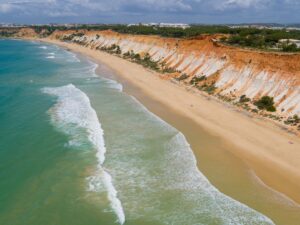
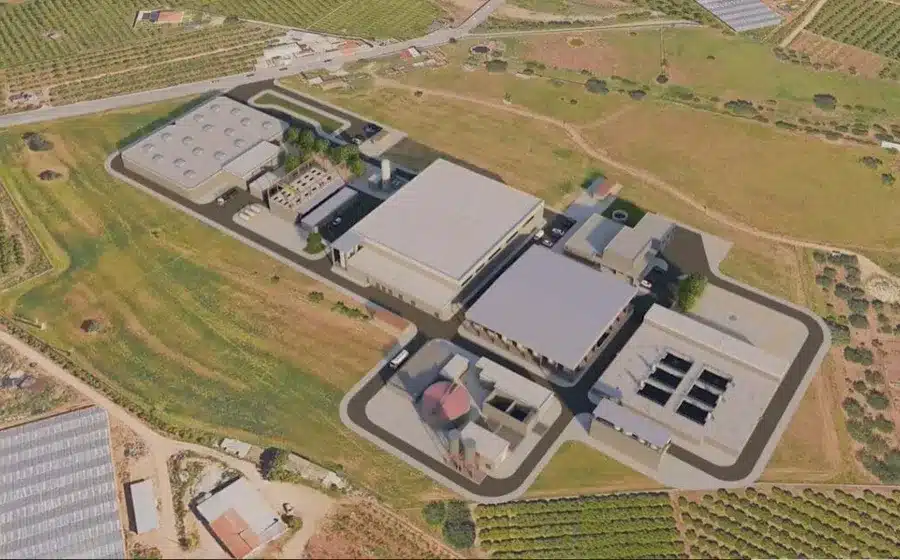
The considerable antipathy to a government plan for a desalination plant alongside one of the Algarve’s most iconic beaches has scored a hit this week, with Loulé Administrative Court suspending the 20-day ‘public participation process’ on the basis that it was skewed in favour of the project, and not in any way geared towards hearing people’s considered opinions.
SEACLIFF COMPRA E VENDA DE IMÓVEIS, S.A – the property company that filed for this preliminary injunction – admits it is a ‘small victory’ but still another ‘win’ for justice.
“The judge saw the injustice” of what was playing out, said a source for SEACLIFF, whose action has the overwhelming support of PAS – the platform for sustainable water – which has repeatedly set out the devastating environmental consequences of this plan, not to mention the high energy costs, and ultimately high costs that will be passed on to consumers.
Today – the day the public consultation period was due to have officially closed – PAS has thrown its weight behind SEACLIFF’s efforts to denounce the whole notion that this was an exercise in public participation.
In a statement sent to the press, PAS said it believes that the manner in which this consultation is being conducted “represents a profound disrespect for participatory democracy, creating significant obstacles to access to information and the possibility of informed analysis and intervention by citizens and civil society”.
As PAS explains: “The documentation made available for consultation is, in PAS’s opinion, disorganised and incompatible with the basic principles of transparency required by law. Specifically: More than 400 documents were made available for analysis in an extremely short period of just 14 working days (July 3 to 23); some documents have parts written in different languages (Portuguese, Spanish and English). The documents are presented in a haphazard manner with no organisational criteria. The titles of the documents do not allow their content to be clearly identified, forcing the entire file to be opened and read almost in its entirety. Examples include vague designations such as ‘Marine Studies’, ‘Previous Studies’ or ‘Listed’; there are hundreds of documents with identical titles, such as: ET – 03.03 Characteristics Sheets (116 documents with this exact title); 01.02.01. ANNEX 1 – PREVIOUS STUDIES (13 documents); there is also duplication of documents, which can only be detected once they have been opened, creating confusion and a huge waste of time.
“Several documents identified as ‘technical’ have vague and generic content, with no concrete relevance to the project assessment. These obstacles clearly jeopardise the effective exercise of the right to public participation and access to information, enshrined in both Portuguese and European legislation, namely under the Aarhus Convention – to which Portugal is a signatory – and Directive 2011/92/EU on the assessment of the effects of certain public and private projects on the environment. For public participation to be serious, useful and swift, it is increasingly necessary to demand quality in the way information is presented.
“If the aim of putting this type of documentation out to public consultation is only to discourage participation, then it is essential to take strict measures to prevent this from happening again and to punish those responsible.
“In view of this serious violation of the principles of transparency, participation and environmental justice, the Sustainable Water Platform will report the situation to the following bodies: the European Commission, which is responsible for ensuring that environmental directives are applied in the Member States; the European Parliament, with a particular focus on the Environment and Citizens’ Rights committees; and the Aarhus Convention Committee, which monitors compliance with the rights of access to information, public participation and access to justice in environmental matters.
“PAS reaffirms its commitment to public water management that respects the principles of sustainability, transparency and democratic participation”.
What happened with this ill-chosen exercise in public participation is that authorities believed, as they so often do, that pushing through a plan that is hotly contested during the summer, with a short period for public consultation, almost always in the throes of everyone’s holidays, would work. But people have become wise to these tactics. Certainly PAS and SEACLIFF are taking no chances. ND