To read from the start click here.
From a northern train window
From the window of a slow train leaving Braga, the country unfolds in shades of green and terracotta. Farmers wave from fields, olive trees flick past, and then … a familiar sound. These are a few American voices comparing notes about Portugal. You don’t hear them often here in the North. But you hear them everywhere once the train reaches Porto Campanhã.
After a year of living in Portugal, I’ve realized the map of where Americans go is almost a story in itself. According to recent Ovago flight-booking analytics, that story is quietly changing. For many travelers, the journey now begins with choosing not only the best and safest airlines but alsothe right route. It’s a priority that reflects how thoughtful and well-planned these Portugal trips have become.
A market still centered on Lisbon but widening at the edges
The overall structure of the US-Portugal market has barely shifted: Lisbon and Porto still capture more than 83% of arrivals. In 2024, Lisbon held 66.1% of bookings and Porto 17.1%; in 2025, Lisbon edges to 66.5% and Porto to 16.6%.
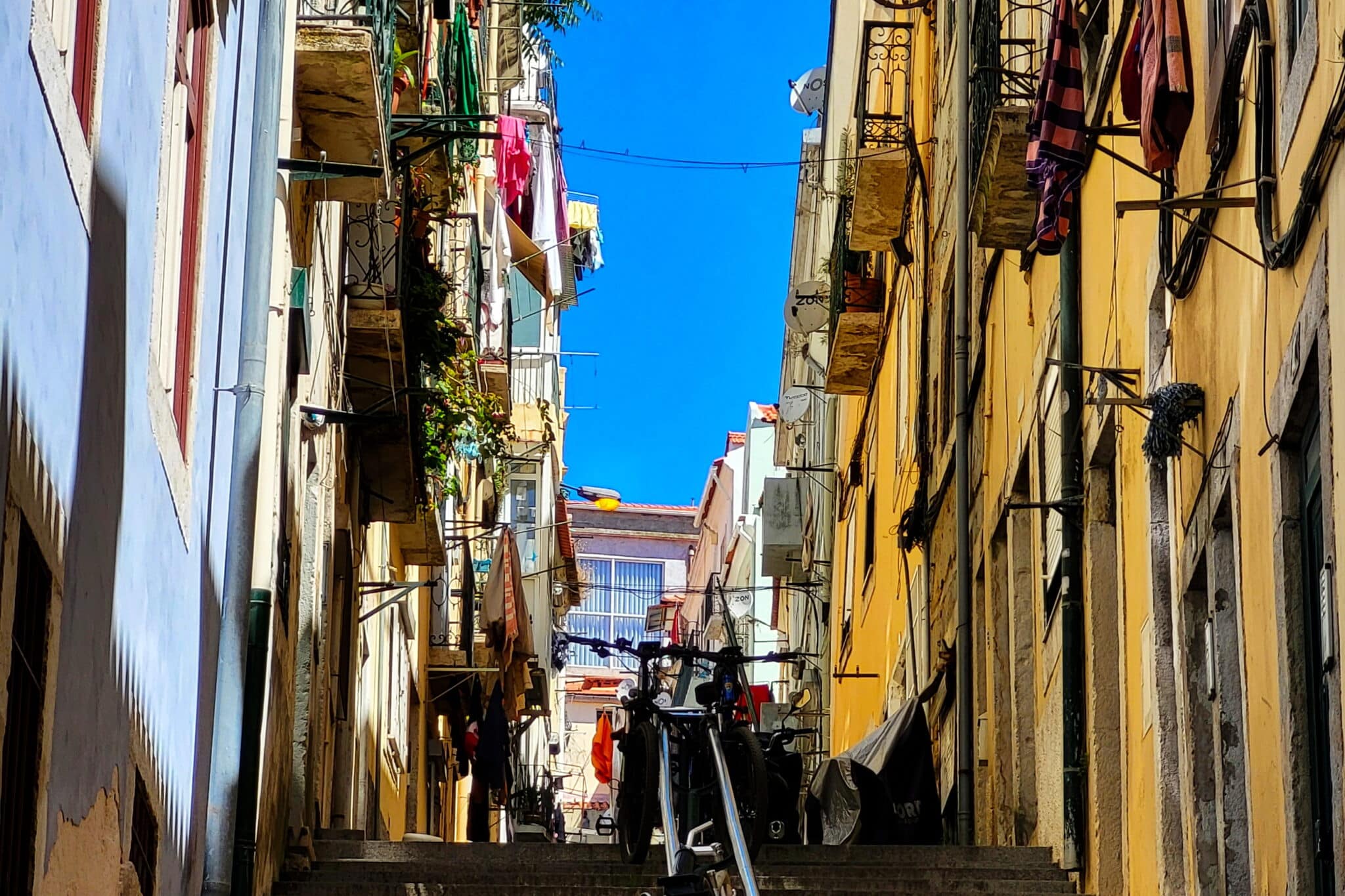
That dominance makes sense. Lisbon remains the magnetic capital. It’s the first point of contact, the easiest route, the icon. Its leafy hills remind me of Singapore in miniature: lush, steep, alive. But venture just a few kilometers beyond the Alfama crowds and you can still find quiet gardens where cicadas, not selfie sticks, set the rhythm.

Porto, meanwhile, has become the north’s open-armed host. Down by the river, I often watch fish splash near the quay while locals cast lines and cafés fill with that soft afternoon hum that only this city knows. No wonder Porto retains its strong second place.
Beyond these two giants, the smaller gateways are Faro (~6%), Funchal (~4.5%), Ponta Delgada (~4%), and Terceira Island (~2%). They keep their steady niche. Together they’re small, but they tell a bigger story: Portugal’s reach is no longer confined to the mainland.
Boston’s rise and the expanding US map
If Lisbon is the magnet, Boston has become its new bridge. Among US departure cities, New York remains the clear leader. It nearly matches last year’s totals in just nine months (January–September 2025). But Boston has surged ahead (+34% year over year), already surpassing its 2024 volume as of September 2025.
The month-by-month pattern is telling: strong spikes in Boston flight bookings between January and May, a lull in midsummer, then another lift in September.
Washington D.C. also shows healthy gains, nearly matching last year’s full count by September. In contrast, San Francisco (-1%), Los Angeles (-1%), and Miami (-3%) slipped slightly, suggesting that East Coast gateways will continue to dominate transatlantic demand.
Even more interesting: the number of US cities sending travelers to Portugal jumped from about 55 to 65 in 2025. Secondary hubs like Philadelphia, Houston, Portland, and San Diego are joining in. That’s proof that Portugal’s appeal has matured into a nationwide phenomenon, not just a coastal curiosity.
What this means for Portugal’s regions
For local tourism planners, this diversification is gold. A broader US footprint means travelers arrive through more doors and spread farther once they land. In practice, it translates into longer stays in the North, more potential for Faro in the South, and growing visibility for Portugal’s islands.
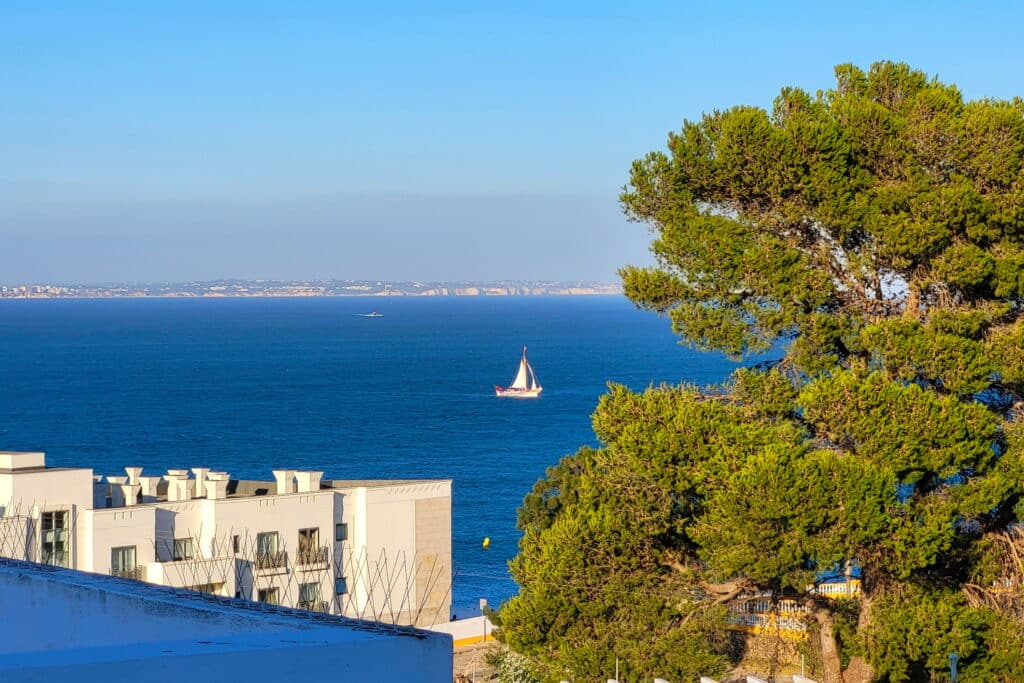
From what I’ve seen traveling around the country, these opportunities are real. In the Algarve, July evenings in Lagos feel like a cauldron of nations. People stand shoulder to shoulder along Rua 25 de Abril, the town’s main tourist street. But turn onto one narrow street, and you find utter calm, with seagulls becoming your only soundtrack.

Although the Algarve doesn’t yet receive the same volume of direct US arrivals as Lisbon or Porto, access is improving. United Airlines has launched a Newark–Faro non-stop service, while one-stop connections via Lisbon remain strong.
Farther west, Funchal and the Azores deliver the kind of awe that stays with you: vast horizons, quiet coasts, and a sense of remoteness that feels timeless. Yet most US visitors still reach them by connecting through Lisbon, a pattern that’s beginning to shift. Airlines are steadily expanding access:
- Azores Airlines now flies directly from Boston to Madeira.
- TAP Air Portugal has opened a nonstop link between the Azores and San Francisco.
- United Airlines plans to resume its Madeira–Newark route in 2026.
Together, these developments could transform Portugal’s islands and, perhaps, its entire travel map. They may shift from remote byways to accessible long-haul destinations. It could mark the next great frontier for slow, nature-centered travel.

Why it matters for the North
Here in Braga, the shifts are felt softly. You might hear a new accent in a café or supermarket, but it’s still worlds apart from the Lisbon buzz. And that’s fine. The gradual uptick gives northern cities time to grow sustainably – improving transport, signage, and hospitality training without losing their authenticity.
If the flow continues, I’d expect to see small guesthouses and heritage stays benefit first. These travelers (especially from Boston and D.C.) tend to be educated, mid-career professionals with an appetite for culture over nightlife. For them, Porto’s crafts markets, Braga’s baroque churches, and Minho’s vineyards tick all the boxes.
Hidden signals for Portugal’s travel industry
From a data perspective, a few untrivial opportunities stand out:
- Spring and autumn demand spikes out of Boston show potential for off-season tourism campaigns, pairing airfare value with milder weather in Portugal.
- Smaller gateways’ steady shares (Faro, Funchal, Azores) mean regional tourism boards can justify direct-flight negotiations.
- Long-tail city growth in the US suggests Portugal’s image now resonates beyond big metros (a sign to tailor digital outreach for secondary American markets).
For local cafés, hotels, and cultural venues, the takeaway is simple: the map is widening. A traveler who once stopped in Lisbon for three nights might now spend a week between Porto, Braga, and the Douro if we make it easy and welcoming enough.

A personal glimpse
Traveling through Portugal still feels to me like unfolding a storybook. Lisbon’s green hills echo Singapore’s lush corners. Porto’s riverside cafés heal the soul. And the Algarve’s hidden alleys remind you how peace can live right next to a crowd.
Watching Americans discover these layers feels personal. Their routes mirror my own first explorations: cautious, then curious, then deeply attached. They come for the scenery but stay for the sincerity.
And if current trends hold, they’ll keep coming, just not all to the same place.
Next time, I’ll look at who these travelers are, their ages, travel styles, and what truly draws them to Portugal’s slower rhythm.