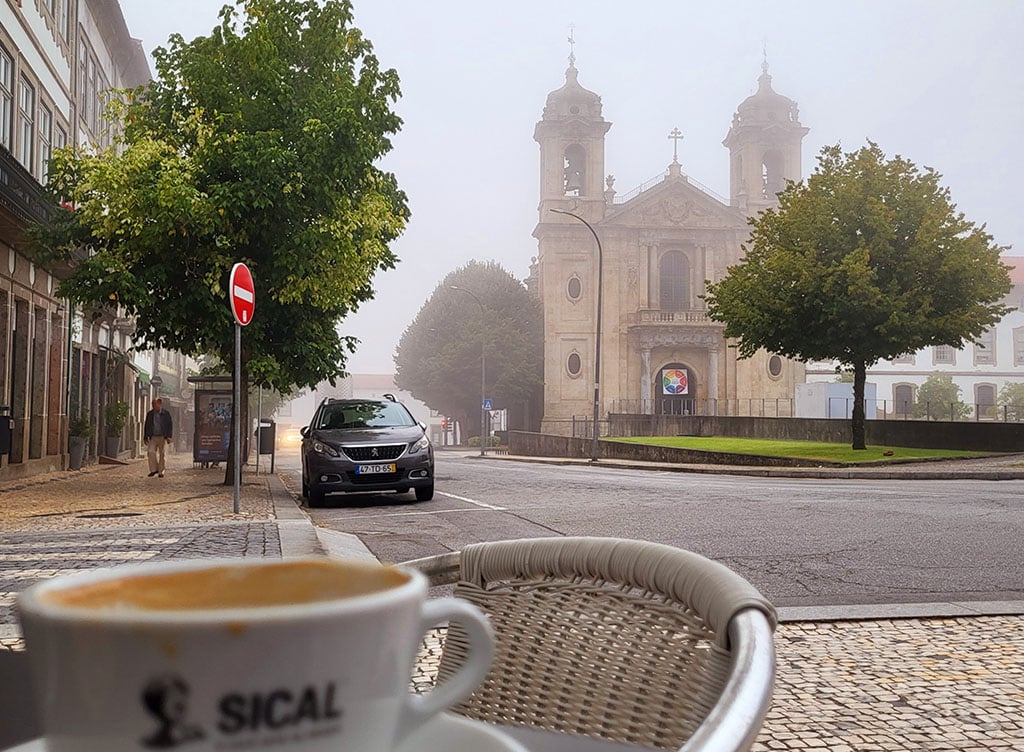
Life in the North, seen from a café table…
From my café table in Braga, sipping a warming galão, I often find myself listening to the hum of everyday Portuguese life. Students chatting, older locals reading the paper, the faint rhythm of church bells.
I’ve been here for over a year now, exploring everything. Think Lisbon’s tiled streets, the cliffs of the Algarve, Nazaré’s stunning beach views, and the quiet hills of Gerês. Still, I can’t get enough of the warmth of the people, the sincerity in their kindness, and the soul comfort of life in the North.
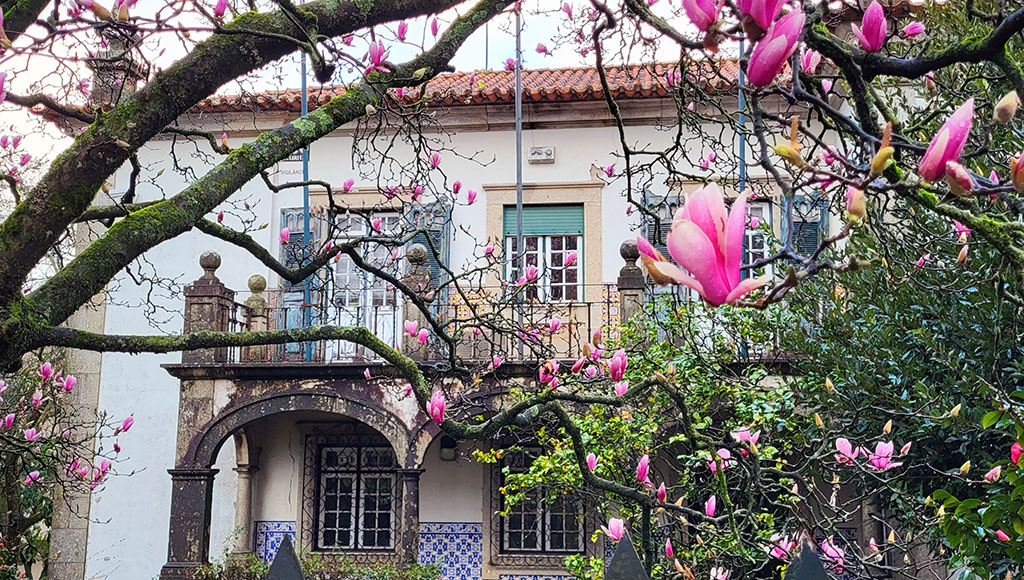
Spring in bloom: Magnolias burst open above tiled façades, turning an ordinary Braga street into a postcard
Yet Ovago’s online booking analytics show a very different kind of warmth: the one radiating from flight searches across the Atlantic. The number of US travelers heading to Portugal keeps rising. And they’re not just coming in bigger numbers; they’re changing when and how they travel.
Recent booking trends show Portugal’s appeal evolving from spontaneous escapes to well-timed, thought-through journeys. So, for The Resident readers, I wanted to share what the data really says and what we locals might expect next.
A market that’s maturing, not slowing
According to Ovago’s internal analytics combined with International Trade Administration (.gov) data, the US–Portugal market continues to grow. But the pattern is changing.
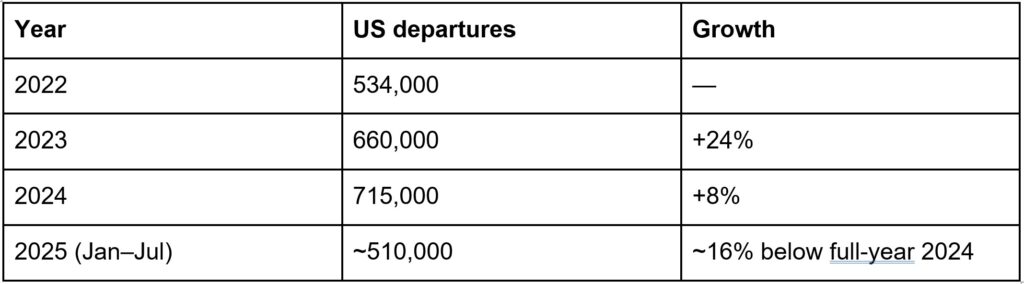
If that pace holds, 2025 should close between 740,000 and 770,000 travelers – another modest rise of 4-8%. For 2026, projections hover around 800-835,000, or a 2-6% gain.
The takeaway? Portugal is still hot, but the fire burns steadier. We’ve moved past the post-pandemic boom into a sustainable rhythm. From what I see on the ground – calm weekdays in Braga, busier weekends in Porto – I’d say that’s a healthy shift. It feels like Portugal is learning to breathe evenly again.

Bom Jesus moments: Sunlight and stillness at Bom Jesus do Monte, a place that never feels the same twice
From early dreams to late clicks
Here’s where it gets interesting. Americans are planning their Portugal trips much earlier than before. But they’re not hitting “buy” quite so soon.
In January 2025, travelers booked an average of 104 days before departure, nearly three times earlier than in 2024. That’s a big behavioral change, suggesting people start dreaming of Portugal early in the year, maybe while snow still piles up back home.
But by spring and summer, the pattern flips. The booking window shrinks to 45-55 days, compared to 80-100 days the previous year.
In short, winter travelers book far in advance, while summer travelers procrastinate. Why? Possibly confidence. People trust flights to Portugal will be available, or they’re waiting for a deal.
And that’s where travelers really feel the difference. Early planners lock in lower fares and better schedules. Last-minute bookers often pay more, but they get the thrill of spontaneity. Both groups are growing.
Deciding vs. Booking: the six-month gap
Another insight: the decision to travel and the purchase of tickets rarely happen at the same time:
- About 20% of travelers decide more than six months ahead.
- 17% decide four to six months ahead.
- Only 8% actually book that early.
- Most purchases happen one to two months before departure.
So, Americans know early that they’ll come to Portugal, but hesitate to commit. They research, wait for confirmation from friends or family, or track fares hoping for a dip.
It’s a bit like Portuguese weather: the intention is sunny, but the follow-through can be cloudy for a while.
This pattern also explains those familiar last-minute surges we see when the price spikes right before summer or holidays. People finally press “book,” and the system reacts.
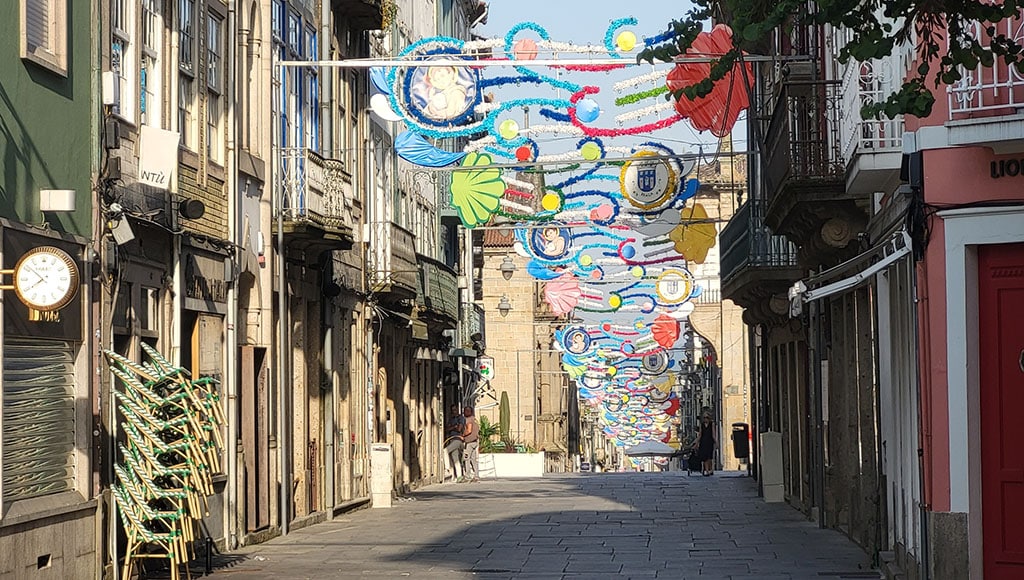
When Braga celebrates: Color spills through Rua do Souto: ribbons, lights, and that unmistakable festival joy
Seasonality: Portugal’s spring-and-summer story
From where I sit, Portugal doesn’t yet feel like a winter market for Americans. Even at Christmas, Braga stays peaceful, and I can walk the cobbled streets without the summer crowds. The analytics confirm it: US bookings surge in spring, while departures peak in summer.
That’s good news for those who prefer quieter cities and fairer prices. It’s also a hint for tourism boards looking to extend the season northward. Off-season trips remain cheaper, but flight options shrink, so flexibility becomes key.
How locals will feel it
If 2023 and 2024 were years of overflow, 2025 is about balance. Lisbon and Porto still carry the heaviest load, but steady growth means visitors are trickling farther north: to Braga, Guimarães, even the Minho coast.
You’ll notice it in small ways: more English menus, slightly busier cafés, Airbnb calendars filling sooner. Still, Braga feels profoundly Portuguese with traditional families gathering on the weekends, church bells, and lively neighborhood markets.
The Americans I do meet here are mostly retirees or remote professionals over sixty. They blend quietly into the city’s rhythm rather than rush through it. That mix, to me, feels right. Sustainable. Respectful.
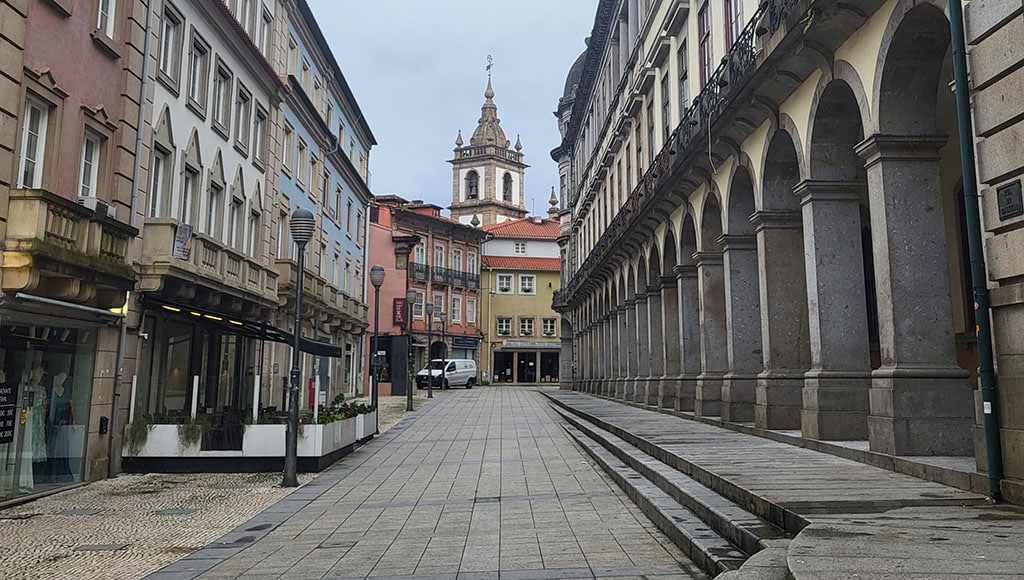
The old town before it wakes: I love walking these empty streets before the city fills with voices and café chatter
What it means for travelers (and for us locals)
For travelers abroad, the takeaway is simple:
- Book early for winter, when seats are scarce.
- Watch fares closely for summer since booking one to two months ahead can still work.
- If you love calm and authenticity, come between September and March.
Those of us living here should prepare for steadier flows instead of unpredictable peaks. Local cafés, guesthouses, and regional attractions can expect a smoother pace. I believe that stability will help preserve what makes each city special.
A personal reflection
As a Ukrainian expat working remotely for a flight-booking company serving mostly US travelers, I live between two worlds: the data dashboard on my screen and the slow beauty outside my Braga window. One speaks in percentages; the other in sunlight and church bells.
And both tell the same quiet truth: Americans aren’t just coming to Portugal; they’re learning to love it in their own, more deliberate way.
Portugal has become part of their long-term plans. It’s not a bucket-list rush, but a chapter. Maybe that’s why, even as the data lines flatten, the country still feels full of promise. The best kind of growth, like the Portuguese themselves, is calm, consistent, and full of heart.
Next time, I’ll explore where Americans are heading within Portugal and how those choices are redrawing the country’s travel map.
Read Daria Bulatovych’s next article: Beyond Lisbon: How Americans are redrawing Portugal’s travel map – Part 2