Google’s latest report, released on November 6, 2025, paints a stark picture of how Artificial Intelligence (AI) is supercharging online scams, turning festive cheer into potential financial ruin for millions. Drawing from Android Central’s coverage, the tech giant highlights a ‘new wave’ of sophisticated scams that blend AI-generated fakes with seasonal shopping frenzy.
Black Friday, traditionally a day of frenzied shopping for great deals, has evolved into a complex landscape where savvy shoppers must navigate a minefield of scams, especially those fuelled by AI. As this technology advances, so too does the sophistication and prevalence of these deceptive practices.
This article explores why Black Friday has become a prime target for AI-driven scams and provides essential tips to help you stay safe and protect your hard-earned money.
Black Friday presents an ideal environment for scammers due to a perfect storm of factors. The surge in online shopping creates ample opportunities for cybercriminals, with millions of shoppers visiting websites and marketplaces, making it easier to exploit vulnerabilities and deceive unsuspecting buyers.
What changes with AI?
According to insights from BetaNews, AI is making holiday shopping scams increasingly difficult to spot. Scammers use machine learning to analyse consumer behaviour, crafting targeted attacks that exploit urgency and trust. For instance, fake online stores pop up overnight, offering unbelievable discounts on hot items, only to vanish after collecting payment and personal data.
Artificial Intelligence now enables criminals to create hyper-realistic deepfake videos, voice notes, and emails that impersonate trusted brands or individuals, usually a popular celebrity or trusted person. This makes impersonation scams – such as fake product launches or limited offers – far harder to detect.
One interesting study by McAfee found that 89% of Americans plan to shop online during this holiday shopping season. Many say they’re more concerned about being scammed online than they were last year. One big reason why – AI deepfakes.
A 2024 Global Holiday Shopping Scams Study uncovered that 70% of American shoppers say AI-driven scams are changing the way they shop online.
In all, they think scam emails and messages will be more believable than ever, making it harder to distinguish between what is genuine compared to what is not. With that in mind, 58% of people say they will be more alert than ever to when it comes to fake messages. Another 11% said they will do less online shopping because of how AI is helping cybercriminals.
Overall, people say their confidence in spotting online scams is low, particularly when it comes to scams featuring AI-created content. Only 59% of Americans feel confident they can identify deepfakes or AI-generated content.
The professional appearance of the pages and the use of Artificial Intelligence make the scam more sophisticated. Before, it was common to identify fake websites by spelling mistakes or poorly-made images. Today, that no longer exists. Criminals use AI to correct texts and create layouts identical to the originals. Even the spelling is impeccable!
How to identify and avoid AI-powered Black Friday scams
AI-driven scams can be hard to detect, but there are several strategies you can use to protect yourself. The best defence against these tricks is to pause and look closely at the product listing before you buy. While AI is powerful, it’s not perfect, and you can often spot the signs of a fake.
Firstly: Be cautious of unsolicited emails, messages, or phone calls, and deals on social media, especially those offering extraordinary deals or urgent requests. Always verify the sender’s identity by checking official websites or contacting customer service directly. Before clicking on any links, inspect the URL for typos, misspellings, or suspicious domains. Authentic websites typically feature secure URLs starting with “https://”.
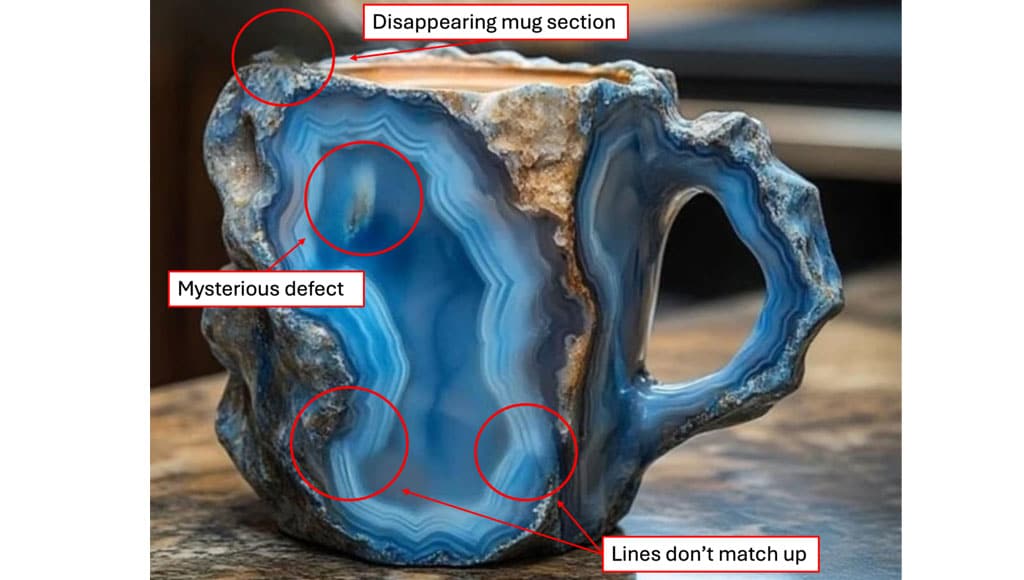
Images and video: Some deepfake videos use lip-syncing, so watch the video carefully for lip-syncing that’s slightly off. Pay attention to details in the quality – do the hair, lighting and skin tone of the person look believable? Is there any blurring in the video? Many AI images have a specific polished, slightly unreal look. Tiny details are often the biggest giveaway. Look for misaligned lines, weird smudges, or blurry spots, which are common artefacts in AI-generated images. Scammers may hide disclosures in the text, stating the images are for illustration purposes only. Always check the listed materials and dimensions to see if they match the photo.
Customer feedback: A product may even appear to have excellent customer feedback, but this doesn’t necessarily mean it is safe to purchase. Scammers can use AI to generate fake positive reviews and customer feedback. If you examine the reviews closely, you will notice that they may use similar wording, which can be a warning sign that real customers did not post the reviews.
Who is behind this item? Finally, it’s always helpful to look beyond the listing and consider who is profiting from the purchase.
Is this a name-brand item, or does it appear to be some mysterious seller that has popped up overnight? Does this seller have a website, or do they only exist on Facebook or Amazon? Is the seller’s account brand new? Is the seller using an AI-generated image as their profile picture?
If it is a book you are purchasing, look to see who the author is. Does this person exist? Is there a legitimate publisher of the book, or is it just through Amazon’s self-publishing? While self-publishing does not automatically mean a book is untrustworthy, this process has fewer checks and balances compared with books from publishers, which usually go through a review before being released.
Checking for scams
There are various online tools available to establish the security of websites you are visiting. One of these is ScamAdviser where you can check for dubious websites but also phone numbers, crypto pages and IBAN numbers as well. You can also report scams.
In Portugal, DECO PROteste has an online tool that allows you to assess the security of the website you are visiting: siteseguro.deco.proteste.pt
Looking to the future
AI-generated scams will only get more advanced, so our awareness and defences need to evolve too. Staying informed, regularly updating security habits, and sharing what you learn with others will be key to staying safe.