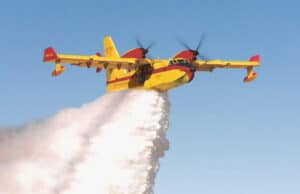
These fuel loads act as potent accelerants, enabling fires to spread rapidly and intensify, making them difficult to control and extinguish. Inadequate fuel management practices and the absence of effective treatments contribute to the escalation of wildfire severity, posing significant risks to ecosystems, communities, and firefighting personnel.
Why the problem exists?
The accumulation of excessive fuel loads is influenced by a range of factors, including natural processes, limited resources for fuel reduction efforts, and land management practices. Climate change-related factors, such as prolonged droughts and increased tree mortality, exacerbate the fuel build-up. In some cases, the historical suppression of natural fire regimes has disrupted the ecological balance, resulting in the accumulation of dense vegetation and debris. The lack of efficient fuel management strategies and effective treatments further compounds the problem, leading to more severe wildfire events.
Top 10 Action List
- Check if you are living in a municipality affected by Situation of Calamity
- Undertake land cleaning without delay – if advice is required, contact local civil protection or Hotline 808 200 520 – Remember deadlines May 31/June 30
- Neighbouring land – if it poses fire risk, and cannot be resolved, contact GNR as soon as possible
- Prepare your house by cleaning roof, terraces, leaves from gutters etc
- Burning cut/piled waste – Ensure registration, authorisation/permit is obtained before and follow safety regulation
- Familiarize yourself with self-protection measures under Safe village – Safe People Program
- For those in high-risk areas, prepare or update an Emergency Evacuation Kit
- Emergency Contact numbers – keep at hand
- High-risk areas – Familiarize yourself with village and evacuation plans and assembly points. If none, identify an escape route and safety point.
- Developments – Keep up to date through: ICNF, ANPC, IPMA websites and that of SCP
In Portugal
In Portugal, the government has decided that, due to the bad weather, the deadline for land cleaning has been extended to May 31.
In the councils covered by the calamity declaration, the deadline is until June 30. In the Algarve, councils include Alcoutim, Faro and Monchique.
If you are not clear of the deadline in your municipality, contact your municipal council.
Land cleaning (fuel management) means creating a strip of 50 metres around external masonry of the building and 100 metres from population clusters. The details of this can be accessed at SGIFR.
As part of “Operation Safe Forest 2026”, the GNR is implementing a Monitoring Plan, which started on February 16 and lasts until May 31, with the aim of identifying critical situations of non-compliance regarding fuel management strips (clearing of excess vegetation) around homes and population centres, for subsequent communication to property owners and notification to local authorities.
These actions include the involvement of other entities, namely municipal councils (câmaras municipais), parish councils (juntas de freguesia), ICNF (Institute for Nature Conservation and Forests), etc, and will preferably be carried out through direct contact with landowners or through neighbours and other residents.
Starting June 1, the GNR will implement the Inspection Plan, with the objective of verifying whether the non-compliance situations identified during the awareness-raising phase have been rectified, with a view to imposing administrative penalties.
High-risk fire areas
This is usually identified each year as priority parishes for the purposes of monitoring fuel management (land cleaning). This is in the form of an Order and last year it was Despacho n.º 4717/2025, of April 17, covering 988 parishes.
For 2026, Safe Communities has been in contact with the ICNF, and the law has not yet been published; a possible complication being that this year is unique given the different land cleaning deadlines between those municipalities affected by the Situation of Calamity and the remainder of the mainland.
Disposing of waste
Before burning vegetation, look for alternative solutions for its elimination: shredding and incorporation into the soil, use for biomass, composting, and energy production. Before undertaking any activity involving the use of fire, it is essential to consult the daily fire hazard level on the IPMA website.
Between November and May, if the rural fire danger index is “low”, “medium” or “high”, requests are made in the form of prior communication (and does not require a decision process). Status reported: “Meets conditions”.
However, at the time of writing, the fire risk was actually increasing, with some municipalities at “very high” or “maximum risk” levels. In these situations (and also between June and October), authorization is required with the municipal council. Initial status reported: “Pending/Awaiting council decision”. Post-decision status reported: “Authorized” or “Unauthorized”. However, it is safer to wait for a day with lower risk.
If in doubt, always contact the Câmara Municipal (Municipal Bombeiros), or 808 200 520; or online check out the ICNF webpage (fogos.icnf.pt/InfoQueimasQueimadas).
How to safely burn cut and piled waste
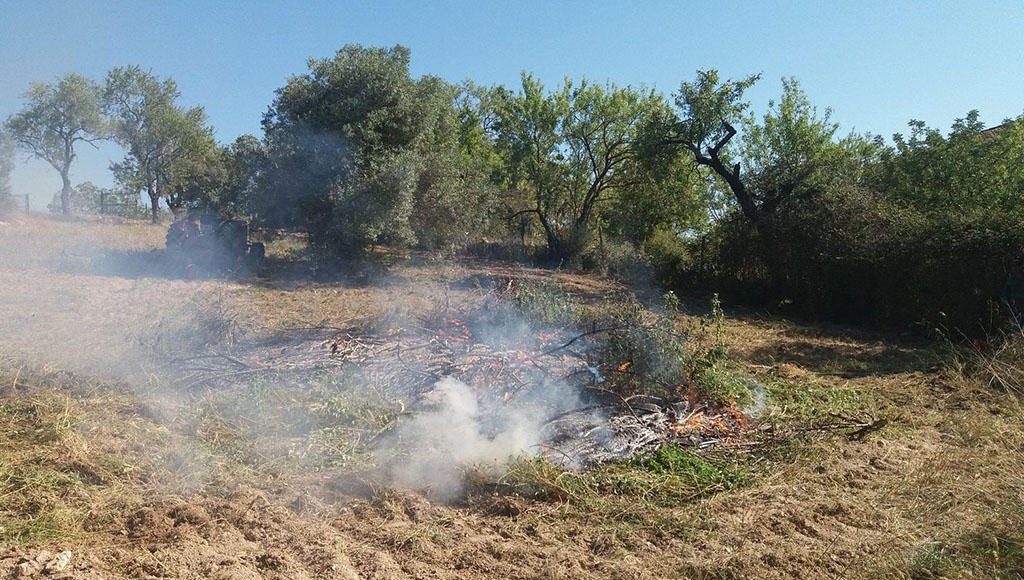
Here are the main tips: burn early in the day; avoid burning on a windy day, especially if it has a variable direction; make several small piles instead of one large one – avoid sloping land or near trees; create a non-inflammable strip around the debris you wish to burn; have a water supply present and ensure fire is properly extinguished before retiring, cover with earth or use water. Remember: the person responsible for burning the piles cannot leave the place during the time in which it takes place and until it is duly extinguished and its effective extinction is guaranteed.
How do you stop the burning?
Turn over the burnt remains to check if there are still small flames or embers; extinguish it completely with water or by throwing dirt on top of it. Before leaving the area, make sure that no more smoke is rising from the ashes. In the end, only ashes should remain.
What should I do if the fire gets out of control?
This, unfortunately, is one of the major problems. Call 112 immediately, giving precise directions to the location of the fire; go to a safe place, ask for help and let your neighbours and family know.
Finally, a reminder: the deadlines have been extended until May 31, and until June 30 for those municipalities affected by the Situation of Calamity. It is strongly recommended to clean the land some time before these deadlines, as the weather will be hotter and relative humidity much lower. As such, the fire risk will be much higher than now, with restrictions in place on when you can burn cut and piled waste and use motorised gardening equipment.
Previous article by David Thomas: As spring approaches, so does the dust