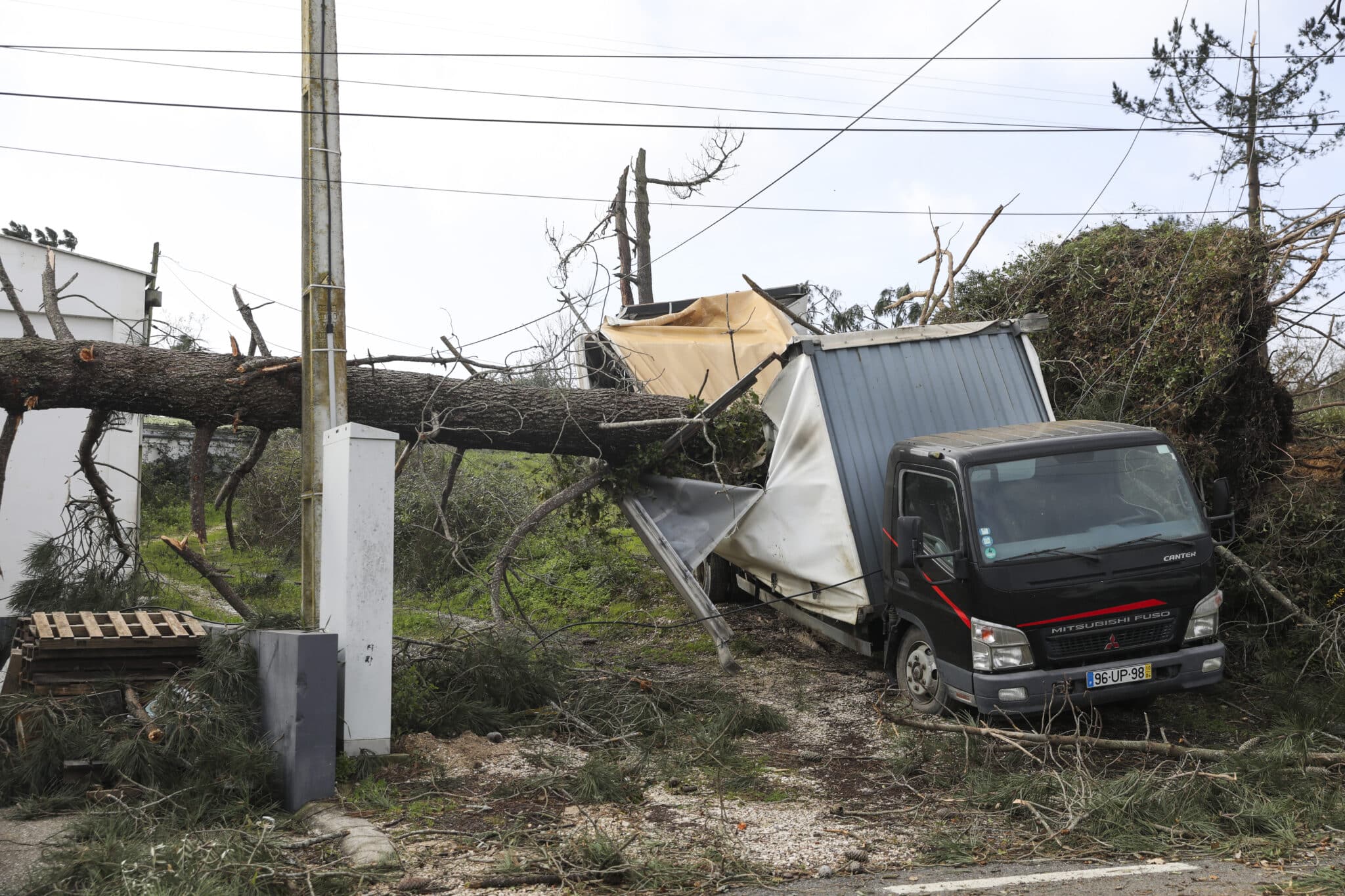
Kristin has resulted in at least 10 deaths and around 12,000 severe weather-related incidents registered by the Civil Protection Authority – mainly as a result of extreme winds, with gusts up to over 200km/h and extensive flooding.
Fallen trees and structures, road and transport service disruptions, especially railway lines, school closures, and power, water, and communication outages were the main material consequences of the storm, in response to which government declared a “Situation of Calamity” initially until February 1 but now extended to February 8. The Prime Minister described Kristin as a “meteorological phenomenon never seen before”.
Whereas Ingrid was noteworthy due to cold and widespread snow in the central and north, Kirstin’s impact has been the extreme winds and flooding.
Why did Kristin cause so much devastation?
Kristin was no ordinary storm in terms of its intensity.
The critical moment of the storm occurred in the early morning of January 28, with the occurrence of an extreme meteorological event characterized as “explosive cyclogenesis”, associated with very extreme winds and precipitation of rapid development, with particular impact on the central region of the mainland.
IPMA, the Portuguese Institute of the Sea and the Atmosphere, has described Kirstin as “a rare phenomenon” and that it only resembled two other situations that occurred in 2018, with Hurricane Leslie, and another event earlier, in 2009. These complex low-pressure systems sometimes develop secondary nuclei of high intensity. Storm Kristin also had a phenomenon that is called a ‘sting jet’. It is a rare phenomenon with the consequences that we saw, and very difficult to forecast.
Warnings
In the days leading up to these storms and during the storms themselves, the IPMA issued periodic warnings and ANEPC (National Civil Protection Authority) sent SMSs to the population, the latest on February 1. Red warnings were issued for rough seas and, for the first time for many years, there were red level snow warnings.
For Storm Joseph, red level warnings were issued for very strong winds, which are extremely rare, and this again was the situation with Kristin. At the same time, level 4 internal readiness (the maximum) was raised by the ANEPC, acknowledging that they were expecting a “complex phenomenon” with “very significant destructive potential”.
Government advice
Prior to and during the storms, there was a plethora of advice being published by the authorities on: keeping your property and yourself warm; safe driving (including in ice and snow); pet safety; and flood prevention. This was mainly generic advice, but for the most detailed information and action to take (some urgent), those affected are also advised to check their municipal Facebook pages and websites.
Storms Ingrid, Joseph, Chandra, Kristin …
Storm Ingrid was one of the most severe storms to have affected the mainland for years. Its passage through mainland Portugal resulted in two deaths, one injury, and 21 displaced persons. The severe weather mainly affected the western sub-regions, Greater Lisbon and the Coimbra region.
However, no sooner than Ingrid had lost its intensity, Storms Joseph and Chandra began to affect the mainland resulting in over 700 incidents, to be followed closely by Storm Kristin. Among the impacts was damage to the telecommunication operators’ infrastructure (with around 200,000 customer still experiencing problems), including cuts in fibre optic lines that prevent telephone services for customers, both on mobile and fixed networks, especially in the central region of mainland Portugal. This is worrying as it meant that people could not contact with the outside world (relatives and friends) and vice versa.
Due to the successive storms in a short period, the situation is even more dangerous because the risks as well as the impact increase substantially and particularly because the soils are completely saturated.
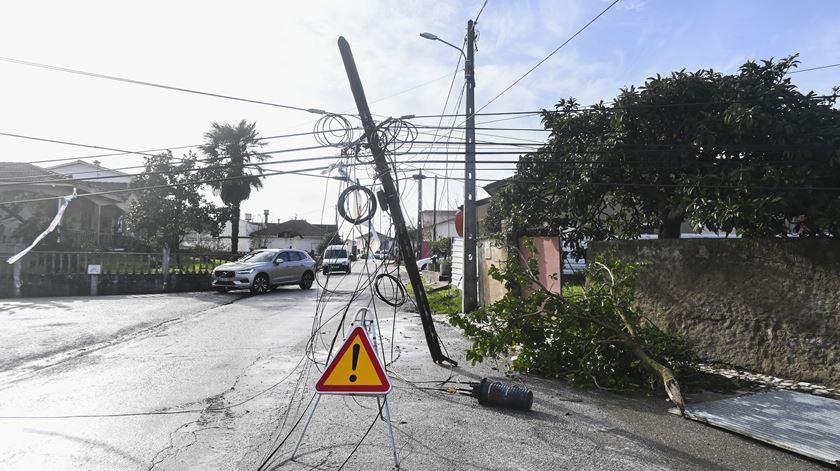
Power outages
During Storm Ingrid and Joseph, there were power outages, but these were relatively localised compared to Kristin, which left nearly a million customers without electricity on January 28. Although E-Redes deployed repair teams, the ongoing severe weather hampered progress.
As at 18:00 hrs on February 2, there were still 134,000 customers without power, 95,000 in Leiria municipality. The chairman of the board of directors of E-Redes, José Ferrari Careto, stated last Sunday that there is no way to predict when it will be possible to fully restore electricity.
Unfortunately, the use of fuel-run generators resulted in at least one death and nine injuries, five seriously, as they were used indoors resulting in carbon monoxide poisoning.
Power outages in cold wintery conditions are not something we are used to in Portugal. The impact could have been worse, however, had it occurred during Storm Ingrid when temperatures were much colder and there was extensive snow. It is important we are prepared for this eventuality, especially those who may be elderly, living in isolated areas.
Precautions include having an emergency kit handy. Keep chargeable battery torches fully charged, as well as your phone. If you don’t have a portable charger, reduce the screen brightness on your phone and close apps not in use to conserve the battery.
If the power goes out, make sure you have simply not blown a circuit by checking the breakers in your home’s electrical panel. By isolating this, power is easily restored to the remainder of the property – literally by the flick of a switch! A useful tip is to have the contact details of your energy supplier readily at hand.
Regardless of how cold it is, do not use charcoal grills or the gas oven to keep the property warm.
The days ahead
Experts warned on February 1 that 95% of the soil is unable to accommodate the rainfall expected in the coming days. Civil Protection warns of the need to remove belongings and animals from flood-prone areas and recommends preventive measures. Areas of greatest concern are those along the Douro, Águeda, and Mondego rivers, and in the Tagus basin. Discharges from several dams are taking place and plans are in place in case preventive evacuations of population and animals become necessary.
With the approach of Depression Leonardo, forecasts are for periods of “locally strong winds”, which should be classified under yellow warnings, but which, given the vulnerabilities of the territory, could have greater impacts. For example, there is a greater risk of trees falling due to saturated soil and those already damaged.
We need to learn from this experience
Climatologists believe that these extreme events are not necessarily happening more frequently, but with greater violence, because there is a greater imbalance in atmospheric behaviour. Warmer atmospheres and oceans contribute to this scenario. There is much more energy available and many imbalances. As such, we need to be prepared.
There will undoubtedly be a comprehensive independent review into the impact of Storm Kristin, which should include: how well prepared we were, communications and the effectiveness of operational deployment, recovery operations, lessons learned and recommendations. This was the case following the tragic fires of 2017.
Finally, a word of thanks to all the Civil Protection agents, security forces, and also to the local authorities who were on the ground helping people so that normality can be restored to their lives as quickly as possible.
_______________________________________
Previous article by David Thomas: Tips for keeping you and your house safe in cold weather