Safe to say it was well received, so here are 10 more questions to test your grasp of Portuguese culture. And don’t feel bad if you feel the need to look anything up, as it’s the learning that matters here as well as the joy of becoming more familiar with the country that keeps on giving when it comes to rich history, fun facts and cultural curiosities.
Let’s begin with an Easter question, given last weekend’s deliberations and festivities, and an extraordinary egg-bearing cake from Quarteira…
Question 1: Local bakeries Duodoce, Costa Doce and Valenciana got together to bake a gigantic version of one of Portugal’s favourite Easter traditions — the sweet, spiced folar cake. The monster confection weighed around 510 kg, took 42 hours to prepare (including kneading, resting, baking, assembling and decorating), and used massive amounts of ingredients like 450 kg of flour, 45 kg of eggs and 180 kg of sugar, along with a special spiced tea infusion.
It was decorated with white and dark chocolate, egg threads and sugar, and served free to the public, but how long was it?
A: 1.35 metres
B: 135 metres
C: 13.5 metres
Question 2: April 2, 2026, saw the 50th anniversary of the ratification of the Constitution of the Portuguese Republic. Back in 1976, one of the many enshrined features of the great democratic document was that ‘the President must personally taste and approve every new wine vintage from the Douro region before it can be sold’.
True or False?
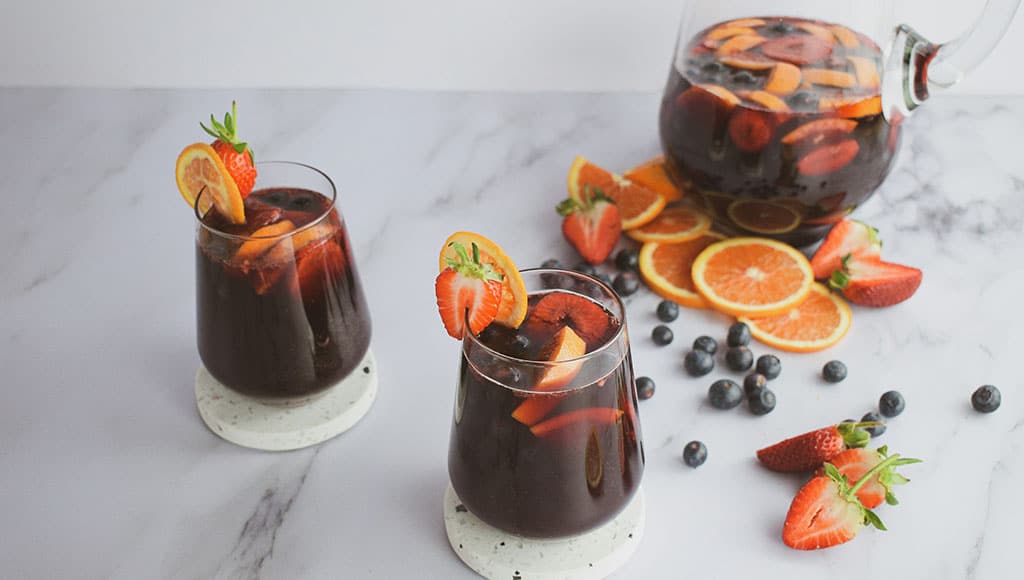
Question 3: Many people around the world associate sangria with Spain, and some still have the scars to prove it from an Iberian holiday, long ago. As summer approaches, this delicious party-starting, pitcher-mixed cocktail will most certainly be enjoyed as much in Portugal, as it is next door, with its blend of red wine, fresh fruit, sugar, sometimes cinnamon, and perhaps nutmeg.
What key Portuguese ingredient gives sangria in Portugal its distinctive richer flavour compared to the Spanish classic?
Question 4: Talking of Spain, and the long-standing but generally good-natured rivalry that exists between the Iberian neighbours, it’s said in Portugal that two bad things come from Spain. One, based on the track record of royal matchmaking it seems, is marriages – what is the other?
A: Bad sausages
B: Bad music
C: Bad winds
Question 5: The Real Fábrica de Gelo (Royal Ice Factory) in Portugal’s Serra de Montejunto was built in the 18th century by Dominican friars to produce natural ice from snow and water tanks, supplying Lisbon’s royalty and hospitals with ice for cooling drinks and making ice cream until it closed in the late 19th century.
True or False?
Question 6: In a famous Portuguese folk tale, a smart friar arrives in the town of Almeirim and boils a single stone in water, cleverly convincing generous villagers to add chouriço, potatoes, beans, and meats one by one until it becomes a rich communal soup. Some say he was a cunning culinary conman; others say he brilliantly taught the value of sharing!
What do the Portuguese call this legendary dish?
Question 7: Portugal maintains an official government list of permitted first names (prenomes) for registering children. It is published by the Instituto dos Registos e do Notariado (IRN) under the Ministry of Justice. Parents (especially when both are Portuguese) must generally choose from this approved list, which aims to ensure names are compatible with Portuguese language rules, spelling, pronunciation, and gender clarity.
Which of these names is not included, currently?
A: Âmbar
B: Nutella
C: Oceano
D: Platini
Question 8: A dining experience created for food lovers seeking a new ‘high’ is arriving in Portugal soon, offering meals to 22 guests at a time, served 50 metres (164 feet) above the ground on a suspended platform.
“We want to offer a pioneering experience that combines gastronomy and showmanship with a privileged view over some of the most emblematic cities in the country,” says Francisco Mendonça, founder and CEO of Sky Lounge, the company behind the idea.
True or False?
Question 9: Portugal has a spectacular 226 km coastal hiking route within Southwest Alentejo and the Vicentina Coast Natural Park. It follows narrow, often sandy single-track paths once used by local fishermen, running dramatically along wild Atlantic cliffs with constant ocean views, hidden coves, and rugged beaches.
Considered somewhat difficult due to soft sand and exposure, it does offer breathtaking scenery, intuitive waymarking, and passes charming villages like Porto Covo, Vila Nova de Milfontes, Zambujeira do Mar and Odeceixe. Best hiked September to June, it immerses walkers in raw Portuguese, windswept coastal nature.
What is the English name of the trail?
Question 10: During the time of the Moorish occupation of the Iberian Peninsula, many legends tell of beautiful Moorish princesses who were enchanted and trapped inside rocks, fountains, or castles after the Christian Reconquest. The most famous versions are set in the Sintra region or the Alentejo.
The story goes like this: A young Christian knight or shepherd discovers a stunning Moorish princess who appears only at certain times — often at midnight, at full moon, or on St. John’s Eve. She is under a spell cast centuries ago and can only be freed if someone kisses her, guesses her name, or performs a specific task without fear.
The princess is usually combing her long black hair with a golden comb, guarding hidden treasures, or singing sadly. If the hero succeeds, she transforms into a normal woman, rewards him with riches, or marries him. If he fails (often because of greed or breaking a condition like not looking back), she disappears forever with a cry of despair.
These romantic, melancholic tales blend Moorish and Christian folklore and explain many natural features — strange rock formations, springs, or caves said to hide the enchanted females still waiting for their liberator.
What is her name?
A: Maria
B: Mooria
C: Mariah
D: Moura
Answers:
Q1: (B) 135 metres
Q2: False
Q3: Port wine, porto
Q4: (C) Bad winds (of the meteorological kind) – “De Espanha, nem bom vento, nem bom casamento”
Q5: True
Q6: Sopa de Pedra
Q7: (B) Nutella
Q8: True
Q9: The Fisherman’s Trail
Q10: (D) Moura
Read Carl Munson’s previous article: How well do you know Portugal?