Months since the ‘great Iberian Blackout’ – which plunged Portugal and Spain into as much as 12 hours without electricity – cold water has been poured on the government’s initial plan of increasing the number of power stations capable of powering up from scratch (‘black start’).
Pedro Amaral Jorge, president of APREN (the Portuguese Renewable Energy Association) has been talking to the Working Group set out to find solutions to avoid future blackouts – and he suggests that the government’s focus for improvement is misguided.
Increasing “black start capacity” is not necessarily better, Jorge explained – since the existence of more power stations with this function “increases the complexity” of the power restoration process.
According to the APREN president, system recovery requires rigorous synchronisation between production units and networks. “It is not certain that more “black start” will solve the system’s problem”, he stressed. “I may have a system failure when I am trying to recover” if the process is not carefully coordinated.
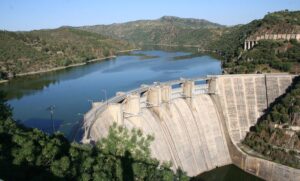
When the country suffered a nationwide power outage (at a time when its system was linked with Spain’s), the only power stations with autonomous start-up capacity – Castelo de Bode and Tapada do Outeiro – were activated. It still took hours to stabilise the system, and reasons given for this were the ‘lack of power stations with autonomous start-up (black start) capacity.
Since then, Energy Services Regulatory Authority (ERSE) has instructed REN – Redes Energéticas Nacionais – to contract two more power stations with black start capacity – Baixo Sabor and Alqueva – both of which have been in operation since January.
Pedro Amaral Jorge recalled that Portugal managed to restore its entire system ‘in about 16 hours, below the initial forecast of 72 hours’ following the blackout. “We were lucky” – despite communication difficulties and initial uncertainty about the behaviour of the grid, he said – referring to the importance of ‘flexibility’.
In this regard, he insisted nuclear energy “is what is not flexible” pointing out that, although Spain has nuclear capacity, this energy source “did nothing to solve this problem” on the day of the blackout.
According to Amaral Jorge, the Iberian experience shows that the resilience of the electricity system depends more on operational flexibility, network management and coordination between operators than on increasing the number of power plants or investing in rigid, operationally inflexible technologies.
The group of experts from the European Network of Transmission System Operators for Electricity (ENTSO-E) pointed, in their preliminary report into the blackout, to a cascade of voltage increases, observed in southern Spain, followed by sudden shutdowns of production – especially renewable energy – which led to the electrical separation of the Iberian Peninsula from the continental system, with a loss of synchronisation and a collapse in frequency and voltage.
A final report on the power outage is due to be published at some point this year before the end of April
Source material: LUSA