DECO sounds alert over public electric charge-points
Charging an electric car on the public network cost 49 cents more in April than filling up a diesel car to cover 100 kilometres.
The figures have been presented to Jornal de Notícias by the Association of Electric Vehicle Users (UVE) to JN, and show that the situation is progressively getting worse for green vehicles (when the whole idea of the energy transition is the opposite): according to the UVE Electric Mobility Observatory, while a 100 kilometre journey cost €7.89 euros this year, in April 2024 the same journey cost €7.66.
Like fossil fuels, the price per kilowatt hour also fluctuates – and its upward trend is cause for alarm among sustainable mobility advocates.
“More than the cost itself, the upward trend worries us a lot. Without a competitive cost, the transition to electric mobility will be slower and people will shy away,” Pedro Faria, president of UVE, told the newspaper.
One of the reasons given for this rise is related to the proliferation of high-power chargers on the public network: they charge faster, but are also more expensive. But lower-power charging stations have also increased in price – especially in big cities, where demand is higher and waiting times and unavailability tend to increase.
“The network is very overloaded, we have a lot of users arriving and the network is keeping up, but it’s insufficient,” explains Pedro Faria.
“On average, 90% of the network is not being used”, he explained. But in areas where it is, the demand exceeds the supply of charging points.
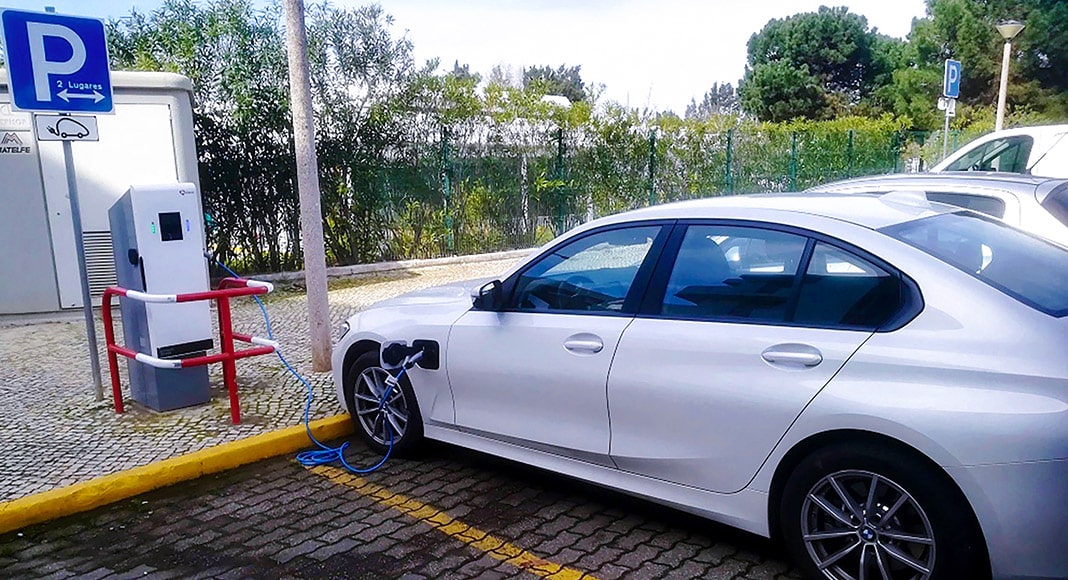
Right now, the Mobi.E public network has 6,193 charging points and 11,517 sockets in the country – 1,805 more than it did last year – but distribution is uneven: Corvo, Mourão, Arronches, Mação, Sabrosa and Paredes de Coura still don’t have a single charging point.
DECO also warns of the lack of uniform pricing between the various operators, tax charges and the amount charged by the electricity retailers themselves for electric mobility.
Even the payment model on the public network is a complication: electric car drivers only know how much they have to pay once charging is complete; they need a contract with an energy supplier or pre-loaded apps linked to bank cards – and not all charging stations accept the various payment methods.
Home charging brings costs down by at least half
DECO stresses that “consumers should opt for home charging, which is more predictable and economical” – the average cost per 100 kilometres charged at home is around €3.19 – less than half the amount charged on public roads.
But to achieve these more economical figures, people need to schedule charging for times when the cost of electricity is lower and avoid peak consumption periods.
UVE confirms that interest in home charging is growing: 50% of new users already purchase a home charging station when they buy their vehicle.
Source material: JN