Government stresses it is doing everything it can
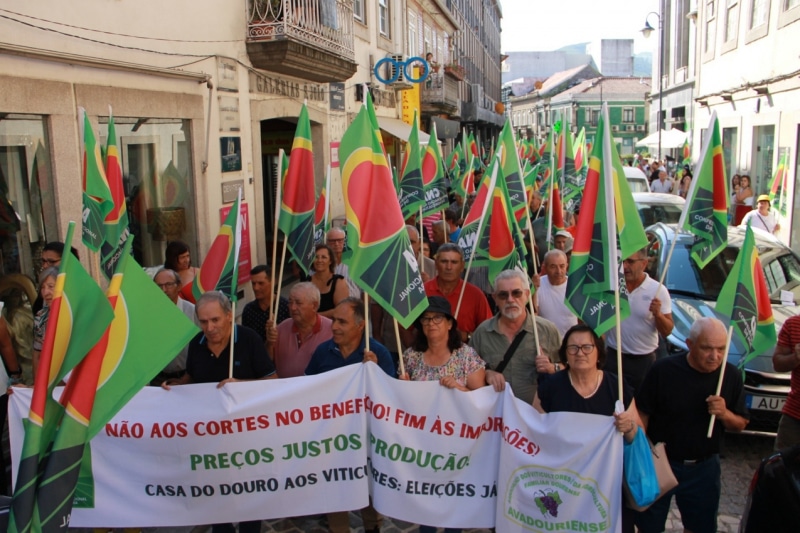
More than 500 wine producers took to the streets of Peso da Régua, in Vila Real, yesterday, demanding that the government find solutions to combat the crisis affecting the region (a combination of the overproduction of grapes, powering a fall in prices paid for them, and competition from grapes grown in neighbouring Spain).
Organised by the National Confederation of Agriculture (CNA) and the Douro Wine Growers and Family Farming Association (Avadouriense), the protest comes as growers fear a third harvest in a row with difficulties. Some have “already received letters cancelling orders for this year’s grapes”, writes SIC.
“Either something is done for the small and medium-sized producers, or we’re going to see part of the region abandoned very soon,” CNA leader Berta Santos told Lusa.
One of the demands was at least for state benefit to be maintained for this year’s harvest.
“We won’t accept cuts because the benefit is what keeps small and medium-sized producers in this region alive. We want better prices for the grapes, because production costs are enormous”, said Berta Santos.
The aim of the demo was to demand fair prices for grapes, a ban on the purchase of grapes below production costs, priority for regional brandy in the production of Port wine, more controls on the entry of wines from outside the region, the purchase by the state of surplus stocks from cooperative wineries and the granting of “legal and operational” capacity to Casa do Douro to stabilise stocks.
The Ministry of Agriculture and the Sea has guaranteed that it is preparing structural solutions to “ensure the economic, social and environmental sustainability” of the Douro Demarcated Region (RDD). These will be aimed “above all at small producers”.
The plan for the Douro is being structured in conjunction with the bodies of the Ministry of Agriculture and the Sea and with the involvement of agents from the region and the European Commission, emphasised the ministry led by José Manuel Fernandes, in a statement sent to Lusa, which pointed out that this government has, in the last 11 months, taken “more measures for the Douro wine sector than the previous government did in all its years in power”.
“We can’t give up on promoting a unique product in the world. That’s why we’ve already increased the amount earmarked for promoting Portuguese wine in third countries by €14.2 million for the years 2025 to 2027, totalling €34 million.
“In the last call for proposals, with the highest budget ever – €20 million – applications for support totalled only €12 million, and it is expected that the full amount will be used,” he stressed, referring also to the “high-level group” that has been set up in the EU, in which “Portugal has played an active role through a set of proposals which are being negotiated between the Council and the European Parliament to mitigate this situation”.
Among support measures introduced by the first government led by Luís Montenegro are €19.5 million for distillation, the creation of a €100 million credit line, with subsidised interest, to support producers and suppliers, and €14.2 million for Promotion and Communication in Third Countries – bringing the total allocation for the years 2025-2027 from €19.8 million to €34 million, recalls the ministry.
These measures “contributed to an increase in exports of 4.5% and a decrease in imports of 19.5%”, leading to “a positive trade balance of more than €800 million by 2024”. But, as minister Fernandes has impressed in interview with Antena 1, support must imply a reduction in production into the future. If producers simply go on as they are, they will lose money, because of the generalised fall in wine consumption, he warned.
Sources: Lusa/ SIC Notícias/ Correio da Manhã