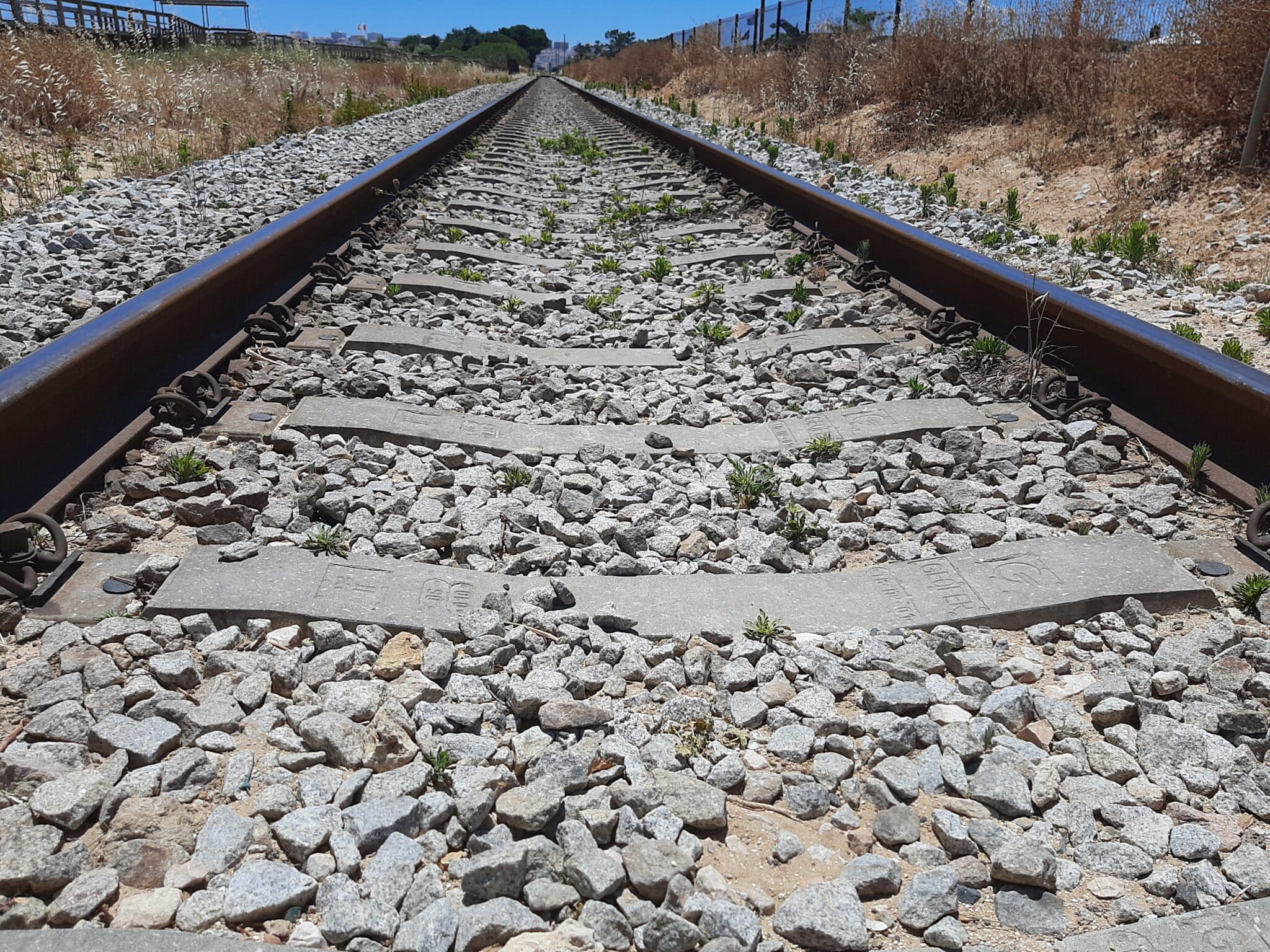
The long-awaited introduction of electric trains along the full length of the Algarve railway line has been postponed once again, despite infrastructure works having been completed months ago.
The electrification of the Linha do Algarve was expected to be completed at the beginning of March, but the rollout has been delayed due to pending certification and safety approvals. Neither Portugal’s infrastructure authority (IP) nor the mobility and transportation institute (IMT) has provided a clear explanation for the setback, according to Público newspaper.
Previous statements by Infrastructure Minister Miguel Pinto Luz in parliament last November pointed to the works being completed since at least October. At the time, only driver training and final safety certification were said to be pending, with electrification expected to be operational in the first quarter of 2026.
However, IMT has stated that IP only submitted the formal request for Authorisation for Entry into Service (AES) for the Energy subsystem of the Algarve line on January 21. The legal review period is still ongoing.
IP, for its part, said merely that “testing and certification procedures are currently underway in coordination with the National Railway Safety Authority (ANSF), with the aim of ensuring that all safety and compliance procedures are rigorously fulfilled, guaranteeing the reliability and efficiency of the electrified line,” according to Público.
The electrification project dates back to 2016, when it was included in the Ferrovia 2020 programme, with completion initially scheduled for the third quarter of 2021.
In reality, works only began in late 2021 on the Faro–Vila Real de Santo António section, and in mid-2022 on the Tunes–Lagos stretch. At the time, IP officials promised electric trains would be running to Vila Real de Santo António by the end of 2023, allowing Intercidades and Alfa Pendular services to extend beyond Faro to the eastern end of the line.
However, that deadline slipped repeatedly. Intercidades services are now unable to cross the Tavira bridge due to infrastructure limitations that were not addressed in time. While CP – Comboios de Portugal had prepared new timetables and trained drivers for electric multiple units, the revised service – which would include more frequent and faster trains without requiring transfers in Faro – remains on hold.
Successive infrastructure ministers – including Pedro Nuno Santos and João Galamba – announced revised completion dates over the years. Most recently, Miguel Pinto Luz assured that electric traction would become a reality in early 2026, putting an end to what he described as “repeatedly postponed promises.”
For now, however, no authority is committing to a new date for the start of electric operations along Portugal’s southernmost railway line, the newspaper adds.
Source: Público