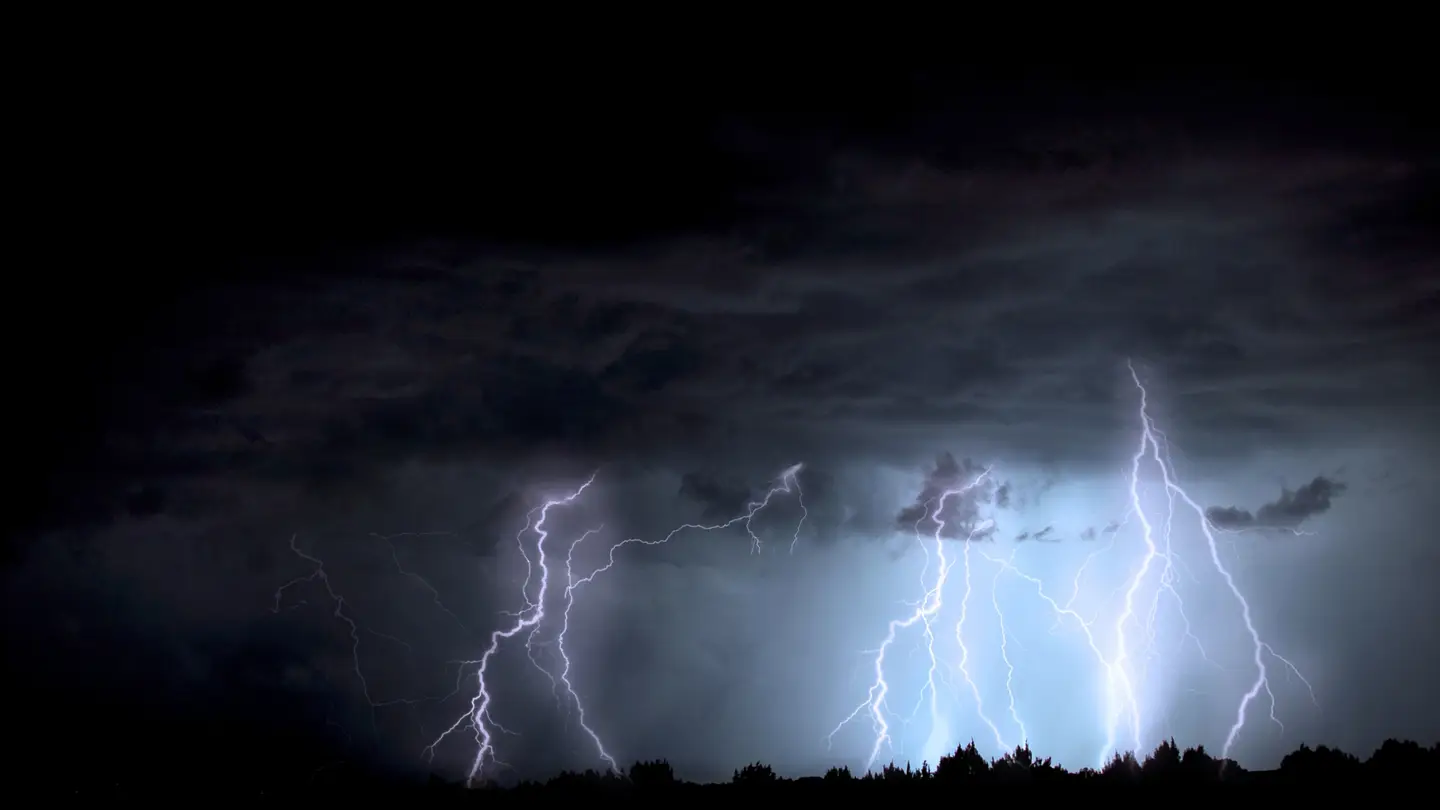
IPMA, the Portuguese Institute for the Sea and Atmosphere has issued several warnings due to rough seas, sometimes heavy showers accompanied by thunderstorms and wind from today for the entire country due to the passage of depression Therese.
Weather conditions in Portugal will be affected between Tuesday and Saturday by Therese, with forecasts of sometimes intense rain accompanied by thunderstorms, strong winds and increasing high seas.
In the Azores, an unusual cold period is forecast.
Given the worsening conditions, a yellow warning as been issued for the districts of Setúbal, Leiria, Lisbon, Beja and Faro due to rain between midnight tonight and 9am tomorrow.
IPMA has also placed the district of Faro (meaning the whole Algarve) under a yellow warning due to south-easterly winds with gusts of up to 75 kilometres per hour, reaching up to 100 kilometres per hour in the hill ranges (between 1pm and 3pm today) and because of high seas, with south-easterly waves of 2 to 2.5 metres forecast (between 9am and 3pm today).
The Madeira archipelago is also under a yellow warning due to the forecast of showers, sometimes heavy and accompanied by thunderstorms, between midday and 9pm. It wil also be under a yellow warning between 3pm tomorrow (Wednesday) and midday on Thursday because of the state of the sea, with north-westerly waves of 4 to 5 metres forecast.
For the Azores archipelago, IPMA has issued orange and yellow warnings due to high seas, wind and rain, between Tuesday and Thursday.
According to an IPMA statement, the Azores archipelago will be especially hit by a sharp drop in temperatures, which “does not occur very often” – and which results from a northerly current, associated with the joint action between the anticyclone and a depression.
During the passage of Therese, the Azores will be affected by low temperatures, with IPMA forecasting minimums between 7 and 9ºC in the Western group (Flores and Corvo), while in the Central (Terceira, Faial, Graciosa, Pico and São Jorge) and Eastern (São Miguel and Santa Maria) groups they could drop to between 3ºC and 5ºC.
As for maximum temperatures, these should vary between 10 and 12ºC in the Western group and between 8 and 12ºC in the Central and Eastern groups.
Source material: LUSA