The recent Munich International Motor Show – effectively the heir to the once enormous and market-defining Frankfurt and Geneva motor shows – has established itself as the biggest event held in Europe for the whole of the motor industry.
It is, naturally, a place where constructors can display their new cars and technologies, show some concepts pointing to future products and take the market’s overall temperature.
The thing about such an event is that, apart from all the ‘regular’ stuff, it is also a place where industry leaders have a stage to express their current views about the industry as a whole. What they said – and what has been going on for the past months – is so worrying I put the test drives on hold for this issue to talk about it.
I have always maintained in these pages that the electric car is not the definitive answer to the problems mobility faces in terms of emissions.
The electric car may be zero emissions on the move, but when seen as a whole, from production to end-of-life recycling, it most definitely is not. In fact, it uses much more resources before it turns a wheel for the first time than a regular internal combustion car.
We are being sold a lie by politicians who know they will not be in office when the consequences of their actions come into play. The electric car will not save the planet. That is, obviously, the biggest problem, because we are spending trillions developing a technology that is part of the answer, yes – in the form of small cars in crowded cities – but not the fundamental solution. We should be looking at the big picture, whilst trying to create the right solution for each case, i.e., each user, in their specific set of circumstances.
The next problem is electric cars are plainly boring. Soulless machines about as exciting as a toaster. Yes, they can be super powerful and much quicker than combustion cars, but so is frozen food heated on the microwave faster than our grandma’s cooking – and which one do you prefer?
The latest rage is virtual transmissions and fake engine noises to simulate cars with actual mechanical parts. Apparently, you can drive an electric car faster if you can connect the speed with the noise, and you feel more engaged with the machine if you can pull a paddle that does absolutely nothing but makes a similar noise to a transmission cog. The stupidity of it all is baffling.
Third, a fact quickly becoming all too apparent is this: people don’t want electric cars because they don’t serve their needs. It’s only companies who buy them to have some kind of fiscal advantage, while somehow stomaching the enormous depreciation, but private buyers simply do not.
One just has to look at the price of 20- and 30-year-old cars to see what people are buying as a thing they love. A good Peugeot 205 GTI from 1984 is now a €25,000 car. Fifteen-year-old Ferraris are more expensive than two-year old ones. Even the first Porsche Cayenne is going up in price.
This leads me to the Munich Motor Show because, as I said, it set the stage for leaders of the industry to speak their mind. Remember, these people are responsible not only for putting out beautiful, appealing, efficient machinery, but their decisions have a direct impact on a multitude of suppliers and satellite companies, as well as hundreds of thousands of families – not to mention the actual social fabric we live in as a whole.
Basically, what they are saying is this: if the EU maintains the ban on internal combustion cars from 2035, the European car industry will collapse. I am yet to find a positive situation in which to use the word ‘collapse’ and this one is definitely not it. Tens (hundreds?) of thousands of people in Europe will lose their jobs and the Chinese manufacturers will take over the world.
Ola Källenius, CEO of Mercedes-Benz, said in a recent interview: “We need a reality check. Otherwise, we are heading at full speed against a wall.”
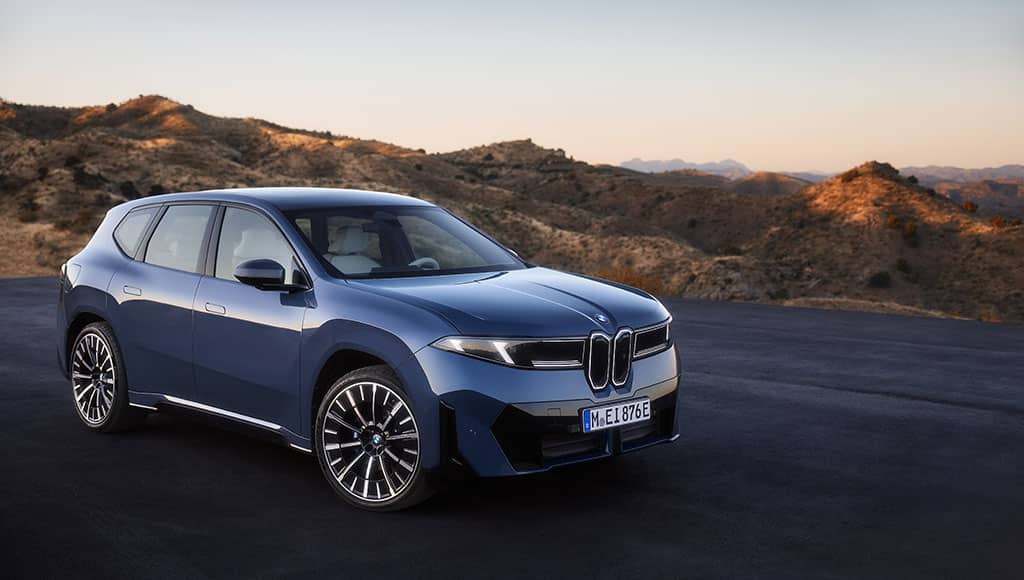
BMW’s Chief Executive Oliver Zipse joined in on the discussion in an interview with Politico just before BMW showed the new electric iX3 at Munich, the car to take the brand into the next decade. Zipse stated the European Union’s planned phasing-out of combustion engines by 2035 was a “big mistake”, calling for a shift to emission measures that capture a vehicle’s entire supply chain. He is stating the obvious but, still, the people in Brussels don’t seem to understand.
Zipse added: “We do ourselves no favours by setting arbitrary future dates by which all industries must adapt. The absurdity of the current rules is that the fuel makers – the Shells and the BPs – face no targets.” He is not wrong, is he?
Another wake-up call came from Jean-Philippe Imparato, Stellantis’ boss, who told the media at Munich that there was a “sense of urgency” before talks with Ursula von der Leyen concerning the ICE ban of 2035. He said current targets are not reachable and could crash the European industry. Those targets, set six or seven years ago, anticipated 25% to 30% of the market to be electric by now, but the reality is nowhere near that, adding that “(…) the infrastructure is not there, and the pricing is not there.”
Imparato’s plan starts with a proposal to “revamp and revolutionise the A-segment in Europe. More than 20% of the market is below €20,000. People don’t have the money to buy cars over €40,000”. He emphasised the need for a vehicle that would need special homologation to achieve that target price point, but that “tonnes of drivers would love”.
The strategy would cause the removal of older vehicles from European roads, with Imparato highlighting that the continent’s car fleet average age is 12 years old and includes 150 million vehicles with 10 years or more. That is not a healthy market from any perspective. Exchanging a vehicle from 2010 for one manufactured within the past three years could reduce emissions by 76 grams per kilometre.
We then learned on September 11 that Ursula von der Leyen gave the green light to this idea, saying the EU would work with industry bosses to create a new E-car category – that’s E for environmental and not for electric.
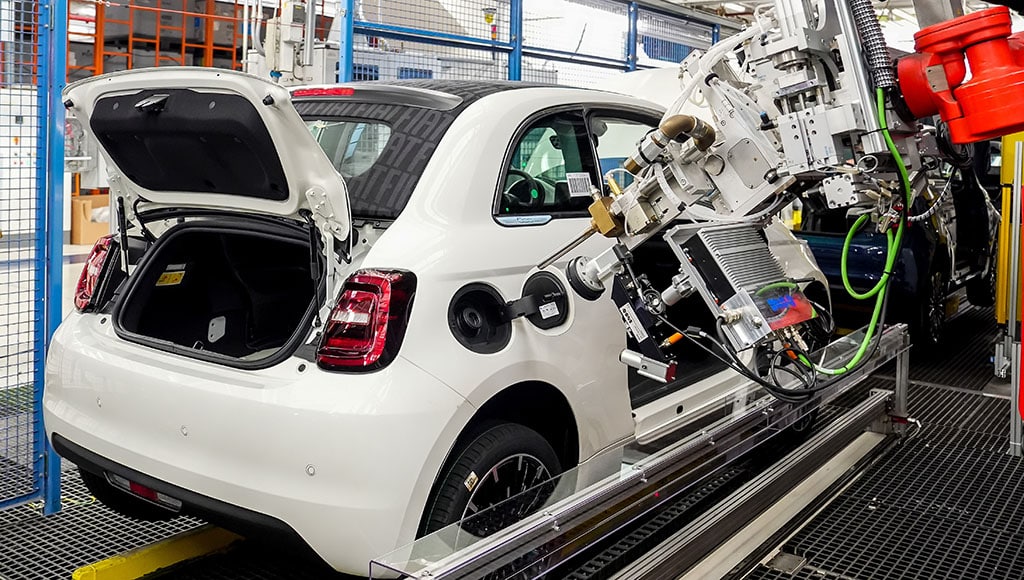
These cars will follow the concept of Japan’s Kei cars, the small city runabouts that account for around 40% of the Japanese market.
The president of the EU said on her last State of the Union address that the car industry is a pillar of the European industry and economy, and her office’s recent press release on the matter stated: “I believe Europe should have its own E-car. E for environmental – clean, efficient and lightweight. E for economical – affordable for people. E for European – built here in Europe with European supply chains. Because we cannot let China and others conquer this market.”
Moreover, although it is not yet clear what kind of powertrains will be used for this E-car (but let’s be honest, they will use a combustion engine or all this talk would be absolute nonsense), von der Leyen added: “No matter what, the future is electric, and Europe will be part of it. The future of cars – and the cars of the future – must be made in Europe.”
I take this with a pinch of salt and deeply hope these are not just words written by her coms team. The EU’s intentions seem a bit more realistic than five years ago, but still a lot of work has to be done and hard decisions have to be made before we can truly see what the best solutions are. Engineers and not politicians must lead the way.
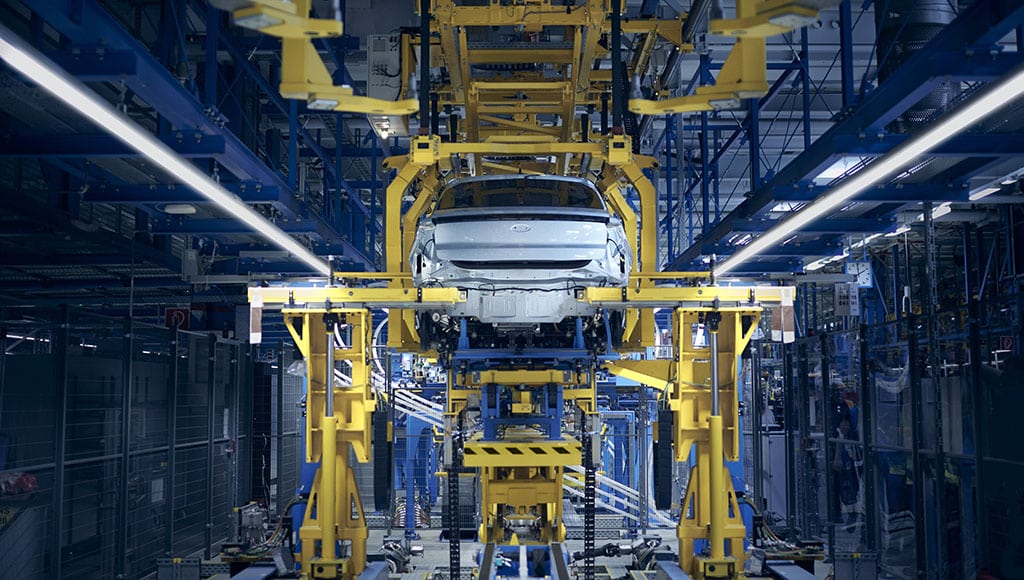
To add insult to injury, after von der Leyen’s plans became known, Ford came out with some shocking news regarding their factory in Cologne, Germany, where the Fiesta used to be produced (remember the Fiesta? It was the best-selling car in the UK and a constant top-10 presence in Europe since, well, forever). The last one rolled off the line on July 7, 2023, with Ford then completely overhauling the factory to the tune of €1 billion to adapt and upgrade the production lines to electric vehicles.
At the moment, Ford is producing two SUVs at Cologne: the Explorer and the Capri. Past glory names revived for the current electric era, following the use of the Mustang name in another electricity-propelled SUV. But get this: Ford’s Cologne factory has a capacity of 250,000 cars per year. How many Explorers were sold in total in the first semester? Less than 19,000. And, although I don’t have the exact numbers, even fewer Capris found buyers.
The Ford Motor Company says demand for electric cars is much lower than forecasts predicted. Really? Who would have thought? Anyway, from January, Cologne will operate on a single-shift operation, with a direct consequence of 1,000 jobs being made redundant. Every week this kind of news is coming out.
Because of market conditions, manufacturers are backing out of their intentions of going all-electric, retrofitting electric platforms to install combustion engines and finally putting the needed pressure on the Europeans institutions to give them the time to develop and implement the correct solutions.
Things are spiralling down quickly though. Let’s hope the powers that be finally start to acknowledge something needs to be done now. Emphasis on the ‘now’. And, for the sake of all, let’s hope it’s not too late.
Motoring Trade | Business, Services, Marketplace – click here