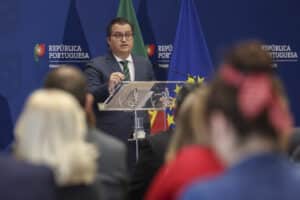
European Commissioner for Energy Dan Jørgensen is in Portugal today – and has combined a visit more focused on his role as Europe’s energy czar on visiting areas most affected by Storm Kristin. But the focus of the trip appears to be more focused on pushing for the ‘energetic corridors’ that Europe has so long desired.
In that context, he has described Portugal as “a key country” for increasing energy interconnections with the rest of the European Union (EU) – assuring that he is also in contact with France with a view to ‘unblocking initiatives’.
Speaking in Brussels before he arrived here, Jørgensen told reporters: “Portugal is certainly a key country in this area and the Iberian Peninsula, in connection with and through France, is clearly at the top of our agenda.”
These comments totally explain the government’s zeal in approving green energy projects – and its discomfort with ‘negative opinions’ coming from scientific entities.
Before his visit, Jørgensen alluded to still “debating with the French minister and the French Government”, at a time when the Iberian Peninsula is an energy island with little connectivity to the EU – essentially due to French opposition to further interconnections.
Last December, the European Commission chose, as future “energy highways” that will receive EU support, electrical interconnections from the Pyrenees to the Iberian Peninsula, and a hydrogen corridor from Portugal to Germany.
“The need to better connect Europe (…) is something we are also addressing through our eight “Energy Highways”. We are therefore very committed to moving forward with these eight energy highways and, of course, the connection to the Iberian Peninsula is one of them,” said Jørgensen.
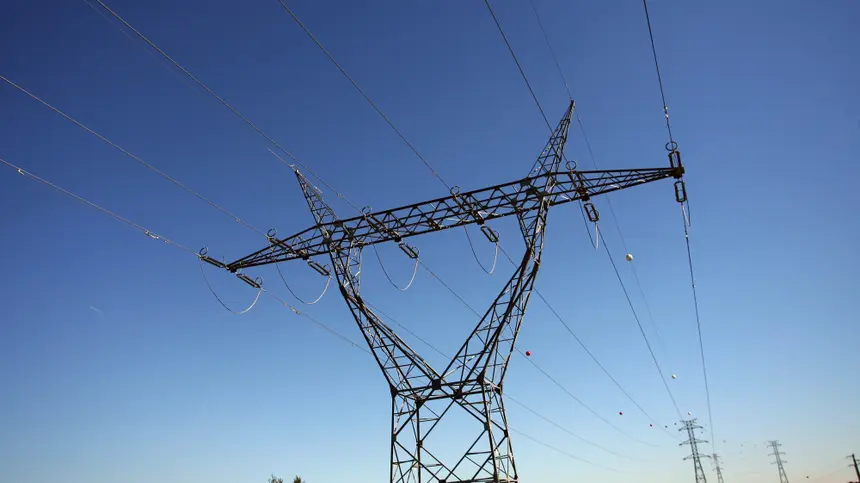
Energy interconnectors reinforce the security of the electricity system by facilitating the exchange of electricity between countries, which stabilises networks, includes more renewable sources (such as wind and solar) and reduces dependence on fossil fuels, said the commissioner.
“When it comes to security, we usually focus on weapons, which is obviously also important, but there is no security without energy security, and this means that we need to step up our efforts,” Jørgensen added – referring to the blackout across the Iberian Peninsula last April “at a time when the Iberian Peninsula has less than 3% connectivity with the rest of the Union”.
The Portuguese government has been advocating an increase in Portugal’s energy interconnection with the rest of the EU to 15% by 2030, through the construction of more interconnections, Lusa adds – not referring to the heritage and social costs of these ‘interconnections’ that tend to sacrifice large swathes of land and traditional (even modern) ways of life for what is seen as the ‘greater good’.
Tomorrow, hundreds of people from the Beira Baixa region – currently under threat from ‘mega solar plants’ envisaged along hundreds of hectares – will be in Lisbon showing their opinion of the perceived way forwards which the government is seemingly more than happy to pursue.
Source material: Lusa