The government has announced an extraordinary meeting of the Council of Ministers for tomorrow, to discuss prolonging the ‘state of calamity’ declared over more than 60 municipalities in the wake of Storm Kristin, as well as other measures of support for stricken populations.
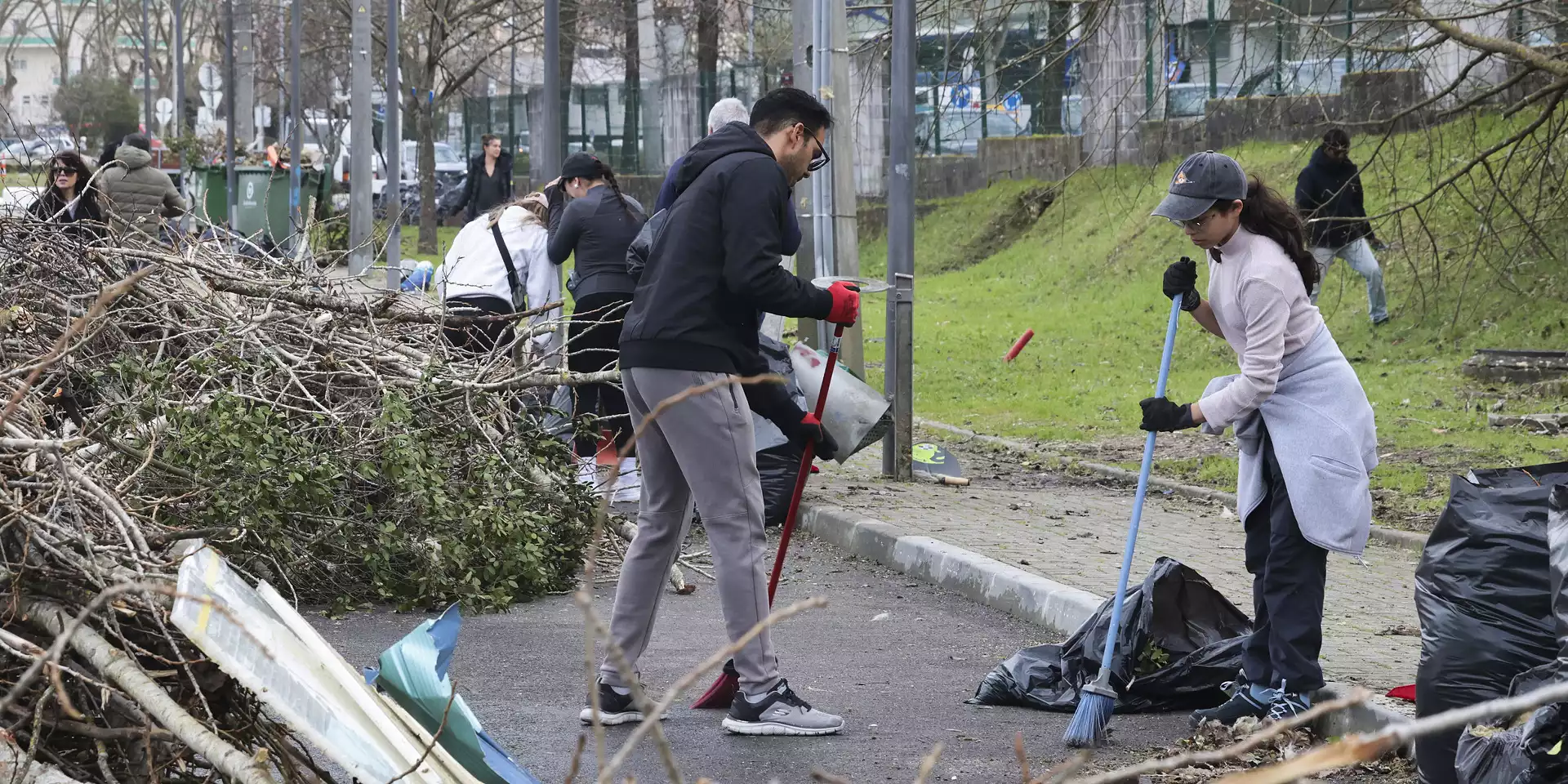
Against a still confused backdrop in which council officials have complained that ‘little effective is being done’ (particularly in the short fine-weather window of today, leading up to further rain and wind tomorrow), many are taking complicated repairs into their own hands – with at least one death already registered of a 73-year-old Batalha man who fell off his roof trying to repair it. Ideally, no elderly person should be expected to clamber onto a roof, stress critics. These should be jobs for ‘civil protection’/ firefighters/ council workers. But this is the awfulness of the situation: it is just too huge for available ‘boots on the ground’.
Army personnel are being drafted in to help in a number of areas. But communities are still without power in Leiria district (meaning they have been without water/ light for four full days already); businesses are unable to function. As President Marcelo said, it is the country’s first ‘urban catastrophe’ – and in the words of the Minister of Interior Administration yesterday, “we are all in a process of collective learning”.
The problem is that this process is exceptionally hard on some – and has left others completely unaffected.
Leiria mayor Gonçalo Lopes has been grappling with the disaster that battered his community on Wednesday, and his patience today with the incomplete response from central government was fraying. He referred to the ‘caroussel’ of political leaders visiting Leiria as if it were a ‘Jardim Zoologico’ (Zoo) – stressing that what Leiria needs is much more in the way of help; tangible help/ manpower.
As for the state of calamity, initially enforced for such short a time that it appeared to make little sense, the mayor stressed that it has to be extended. According to the initial announcement by the government, the state of calamity should end tomorrow (at which point not even all the villages without power are expected to be back online).
Following on from tomorrow’s extraordinary meeting of the Council of Ministers (at 10am, in the prime minister’s official residence of São Bento), there will be a meeting, chaired by the Minister of Interior Administration at the Civil Protection headquarters – again in Lisbon.
These two meetings should create more of a roadmap for how authorities mean to ‘fix’ this disaster – and how businesses and factories that cannot reopen on Monday will be able to afford to continue paying their staff.
Advice in the meantime has been to people: “Do not take risks trying to repair your homes”.
As for the ‘presidential campaign’ that will run until Friday next week – with final voting on Sunday, February 8, that has all but been relegated to a footnote in news bulletins. The two candidates are attempting to maintain some form of visibility, but all eyes are on the situation of so many people whose lives have been turned upside down.
WHAT DOES A STATE OF CALAMITY ENTAIL?
A state of calamity in response to storm damage in Portugal means:
 Emergency services and civil protection are fully mobilised
Funding and support can be deployed faster
Damage is assessed and addressed more rapidly
Legal powers allow use of resources and access to private property for urgent work
Public safety measures and infrastructure repairs are prioritised
Foundations are laid for longer-term recovery support.
A state of calamity is used when:
There is serious disruption to public safety or health
Normal administrative powers aren’t enough
Rapid and centralized action is needed
During a state of calamity, the government (and civil protection authorities) can:
Restrict movement
Limit travel between municipalities
Impose curfews
Control access to affected areas
Close roads or neighborhoods
Order closures
Shut businesses or venues
Limit opening hours
Close beaches, parks, or public spaces
Suspend events
Control activities
Restrict construction or agricultural work in high-risk zones
Regulate tourism
Impose safety measures on companies
Requisition property or services
Authorities can temporarily:
Use private buildings, land, or vehicles for emergency purposes
Require companies to provide services or equipment
(Compensation is legally required afterward.)
Police and municipal authorities can:
Stop people to check compliance
Fine individuals or businesses
Close premises
Order evacuations
Enforce civil-protection instructions
Failure to comply becomes an administrative offense and can lead to fines.
People and businesses affected in different ways:
People may face travel limits
Businesses might be forced to close or change operations
Gatherings can be banned
Mask mandates and/ or safety rules can apply
Remote work may be encouraged or ordered
Construction sites can be suspended in risk zones
Mandatory fire-prevention clearing can be imposed
Temporary occupation of land/buildings is possible
Licensing deadlines or inspections may be frozen or altered
Municipal planning services may operate under emergency rules
Source material: SIC Notícias/ Lusa/ State of Calamity information courtesy of Paul Rees