The United States’ Federal Bureau of Investigation is still trying to work out what led ‘failed’ physicist Cláudia Valente to return to the university of his ‘early dreams’ to carry out a mass shooting – and then travel roughly 30kms to the home of a former Portuguese university colleague in order to shoot him dead.
The terrible story of the murder of plasma scientist Nuno Loureiro broke late last Monday – and has been in the press ever since, largely due to frequent updates.
First there was the suggestion – via Israeli intelligence – that there may have been an Iranian connection to the case; then, within hours, came the news that Loureiro’s killer was none-other than a fellow Portuguese citizen (Cláudio Manuel Neves Valente) whose body had been found in a lock-up in Salem, New Hampshire (a little less than 30kms away).
As the stories rolled in, it transpired that Valente and Loureiro had both been gifted pupils at the Instituto Superior Técnico (IST) in Lisbon in the late 1990s to 2000, and that their subsequent academic journeys had led both to the United States, where Valente attended Brown University with the plan of completing his doctorate.
While Loureiro’s academic career went from strength to strength, Valente’s did not.
Reading between the lines, Cláudio Valente appears to have been the architect of problems that led him to ditch the doctorate at Brown early on, and apparently only return over 20 years later to enter the same building (Barus & Holley) in which he had taken lectures in order to shoot multiple young people (last Saturday) whom he had never set eyes on before.
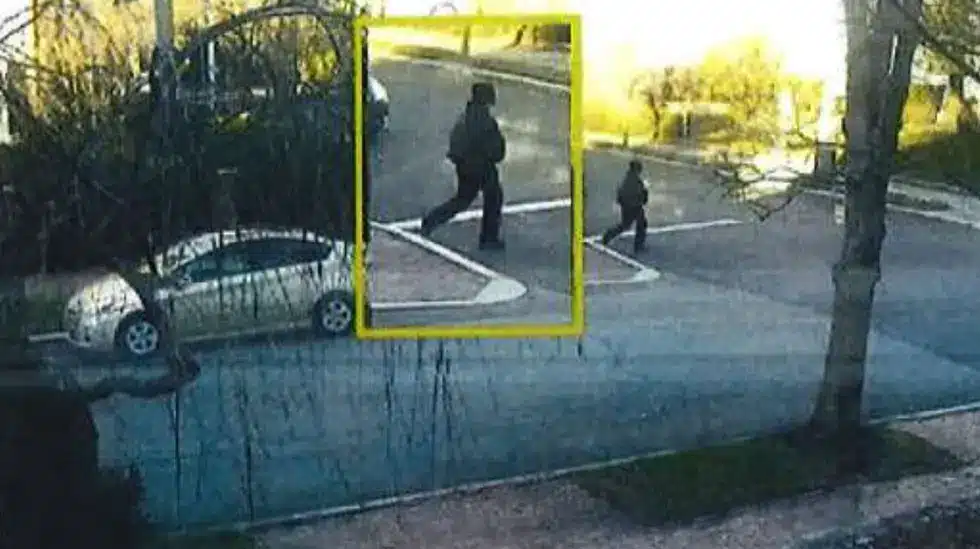
Valente then travelled to Brookline, Massachusetts, where he shot his former university colleague multiple times before making off in a hire car for Salem (and apparently shooting himself dead).
Police in the U.S. have already stressed that they are not looking for anyone else in this case. They are satisfied that Cláudio Valente acted alone – but they appear to have no idea as to what motivated him.
Thus the focus on Valente’s ‘academic past’ – and potentially the intervening years between his exit from Brown in 2001 and his fatal return in 2025.
It is clear that Valente managed to get a ‘green card’ (allowing him to live legally in the States) in a lottery programme in 2017 that US authorities have since shut down. (According to reports, President Trump never liked the Diversity Immigrant Visa Program programme; he felt that it was another avenue for the arrival in the US of undesirables: thus these latest shootings triggered the indefinite suspension of the programme.)
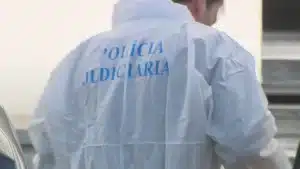
As to what Cláudio Valente will have been doing between leaving the U.S. in the early 2000s and 2017, very little this far seems clear (which is no doubt why the FBI is investigating, aided, we are told, by the Portuguese PJ criminal police).
Correio da Manhã suggests Valente only returned to Portugal from the U.S. in 2006 (even though he left Brown in 2001) to work as a ‘developer’ (writing codes) for the Sapo platform in Lisbon. He lived in Lisbon, says the paper, until 2013. Thus what he was doing, and where he was, between 2013 and 2017 is again something the FBI may be looking into.
Diário de Notícias confuses the picture a little, suggesting Valente returned to Portugal in 2001 (to work at Sapo) for ‘five or six years’ before resigning suddenly, only to return some time later and work again for another few years.
Various accounts coming from those who knew him have appeared in media outlets over the last few days. The impression from former colleagues at Sapo in Lisbon was that Valente was extremely bright but ”a bit weird (…) No one knew anything about his private life”, a 56-year-old former colleague has told Diário de Notícias.
There are other accounts that suggest Valente had stopped communicating with his parents.
Expresso meantime has gone into the research into nuclear fusion that Nuno Loureiro was working on before his untimely death.
The 47-year-old predicted that “the coming years will be exciting for us (at the Massachusetts Institute of Technology/ MIT) and for nuclear fusion”, which he believed would see a ‘decisive moment’ in the very short term (2026-2027).
Expresso explains that a new reactor (called SPARC) capable of ‘generating more energy than it consumes’ is about to make its ‘appearance’ as part of a partnership between the laboratory that Loureiro ran and Commonwealth Fusion Systems (CFS), a start-up born at MIT.
It was here that Loureiro believed ‘solutions to humanity’s greatest problems lie’.
Clearly, the project will not stop because of Nuno Loureiro’s death: Expresso describes the laboratory he was running as “one of the largest at MIT”. It will continue its work as the financing of investigation into nuclear fusion is booming. Even President Trump has announced a joint programme in the last few days.
As Nuno Loureiro insisted only last year: “Nuclear fusion will change the course of the History of Humanity. It is a complex problem, but it can be resolved with determination and ingenuity”.
How the horrors of the last seven days fit into this context is the big question. Was Cláudio Neves Valente simply laying ghosts of a troubled past to rest; or was there a more sinister agenda?
Italian site La Voce di New York refers to the fusion research sector having “faced warnings about attempted data theft and industrial espionage, prompting heightened concern within universities and federal agencies” in recent months.
“Against that backdrop, the killing of the head of a major U.S. research center has raised red flags” says the website.
Source: Expresso/ Correio da Manhã/ Jerusalem Post/ La Voce di New York/ Diário de Notícias/ BBC