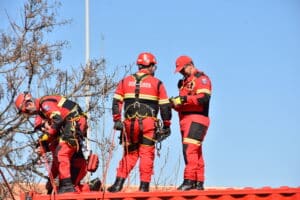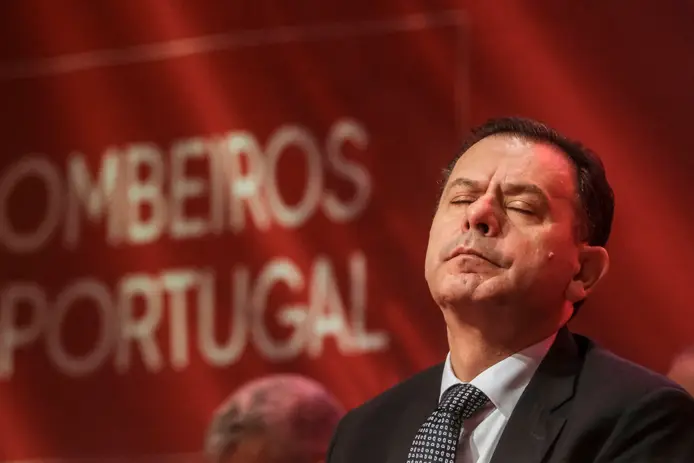
Yesterday’s attempt by the prime minister to bring firefighters on board has fallen flat.
Television footage of Luís Montenegro assuring firefighters at their 45th national congress that the government was ‘committed’ to improving their lot showed a row of stony faces on the firefighters’ podium. Indeed, the prime minister deserved recognition for managing to stay as upbeat as he did.
Today, however, reality has kicked in.
Firefighters have decided they are not convinced.
“Given the lack of concrete responses from the government, responsible protest measures were approved, always safeguarding aid to the population,” president of the congress board, Luis Gil Barreiros, announced as he wound up the two-day event.
Responsible protest measures include refusing to discharge patients from hospitals for several hours, refusing to take part in protocol events, staging slow marches, monthly vehicle drives to parliament and what Lusa calls ‘coordinated siren blasts’.
One of the ‘most debated’ motions centred on the time firefighters could retain patients in hospitals. These periods “could successively increase from 12 to 24 or even 48-hours”, firefighters decided.
In the meantime, firefighters will also start collecting citizens’ signatures, to further pressure legislative initiatives in their favour.
Said Gil Barreiros, these decisions “reflect the sector’s determination to make its voice heard and to demand respect for its claims.”
The congress, which took place “in a context of collective demand and deep reflection on the future of protection and rescue in Portugal” ended, according to organisers, with “a clear and unequivocal message: the current model is exhausted and requires urgent structural reforms.”
The sector, which “does not ask for privileges, but demands justice and recognition”, is demanding the creation of a national firefighter career path, and a firefighter statute that “includes employment contracts with humanitarian associations, a specific pay scale with progression by rank and seniority, adequate social protection, and a fair retirement system.”
The congress’s conclusions also focused on valuing firefighters through measures such as income tax exemption, tax benefits (on vehicle tax, property tax and tolls), as well as priority in public tenders and access to higher education.
Regarding the sustainable financing of humanitarian organisations (firefighting associations), the congress called for the replacement of the subsidy model with multi-year programme contracts that “ensure financial stability, coverage of fixed costs, energy, communications, insurance and vehicles”.
It also seeks the creation of a multi-year re-equipment plan that ensures the renewal of vehicles and fire stations, with a mandatory annual contribution for the acquisition of personal protective equipment and uniforms, technological modernisation, and energy transition.
There is more: firefighters are “demanding a review of the amounts paid by INEM (national institute for emergency medicine) and for the transport of non-urgent patients; access to green diesel – and a reduction in the contribution rate”.
The congress also approved the need to create a statute for association leaders, Regional Coordination Centers, and a National Fire Command – measures that “aim to guarantee the operational capacity and safety of firefighters, as well as adaptation to the demands of a modern civil protection system.”
All in all, the frosty atmosphere already apparent between the firefighters league and Portugal’s government has now amplified.