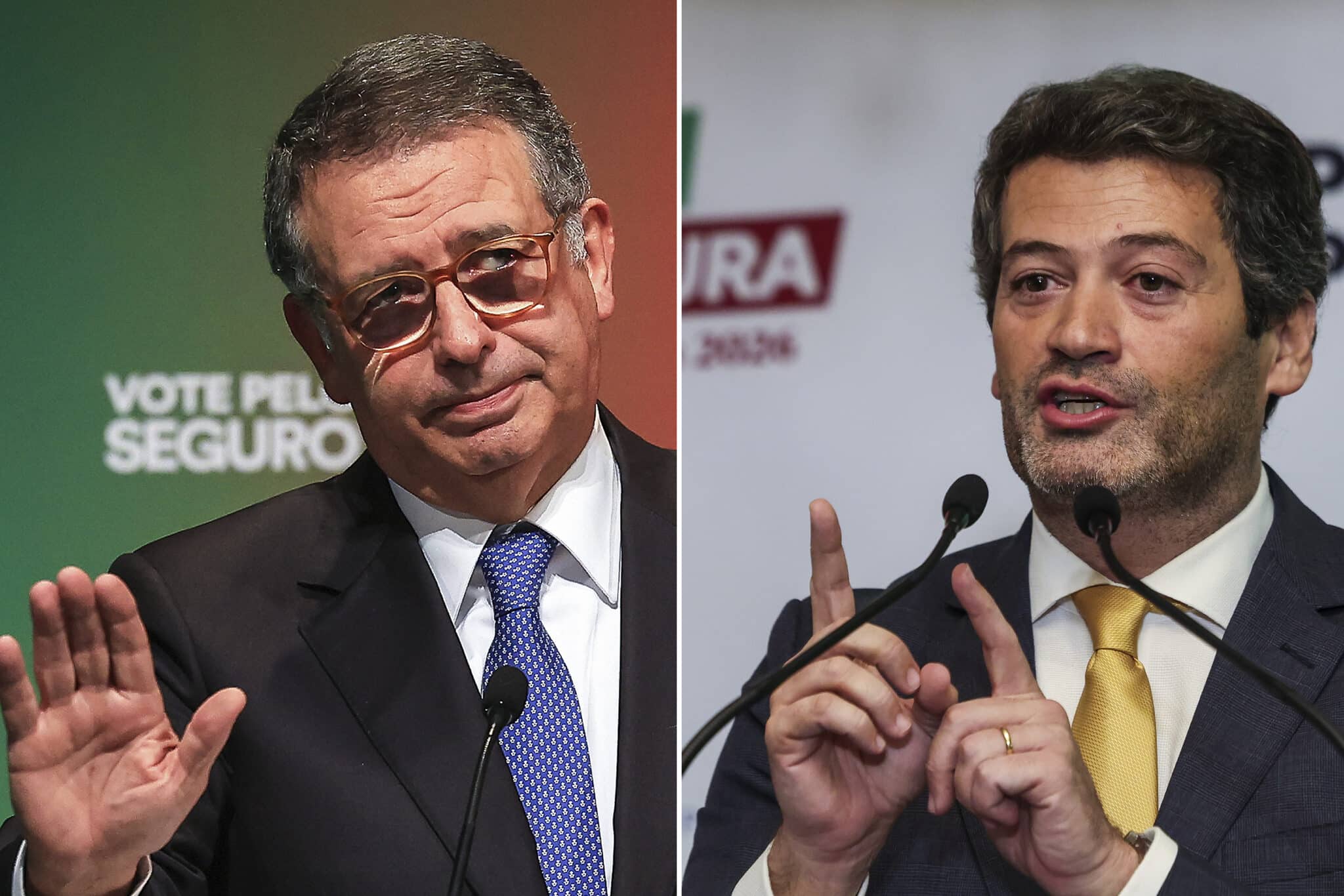
International media on Monday focused on the second-round contest in Portugal’s presidential election between surprise socialist candidate António José Seguro and far-right leader André Ventura, while highlighting the defeat of Luís Marques Mendes, the candidate backed by the governing coalition.
In an article titled “Socialist Seguro and radical Ventura to contest second round of Portuguese presidential elections”, Spain’s El País notes that António José Seguro, who had been out of frontline politics for a decade and initially lacked strong backing within his own party, finished first “against all odds”, setting up a runoff on February 8 against “the radical right-wing candidate André Ventura”.
The paper describes the fifth-place finish of Luís Marques Mendes as “a major setback” for the candidate supported by Prime Minister Luís Montenegro. La Vanguardia goes further, calling it a “hard blow” for the prime minister, attributing the result in part to what it describes as the candidate’s “weakness”, linked to his “opaque role as a high-level lobbyist”.
El País argues that António José Seguro is, “unless a catastrophe occurs”, the “virtual next president of Portugal”, after “20 years of conservative presidencies” in a country that has moved “further to the right than ever before”.
Spain’s El Mundo also predicts victory for the Socialist-backed candidate, suggesting he is likely to consolidate votes against the far right. The paper highlights André Ventura’s declaration that the contest has become a battle “between socialism and non-socialism”.
In France, Le Monde underlines the confrontation between the socialist and far-right candidates, while Belgium’s Le Soir notes that Ventura was not, after all, “the great winner of election night”. Le Figaro headlines: “Presidential elections in Portugal: socialist candidate leads first round, far-right candidate comes second”.
EU-focused outlet Politico describes a “surprise victory” for the centre left in Sunday’s first round, adding that Ventura’s ability to secure almost a quarter of the vote illustrates the “extraordinary” growth of the Chega party in Portugal.
In the UK, The Guardian writes that Seguro will face the far-right leader in a second round that highlights political fragmentation. The newspaper recalls that, in the five decades since the fall of Portugal’s dictatorship, only one presidential election — in 1986 — previously required a runoff.
Brazilian media also gave prominence to the result. O Globo reports that with more than 99% of votes counted, António José Seguro won 31.14% of the vote, compared with 23.48% for André Ventura. Folha de São Paulo similarly notes the advance of the socialist and far-right candidates to the second round.
According to provisional results from Portugal’s Ministry of Internal Administration, Seguro finished first with 31.14%, followed by Ventura with 23.48%. João Cotrim de Figueiredo placed third with 15.99%. Results from 12 of Portugal’s 109 overseas consulates were still pending.
The runoff will be held on February 8. More than 11 million voters were eligible to take part in Sunday’s election, the 11th presidential poll since the restoration of democracy on April 25, 1974. The winner will succeed Marcelo Rebelo de Sousa, who is completing his second and final term.