Operation Marquês case has taken more than a decade to reach courtroom
Thursday July 3, 2025 is a date that should go down in the history of Portuguese justice: 12 years after the start of the Operation Marquês investigation, and more than a decade since its principal suspect – former Socialist prime minister José Sócrates – was arrested in Lisbon airport, the trial into an alleged network of corruption and cronyism was billed to start at 9.30am. It has already passed through the hands over 300 judges, and been the subject of no less than 50 appeals by Mr Sócrates, but today, finally, the trial has arrived.
Or at least, that was the general idea.
At 9.30am when proceedings were meant to start, there was “an IT problem”.
Tense moments ensued, but the issue has reportedly now been fixed, and reporters throughout the nation are now glued to every minute of what unfolds. In the words of SIC Notícias, this is the start “of the most important trial in Portuguese democracy
It is also the moment that so many said would “never happen”. A former head of government standing trial for corruption on an apparent vast scale, which it has to be said he has always refuted.
It is so long now since the initial stories of Marquês that many will only be vaguely aware of the charges against Sócrates et al.
Lusa recalls the basics: “José Sócrates, initially charged with 31 crimes, will answer for 22, including three counts of passive corruption of a political office holder, 13 counts of money laundering and six counts of aggravated tax fraud.
“The friend of the former prime minister, businessman Carlos Santos Silva is the defendant with the most crimes charged by the Public Prosecutor’s Office, facing 23 crimes, down from the initial 33, including one crime of passive corruption of a political office holder, one of active corruption, 14 of money laundering and seven of aggravated tax fraud.
“The list of defendants also includes the former banker of the now defunct Banco Espírito Santo, Ricardo Salgado, who is charged with three crimes of active corruption, one of which of a political office holder, and eight crimes of money laundering.
“Ricardo Salgado has already appeared in court in a case extracted from Operation Marquês, having been sentenced to eight years in prison for breach of trust, a sentence whose enforcement was conditional on the assessment of the former banker’s health, who has been diagnosed with Alzheimer’s disease.
“Another of the defendants already convicted in cases extracted from the main case is Armando Vara, former minister under António Guterres and former director of state-owned Caixa Geral de Depósitos bank, who in the main case will answer for a crime of passive corruption of a political office holder and a crime of money laundering.
“Two former directors of the now defunct Portugal Telecom, Zeinal Bava and Henrique Granadeiro, will also appear before the panel of judges, as well as Rui Horta e Costa, former director of the luxury development in the Algarve, Vale de Lobo, Portuguese-Angolan businessman Helder Bataglia, Sócrates’ cousin, José Pinto de Sousa, the former prime minister’s ex-wife, Sofia Fava, as well as the driver of the former PM, João Perna”.
This has been a roller-coaster ride since November 21, 2014 when Mr Sócrates was arrested at Lisbon airport on suspicions of corruption, tax fraud and money-laundering. After two days of questioning by the then investigating judge Carlos Alexandre, Sòcrates was remanded in custody, where he remained (in Èvora prison) for nine months. This too was ‘unprecedented’ in the history of Portuguese democracy.
A late night release, followed by a month of house arrest, then saw the situation slide into years of claim/ counter claim and legal shenanigans. There was even a moment in 2021 when it looked like it was (nearly) all over.
But the extraordinary ‘preliminary ruling’ by a judge that has since practically disappeared from sight was eventually overturned by Lisbon’s Court of Appeal, and now ‘here we are today’.
Lusa says “The question now is whether this mega-trial will become even bigger” and whether José Sócrates and his friend Carlos Santos Silva will face trial for money laundering offences that may end up being added to those in the main case”.
For the time being, 53 sessions have been scheduled to run until the end of this year, with the next ones to be scheduled in the future. During this trial 225 witnesses called by the prosecution and around 20 called by the defence of each of the 21 defendants will be heard.
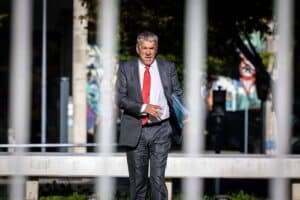
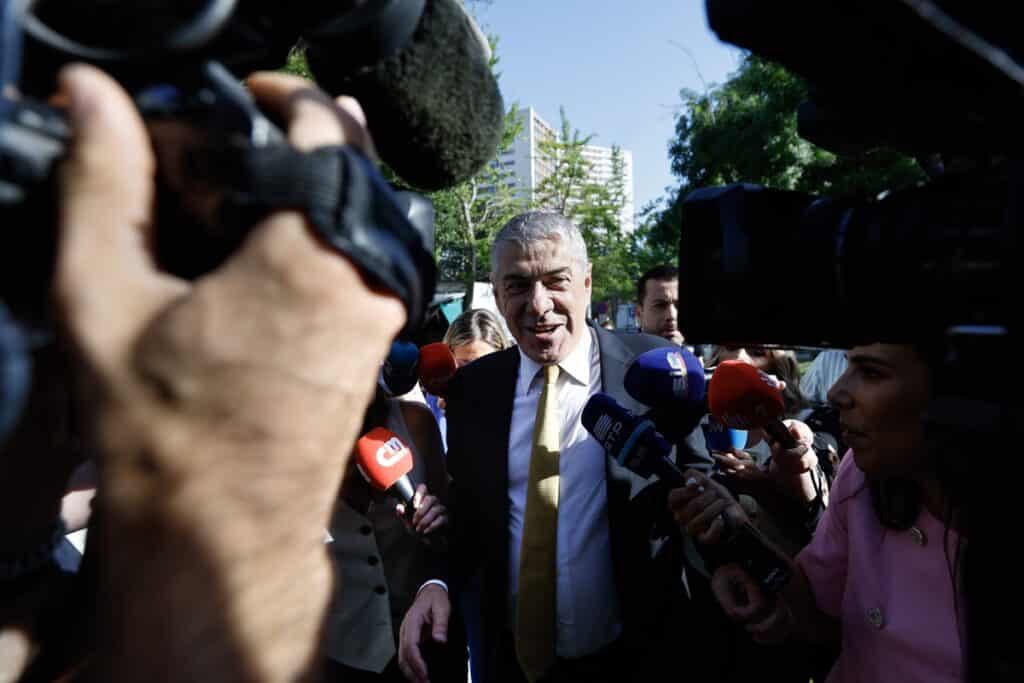
Arriving today, Mr Sócrates was full of criticism for the way things were being handled, as he has been since the outset.
Source material: Lusa/ SIC/