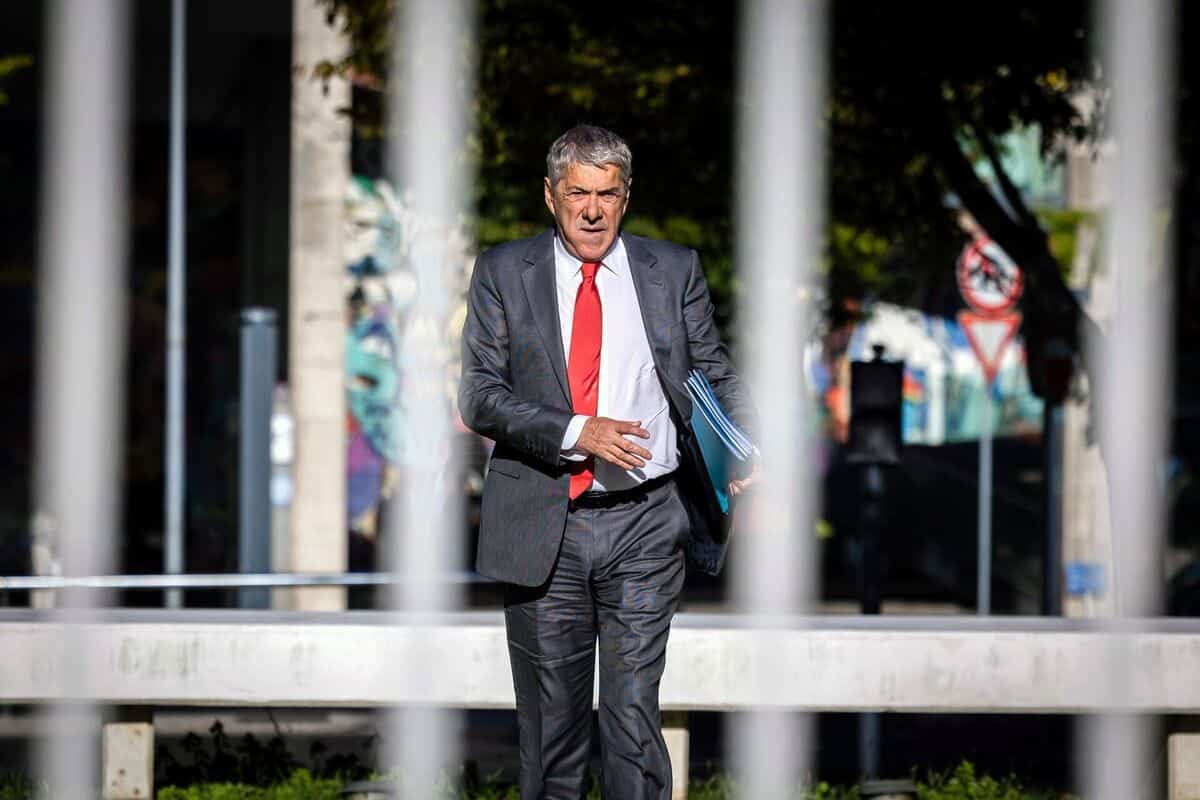
COMMENT: Former prime minister José Sócrates insisted in court today that he didn’t put “money in (his) pocket” by selecting the Lena group for a project to build social housing in Venezuela, starting in 2008.
“I didn’t put any money in my pocket. Don’t confuse my pockets, because we often judge others according to our own needs,” said the ex-PM in an excited tone (according to Lusa) when questioned by prosecutor Rómulo Mateus about the South American country’s public programmes for building houses.
His comment earned yet another warning from the president of the panel of judges hearing this bizarre and very ‘late to the table’ case, known as Operation Marquês.
Earlier, judge Susana Seca had prevented the public prosecutor from asking questions about the transfers under suspicion – pointing out that it had been agreed that this would be dealt with at a later point in the questioning of the former head of government (between 2005 and 2011).
On the morning of the seventh day of testimony, dedicated to requests for clarification on Lena, José Sócrates reiterated, when confronted with several “emails” between third parties, that he neither accompanied nor had any intervention in the group’s choice to build thousands of social housing units in Venezuela.
“What I see here is the diligent behaviour of a government whose political line was economic diplomacy,” he said, adding that there was “no favouritism” towards the Lena group.
José Sócrates countered that the “big project he was involved with” was the Magalhães computer, in which he recognised he had a hand and dealt with the then-Venezuelan president Hugo Chávez.
As anyone who was a parent in the days of the lavish Magalhães computer hand-out will remember, it was not the great education tool it was promoted as being – and it cost the country tens of millions of euros.
This trial, going on 14 years after Sócrates’ extraordinary arrest and time spent behind bars, is all the more bizarre for the context in which it is now playing out: the country has moved on so far that somehow returning to all this ancient history seems like going back to a kind of Dark Ages. Certainly, Mr Sócrates is ‘furious’ at the way he has been treated, and has been having verbal ‘contretemps’ with the lead judge Susana Seca all the way through.
After years of legal fighting (and appeals) the former PS leader is indicted on 22 counts, including three of corruption for allegedly receiving money to benefit the Lena group, the Espírito Santo Group (GES), and the Vale do Lobo development in the Algarve.
There are a total of 21 defendants in the case, who have generally denied committing the 117 economic and financial crimes they are accused of.
The trial has been taking place since July 3 at Lisbon’s Central Criminal Court. It is not clear how much longer it will be continuing (or if anyone, outside the media world, remembers what it is about.)
Correio da Manhã’s top reporter Tânia Laranjo however is someone with an excellent memory. She has written a column to say that “Sócrates is lying in court. He lies with the arrogance of someone who feels he is untouchable: the case that put him in jail and destroyed his dreams of becoming president of the Republic has taught him nothing. When he was asked if he had ever dined with (former BES president) Ricardo Salgado, he responded that he had not. But phone taps reveal the contrary – and Sócrates complains that he is being victimised, that his private life is being invaded.
“None of this would matter if we weren’t talking of millions of euros which belonged to us as a country and which ended up in the hands of his friends.
“The judge deserves applause for being able to keep her calm in front of Sócrates’ game. His strategy is clear: the former prime minister is seeking a confrontation to create yet another incident, a pretext to annul everything and start again with someone that suits him better…”
This last point being a reference to one of the judges that certainly did suit Mr Sócrates better, Judge Ivo Rosa, who basically dismantled the case, only to see it reinstated on appeal much later.
Source material: LUSA/ Correio da Manhã