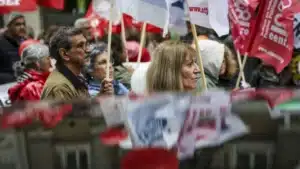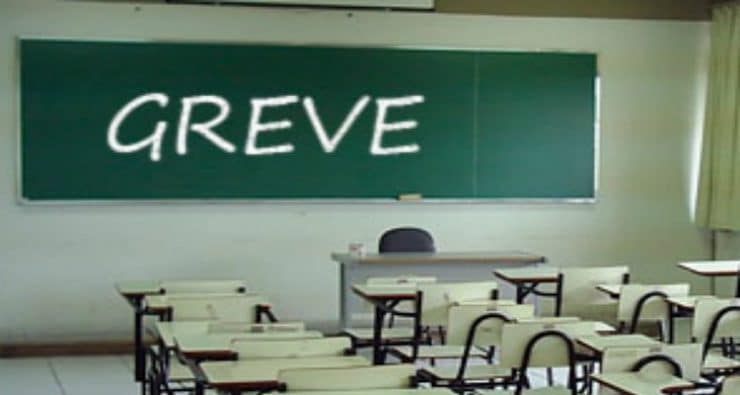
With a general strike looming in less than three weeks time, public sector workers will be getting into the ‘mood’ tomorrow with a one-day strike destined to ‘most affect’ the sectors of health and education.
Talking to Lusa, Mário Rui secretary general of FESINAP (the national federation of independent syndicates of public administration and alike) said the strike was a response to the government’s “Trabalho XXI” labour reforms, with the message that the federation wants their immediate withdrawal, an end to the ‘sindical discrimination practised by the executive’ and participation in all labour negotiations.
“This strike comes as a result of the labour package presented by the government to syndicates,” he said. “The way we see it, this package represents a regression of more than 20 years in labour legislation, a step backwards for the worker and future generations in that it brings a lot of inconsistency, doubts, everything that is bad for the labour market”.
The fact that FESINAP is essentially calling a strike for all the reasons that a general strike has been called for December 11 (and now it looks like December 12 will be added on) is not seen as milking the theme in any way. Mário Rui tells Lusa he sees tomorrow’s ‘paralysis’ as “a strong message for December 11, the day of the general strike, and for December 12 – because FESINAP has decided to schedule a strike for that day as well”.
It is also a wayfor the federation pushing to be properly recognised. As the secretary-general explains “we represent thousands of workers who are not part of the syndical structures that regularly meet with the government. I am referring to the UGT and CGTP (…) For years we have tried to dialogue with the government, but this has always preferred talks with the central syndicates” – something Mário Rui considers “antidemocratic and incomprehensible”.
In this way, the federation believes three days of strike action are so much better than one.
“We are expecting great constraints in practically all sectors”, said the union boss. “In schools, in the courts, in hospitals, Social Security services, etc.”
Mário Rui also stressed that the federation believes the government’s ‘reform’ leaves Portuguese workers “even poorer (financially) in relation to European colleagues” than they already are.
One chink of light is the fact that minimum services have been decreed for “all public institutions” tomorrow. What that actually means is what we will all be finding out.
Sources: Jornal de Notícias/ agencies