The start of the ‘holiday season’ – traditionally ‘kicked off’ by Easter (coming early this year, at the beginning of April) – has been marked by the ongoing war in the Middle East.
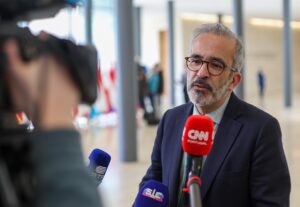
Americans are no longer Portugal’s No 1 market – and the number of Israelis visiting has also tailed off, Bernardo Trindade, President of AHP, the Portuguese hoteliers association, tells Lusa.
While these nationalities, and others, have been frantically cancelling holiday plans, Portugal is benefiting from a wave of reservations from holidaymakers who previously held bookings for Turkey, Cyprus and Egypt.
Nationally, at time of writing – and according to Expresso – occupancy for Easter is looking 5% down on figures for last year, but hotels are not despondent. A lot of business tends to come in the form of last minute reservations – and thus an eventual 5% increase is actually forecast.
Regionally, some areas are benefitting more than others.
Lisbon and Porto, for example, have seen a 10% fall in reservations compared to last year.
Trindade admits: “The war is already impacting bookings for Easter, and we are seeing contradictory movements. Right now, with the exception of Madeira, all national territories are with lower occupancy than last year, but that does not mean that things won’t pick up by the start of Easter, with last minute bookings.
Trindade’s advice for hotels ‘suffering’ a clear fall in prospective clients is “drop your prices”.
As for the coming months, Trindade is not making any predictions. “There is a series of factors that we cannot control, and which are not in themselves favourable to tourism”, he said – in what could be seen as one of the ‘quotes of the times’.
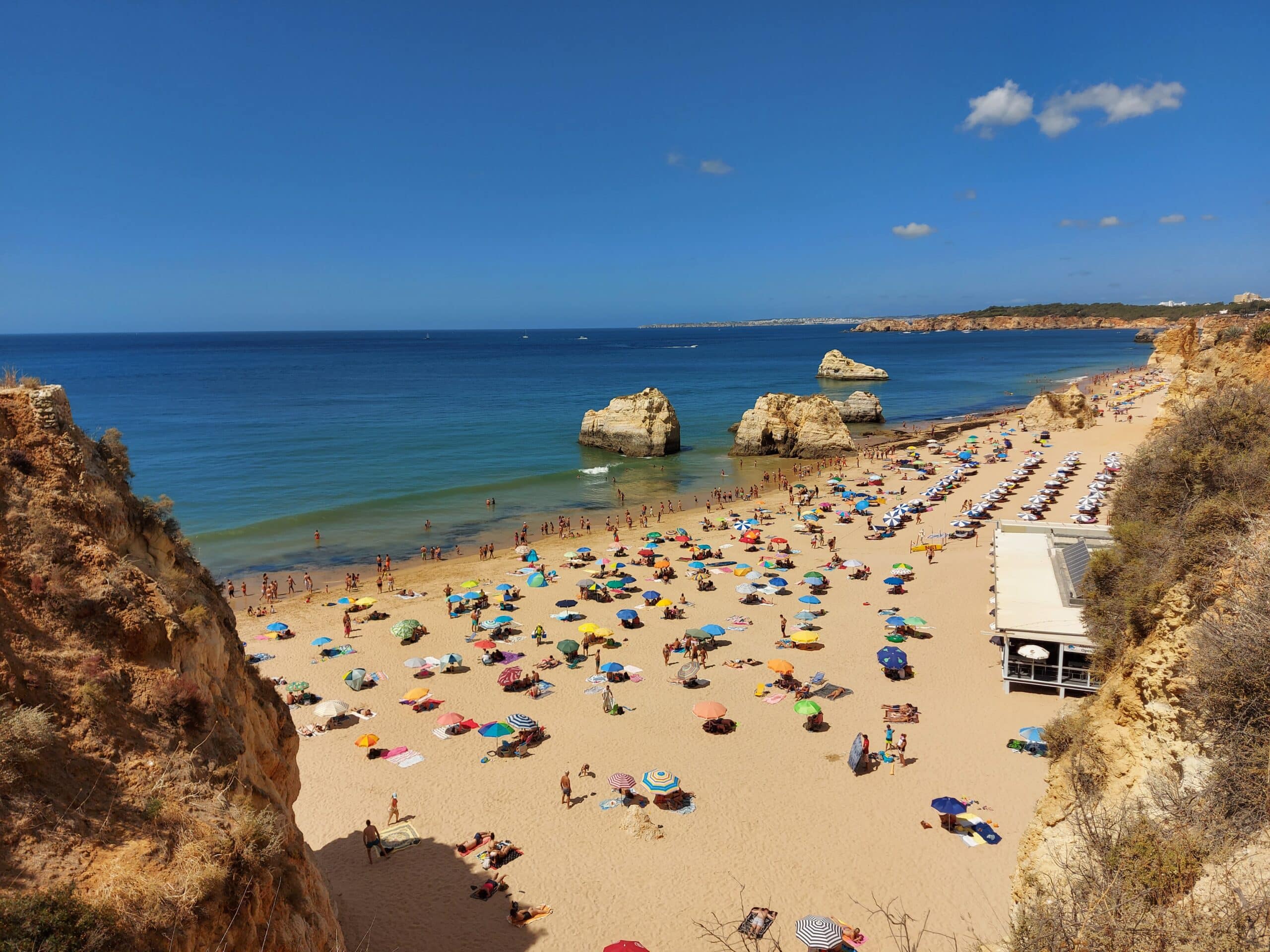
But within the ‘confusion’ and clear abnormality of the start of this 2026 holiday season is the Algarve. The region is seeing people who had planned to holiday ‘further east in Europe’ redirect their bookings to the westernmost tip. And with the expected arrival of Spanish tourists as well, the Algarve is looking like a very safe bet for an untroubled stay in what many see as ‘the perfect holiday destination’ at any point in time.
Hélder Martins, president of AHETA, the Algarve’s association of hoteliers, confirms Trindade’s view, telling Expresso that the season appeared to begin a bit slowly, “but now we are receiving many last minute reservations.” He said he is expecting the whole holiday season to be even better than last year” in terms of numbers. “We could reach a 5% improvement (on last year),” he considered. “Several hotels are already full. We are not alarmed…”
The picture is of incoming holidaymakers focusing on four and five-star hotels.
In line with the rising airline ticket prices, people coming will have to spend more to get here, meaning they may have less to spend on arrival, says Trindade – while Hélder Martins’ only real concern is how arrivals are processed through Faro Airport: the agony of ‘endless queues’ and bottlenecks being the antithesis of a magnet for tourism.
Religious tourism sees 1,200 cancellations from Asian countries
Bookings for Fátima, Portugal’s Catholic shrine, have been markedly affected by the war. President of the United Hotels of Portugal, Marto Pereiro, tells Expresso that arrivals from South Korea, China, the Philippines and other Asiatic countries have been cancelling by dint of travel constraints. As he explained, a lot of them were due to come in groups which had been booked to fly with Emirates or Qatar airlines, with stop-overs in the Middle East. With these airlines now essentially grounded, trips have had to be cancelled: a total of 1,200 overnight stays.
Fátima is hoping that business from Portuguese and Spanish markets will ‘save the day’, but hotels are already lowering prices to help this along.
Storm damaged centre hopes to continue with slow growth
Central areas that were devastated by the conveyor belt of depressions that marked the end of January/ beginning of February, are also positive about the coming season, believing increased visitor numbers is more than likely.
Rui Ventura, president of Turismo Centro de Portugal, stresses the “diversity” of the territories of the centre, that “combine culture, heritage, gastronomy, nature and authenticity”. This diversity, which includes landmarks like Serra da Estrela, the various ‘Aldeias do Xisto, Históricas de Portugal and de Montanha’ as well as urban centres like Coimbra, Aveiro, Guarda, Castelo Branco,”gives us greater resilience”.
The Alentejo, too, is hoping for occupations above 70% for Easter, in line with last year.
President of regional tourism, Rui Ventura, explains that the Alentejo generally receives more last minute bookings even than the Algarve – “and if the weather is good, Comporta will fill up”.
Expectations are that the region will attract more Portuguese and more Spanish than last year – and here, at least, the number of cancellations from north Americans has been minimal. Chinese and Japanese bookings have fallen back, admits Ventura, but they were always “residual”.
The only ‘unknown’ for the Alentejo appears to be the effect on tourism of fuel price increases: “The Alentejo is not just a Class A destination, it receives a lot of people with lifestyles that are less impacted by the economic conjuncture”, considers Ventura. So, “let’s see how things go…”
And as we wrote in a previous article, Portuguese holidaymakers are still booking holidays abroad, albeit they have had to reconsider destinations, etc.
Bottom line: Easter should be a good one, and everyone has their fingers crossed for the rest of the season.
Source: Expresso