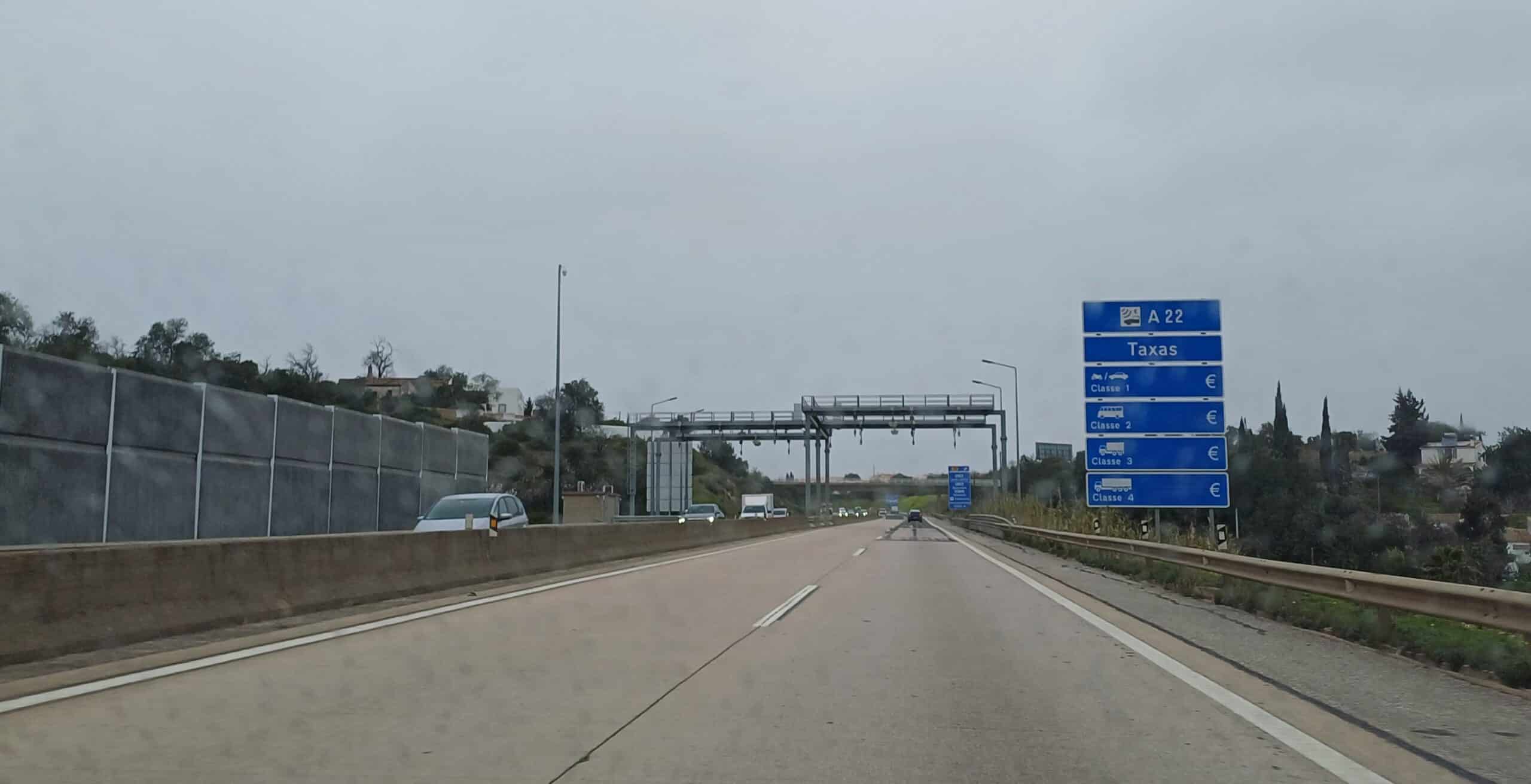
Global infrastructure manager Igneo has agreed to acquire 100% of the concession for the Via do Infante (A22) — the Algarve motorway linking Lagos to Castro Marim — which is valid until May 2030.
The deal comes at a time when the motorway has been toll-free since January 1, 2025, following the approval of Law nº 37/2024, which abolished tolls on former SCUT motorways without equivalent alternatives. Since then, daily traffic on the A22 has surged by almost 30%, with more than 4,000 additional vehicles compared with the same period last year. The change has also helped ease congestion on the busy EN125, once known as “Portugal’s most dangerous road”.
The acquisition does not mean tolls will be reinstated. Under the existing concession contract, Igneo is responsible only for the operation, management and maintenance of the motorway until 2030. For tolls to return, it would require a new political decision and a fresh contractual agreement with the State – a process that cannot happen automatically as part of this transaction.
In the same operation, the company is also buying Autoestradas do Norte Litoral (AENL), concessionaire of the A28 and A27 covering 113 kilometres between Porto and Caminha, whose concession contract ends in September 2031.
This move follows last year’s purchase of Autoestradas do Douro Litoral (AEDL) from Strategic Value Partners. With the three concessions together, Igneo will control 322 kilometres of motorways, making it the third largest toll road operator in Portugal.
Hamish Lea-Wilson, Partner and Head of Europe at Igneo, said: “The complementary acquisition of AAVI (Via do Infante concession) and AENL is fully aligned with Igneo’s strategy of acquiring high-quality, stable infrastructure assets in the mid-market.”
He added: “We have invested in Portugal for the last 10 years and continue to believe in the country’s prospects, with transport being a key area of investment for Igneo.”
Maria Luisa Castro, the company’s managing director, described the deal as “a synergistic and value-generating acquisition,” stressing that the networks “are critical transport links with a long operating history and stable concession structures.”
The deal is expected to close in the last quarter of 2025, subject to approval from Portugal’s Competition Authority and other regulators.