“Consensus on Immigration” says reunification “in country’s strategic interest”
The “Consensus on Immigration” working group – which includes all former high commissioners for migration – has poked something of a spanner into the works of the government’s approach to family reunification for immigrants negotiating the process of obtaining Portuguese nationality.
In a statement released today, the group has said that family reunification is in fact in the country’s “strategic interest”.
“Family reunification promotes security and well-being. It is a solution. The benefits of family reunification far outweigh the challenges it poses.” .
In short, family reunification is “a measure that benefits immigrants, strengthens communities and serves Portugal’s strategic interests, as well as responding to the protection of human rights as a fundamental principle of the democratic regime.”
As Lusa explains, the government has imposed a two-year period after obtaining a valid residence visa for dependent minors to apply for family reunification, which in practice postpones the wave of applications related to recent immigration.
“In a country facing demographic vitality, labour force growth and social rejuvenation, immigration policies based on dignity, family ties, integration and inclusion are fundamental to long-term sustainability,” the working group considers, stressing that “strengthening family reunification” combats social fragmentation and prepares a more cohesive, fair and supportive future for all who live here.
Thus, the group recommends “allocating specific resources to AIMA [Agency for Integration, Migration and Asylum] to streamline and humanise family reunification processes, combined with access to integration and inclusion measures for all members of households, according to their needs”.
“Reunited families contribute to greater emotional stability, commitment to work, school success for their children and civic participation, with concrete benefits for the host society” and keeping families together promotes social inclusion, formal work and intergenerational integration, with significant human, economic and social advantages, the statement continues.
Citing official data, the authors note that “the lengthiness of processes (in Portugal) undermines the objectives of integration and inclusion, and fuels frustration, distress and institutional mistrust, which can contribute to the choice of irregular migration flows, with greater risks for the migrants themselves and the Portuguese state.”
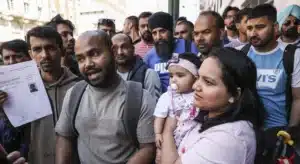
Given Portugal’s “sharp demographic decline – which today makes it one of the oldest countries in the world – the possibility of welcoming families with children, and/ or families of childbearing age who have children into the country, represents an immediate positive contribution to the country’s demographics.”
Created in mid-June, this working group includes four former high commissioners, former Secretary of State Catarina Marcelino, researchers Lucinda Fonseca and Catarina Reis Oliveira, and association leaders Eugénia Quaresma and Paulo Mendes.
Reading between the lines, the group has opened the way to reducing the number of family members eligible to be included in ‘family reunification’. Instead of the selection of relatives currently mentioned by the law, it has narrowed the field down to “spouses, ascendants, dependents and family members in situations of recognised vulnerability”.
Still, fears have been fanned that even this smaller selection could bring more foreigners into Portugal than basic services could handle.
Source material: LUSA