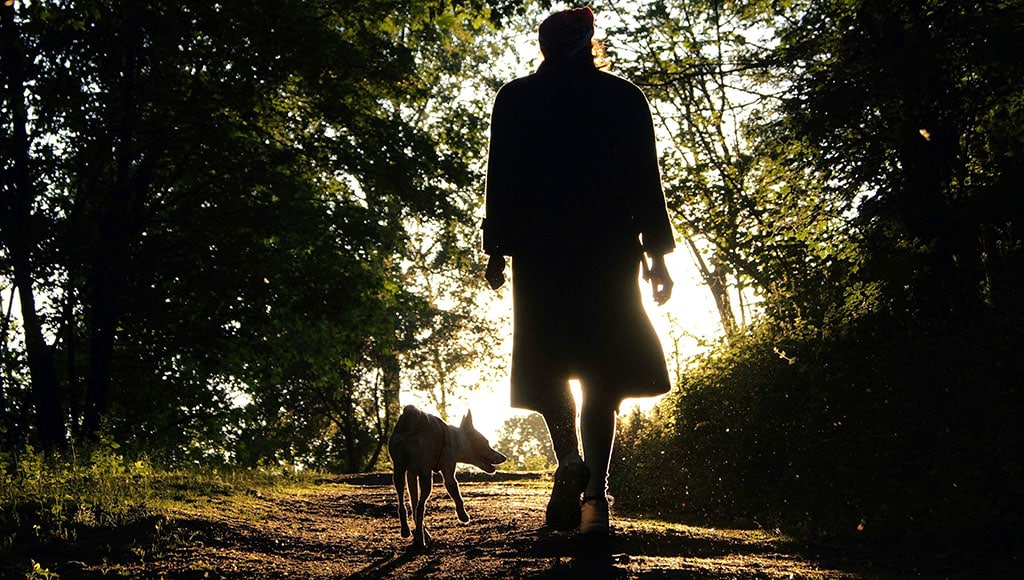
This time of year has a way of doing that. The light is still thin, the ground wet underfoot, and the new year already feels like a distant land — briefly glimpsed, now far away. Many people notice a rise in anxiety around now. Not always sharp or dramatic. More a low hum in the background of daily life. A sense that life hasn’t shifted in the way they’d hoped, that the world feels no safer or more settled than it did a few months ago.
People often ask, ‘What’s wrong with me?’
They assume this feeling must mean something — that they’ve failed to be optimistic enough, disciplined enough, resilient enough.
But when I listen carefully, what I hear isn’t failure. It’s sadness. Ordinary, human sadness. The kind that turns up when the future feels uncertain and there’s no clear story to make sense of things.
We don’t tolerate sadness very well. We’ve learned to see it as something that needs fixing, reframing, pushing away. We distract ourselves, insist on positivity, tell ourselves to be grateful. And when that doesn’t work, we tend to turn on ourselves.
Here’s the part that matters: ‘it’s not your fault.’
Your nervous system didn’t choose the season. You didn’t invent the political climate. You didn’t decide that the world would feel brittle or that the news would be relentless. Many of our emotional responses are shaped by earlier experiences — by loss, by what was missing as much as by what happened, by how safe or unsafe we learned the world could be.
Early trauma is not your fault. The consequences that often follow are not your fault either: the anger that surfaces too quickly, the mistakes you replay, the relationships that didn’t survive, the sense of having lived parts of your life in ways that now feel constrained or unfinished. None of this is a personal failing. It’s not your fault. These are adaptations — intelligent ones — shaped by what you had to manage at the time.
Understanding this doesn’t suddenly make life easier. But it does loosen the grip of shame. And shame is often what keeps people stuck.
And still — and this is where it can feel uncomfortable — it is your responsibility.
Responsibility isn’t blame. It doesn’t mean you caused your pain or chose your patterns. It simply means that, unfair as it may feel, you are the one who has to live inside your own mind. You are the one who has to decide how you meet what’s here, rather than waiting for things to improve.
The philosopher Epictetus put it plainly: “It’s not what happens to you, but how you react to it that matters.” That line is often misunderstood, sometimes misused, but at its core is a simple truth: we don’t get to choose the conditions of our lives, but we do have some say in how we respond to them.
What keeps many people suffering is not sadness itself, but the fight against it. The pressure to feel better. The belief that happiness is something you should be able to generate if you just try hard enough. That pressure usually creates more anxiety, not less.
Two things can be true at the same time. You can acknowledge how hard things feel without turning that into a verdict on your life. You can feel sad and still function. Happy and sad at once. Broken in places and still very much together. Anxious and capable. Disappointed and moving forward anyway. This isn’t positive thinking. It’s psychological flexibility. And it matters.
When we insist on being only one thing at a time — strong or weak, coping or failing, hopeful or lost — we tend to suffer more. Life is rarely that neat.
The psychiatrist and existential psychotherapist Irvin Yalom writes that “the major life task for each of us is to fashion a life that is meaningful enough to withstand the pain of existence.” Not eliminate it. Not rise above it. Withstand it.
If guidance helps, there are three small ways we can often begin to shift our relationship with this time of year.
First: allow two things to be true.
Notice when your mind insists on either/or. Either I’m fine or I’m not. Either I’m coping or I’m failing. Most human experience lives somewhere in the middle.
Second: use the word “sometimes”.
‘I feel anxious’ becomes ‘I feel anxious sometimes’.
‘I always mess things up’ becomes ‘I sometimes make mistakes’.
The word “sometimes” creates space. It stops a feeling from hardening into an identity or a life sentence.
Third: remind yourself — deliberately — that it’s not your fault.
Not as an excuse. Not as a way of avoiding responsibility. But as a way of meeting yourself without attack. Kindness here isn’t indulgence. It’s grounding.
There’s a line often attributed to Anne Lamott: “Almost everything will work again if you unplug it for a few minutes — including you.” It’s funny because it’s true. And because most of us resist doing exactly that. We underestimate how settling it can be to stop arguing with our own feelings. To let sadness be present without treating it as an emergency.
I did eventually spot the almond blossom that morning. Pale, tentative, easy to miss. It didn’t change the sky. It didn’t solve anything. But it was there.
You don’t need to feel happy right now. You don’t need to feel hopeful. You don’t need to have worked it all out. You just need to stay in the room with your life — and take responsibility not for how you feel, but for how you meet it. That may not sound comforting. But it’s often where something honest begins.
Also read Farah Naz’s last month’s article: No heroes. No gurus. Only citizens – Influence is never individual