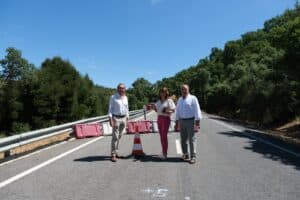
José Apolinário has been re-elected president of the Algarve’s Regional Coordination and Development Commission (CCDR Algarve), securing 75.91% of the votes in an indirect election held on Monday, January 12.
The vote involved 469 of the region’s 500 eligible local representatives, in line with the law governing the CCDRs. According to provisional results, Apolinário received 356 votes in favour, alongside 86 blank ballots (18.34%) and 27 null votes (5.76%).
As part of the same electoral process, Jorge Botelho, currently a member of parliament, was elected vice-president of CCDR Algarve. His appointment was made exclusively by the region’s mayors. The election of a second vice-president, to be chosen by non-mayor members of the regional council, has yet to be scheduled.
Reacting to the result, Apolinário said the outcome was “not just a personal” achievement, “but a collective” one, thanking the leadership team that has worked with him over recent years. He highlighted the contribution of vice-presidents José Pacheco, Elsa Cordeiro and Pedro Monteiro, as well as Aquiles Marreiros, executive board member of the Algarve 2030 regional programme.
He said CCDR Algarve is now “a more prepared, more coordinated and more territory-focused institution”, stressing that cooperation across party lines remains essential to defending the Algarve’s strategic interests at national and European level.
A law graduate, José Apolinário has held a wide range of public roles, including secretary of state for fisheries, mayor and municipal assembly president of Faro, member of the Portuguese and European parliaments, and head of Docapesca, Portugal’s fishing authority. He has also been awarded the Gold Medal of both Faro and Olhão municipalities.
Earlier this month, he announced some of his biggest priorities for this new term at the helm of CCDR Algarve, including plans to connect the Algarve by rail to Spain and extend the A22 motorway to Vila do Bispo.
In Portugal, the president of a CCDR is not elected by the public but through an indirect election designed to give local authorities a formal role in regional governance. This system was introduced to strengthen the democratic legitimacy of CCDRs while maintaining their status as state bodies that coordinate public policy at regional level.
The election is carried out by a broad electoral college made up of local elected officials from the region. This includes mayors, presidents of municipal assemblies and representatives of parish councils, resulting in several hundred voters in each region.