Portugal already European country with highest concentration of PCC militants
Portugal is already the European country with the highest concentration of militants of PCC (Primeiro Comando Capital) – the largest and most violent criminal organisation in South America.
According to an investigation carried out by the São Paulo Public Prosecutor’s Office, worldwide only Paraguay, Venezuela, Bolivia and Uruguay surpass Portugal’s numbers of resident PCC militants “whose leader has infiltrated the country and makes prisons a recruiting ground”
PCC particularly uses Portuguese ports as a gateway for drugs to Europe, explains Jornal de Notícias.
Authorities have already identified 87 gang members living in Portugal – among these, 29 are “infiltrated in prisons”.
Right now, PCC is thought to have around 40,000 militants spread across 28 countries.
According to the Brazilian investigation outlined in Portugal last week, there were over only 2000 PCC members spread around the world at the end of 2023 – the year in which the number of members in Portugal ‘more than doubled’. Now there are thought to be at least 40,000 spead over 28 countries.
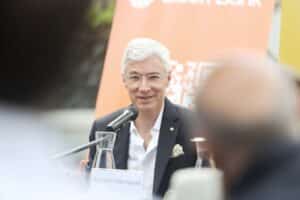
São Paulo prosecutor Lincoln Gakiya, who coordinates a group to combat organised crime, has drawn what Portugal’s leading tabloid, Correio da Manhã, describes as “an alarming picture of the mafia network’s presence” in this country.
PCC has apparently established a complete hierarchical structure, including a person in charge of weapons and a liaison with members held in Portuguese prisons.
This presence indicates that the PCC not only intends to expand in Europe, but also to establish itself definitively in drug trafficking here – an operation that the organisation code-names ‘Sintonia do Progresso’, says Gakiya, warning that the main danger posed by PCC lies in its origins and prison methodology.
“It is in the prisons that (PCC) has the power of organisation, and ideology – a very rigid discipline that spreads very easily in the prison system,” he told the paper.
Roberto Uchôa, an expert in organised crime and a member of the Brazilian Public Security Forum, also identifies Portugal as having ‘significant strategic importance’ in PCC’s expansion plan.
Interviewed this week by Jornal de Notícias, he said that the Portuguese harbours – Sines, Leixões and Lisbon are attractive logistical routes for cocaine trafficking from South America. PCC uses these ports as its main gateway to Europe, using “generous bribes to port officials to smuggle tonnes of cocaine into the continent” (viz the recent police swoop on ports and the number of officials rounded up).
The shared Portuguese language and strong cultural links between Brazil and Portugal make it easier for PCC members to infiltrate, allowing them to ‘go more unnoticed than in other European countries’, Uchôa added. In addition, Portugal acts as a ‘drug distribution hub for the rest of Europe’.
Unlike its ostentatious violence displayed in Brazil, PCC’s presence in Portugal manifests itself through ‘discreet logistics, trafficking and money laundering operations’, Uchôa continued, making detection more complex for the authorities.
With an estimated annual turnover of €155.8 million euros, PCC represents a growing challenge for police and is ‘a direct threat to the sovereignty and security of the state’, the expert concluded.
Source material via Jornal de Notícias/ Correio da Manhã