Loulé is preparing to host one of its most important annual events this weekend with the return of the Festa da Mãe Soberana.
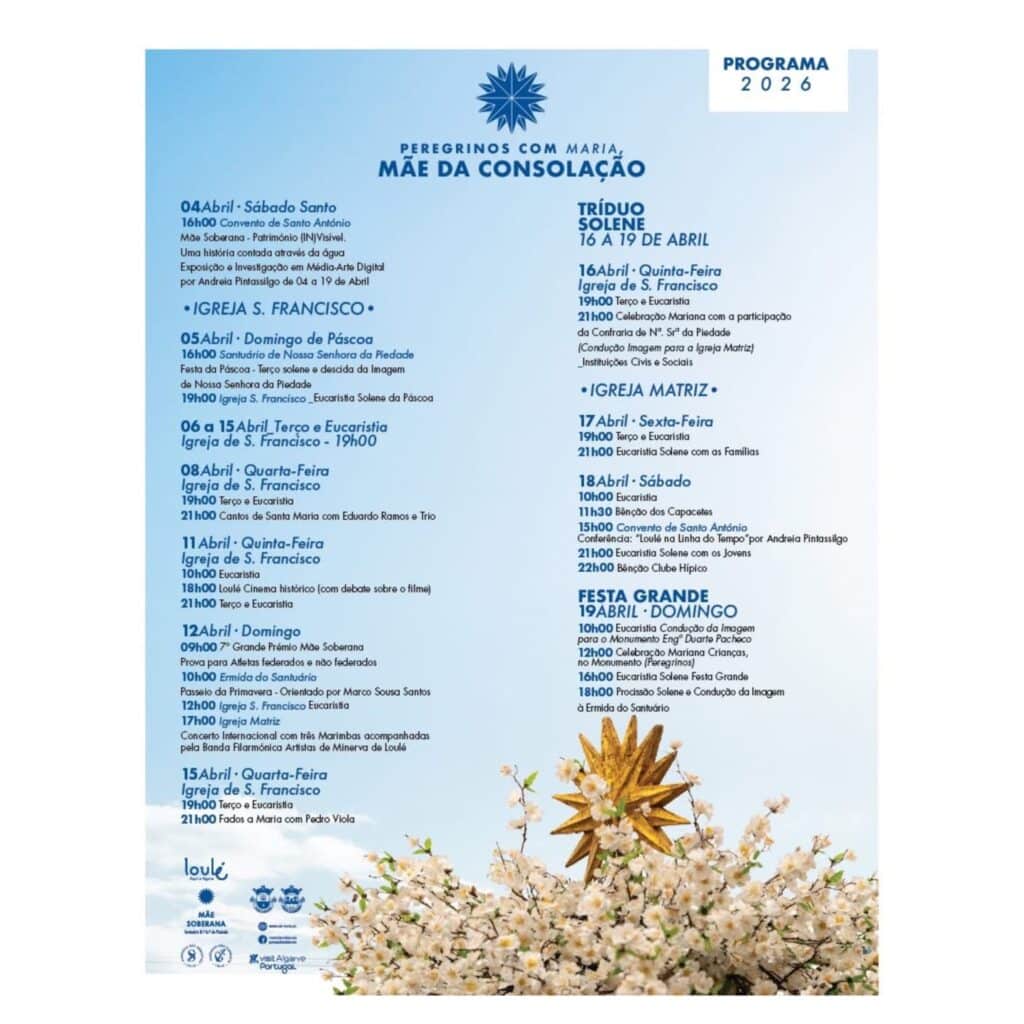
The festivities begin this Sunday, April 5, with the traditional Festa Pequena (Little Party), and come to an end on Sunday, April 19, with the Festa Grande (Big Party).
Widely regarded as the “largest expression of religious devotion south of Fátima,” the celebration draws thousands of people each year, combining centuries-old traditions with a busy cultural programme.
The opening highlight takes place this Easter Sunday at 5pm, when the image of Nossa Senhora da Piedade is carried during a procession from her hilltop sanctuary down into the city centre.
The procession ends at the Church of São Francisco, where the statue will remain until April 16, before moving on to the main church.
This moment is seen as a symbol of closeness between the patron saint and the community, the local council says, giving residents and visitors a chance to pay their respects in a more intimate setting ahead of the larger celebrations still to come.
In the days between the Festa Pequena and the Festa Grande, scheduled for April 19, the programme expands to include cultural and sporting activities across the city. Among the highlights is the 7th Grande Prémio Mãe Soberana, open to both professional and amateur runners.
An exhibition titled “Mãe Soberana – Património (In)Visível”, by Andreia Pintassilgo, is also on display at the Convento de Santo António, exploring the history and social impact of the tradition.
Music is part of the programme too. On April 12 at 5pm, the Igreja Matriz church will host an international concert featuring three marimbas alongside the Banda Filarmónica Artistas de Minerva de Loulé.
Religious ceremonies continue throughout the period, with daily masses, prayers and rosary recitals attracting worshippers from across the Algarve and beyond.
The eve of the Festa Grande includes traditional blessings, from motorcyclists’ helmets in the morning to a local equestrian club later in the day.
Organisers say the event is not only about religion, but also about community identity and cultural heritage.