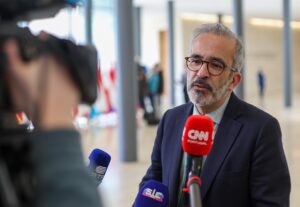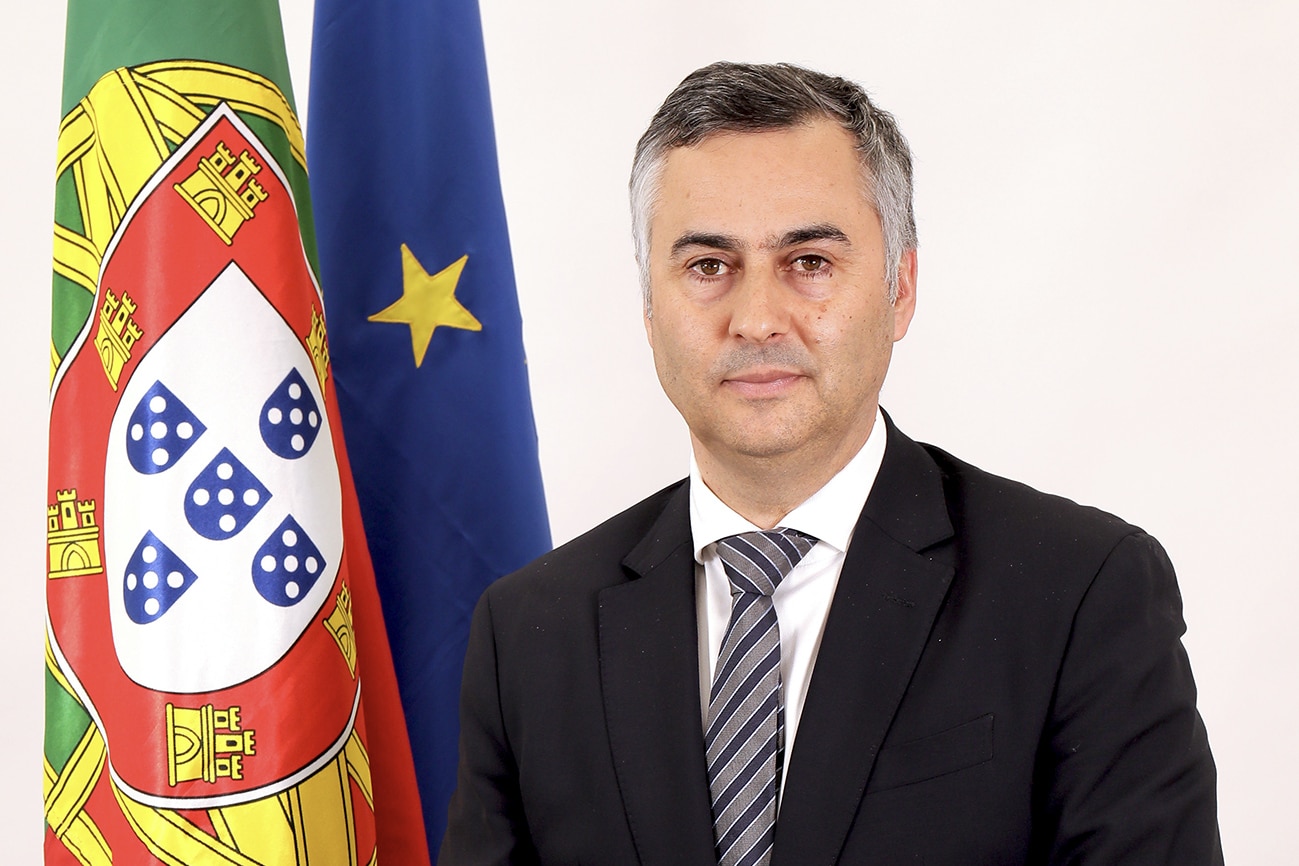
Portugal’s Minister of Education has rejected accusations that he blamed disadvantaged students for the deterioration of university residences, calling the claims “completely false.”
“That is completely false. What I said was that when I have a public service that is only used by people who have no voice, who are on lower incomes, for management reasons, the service deteriorates,” Fernando Alexandre told RTP Notícias, just hours after his remarks caused a wave of outrage among left-wing parties.
According to the minister, his intention was to argue that public residences should be occupied by students from a mix of social backgrounds. He said that when public services are used only by those with fewer resources or less influence, they risk being neglected and suffer from poor management. He added that residences have faced deterioration in recent decades mainly due to management issues.
The statements at the centre of the controversy were made on Tuesday during the ceremony to present the new social action model for higher education, held at the Teatro Thalia in Lisbon.
“Academic residences in Portugal should not be places for the poorest students, for students with the lowest incomes – which is what they are. They are spaces that do not promote any of what has been discussed here. We want residences to be spaces of integration, spaces of well-being — that’s the word we always use,” said the minister.
In order to contribute to students’ academic success, these spaces “must lose the stigma of being shelters for low-income students,” and instead accommodate students from all social strata – something he said is essential for “social mobility.”
“That is why I am a strong defender of public school. If there is something that is important for social mobility and for democracy, it is the mixing of social strata. And what we do in higher education is not mix: we place in university residences students from the most disadvantaged socio-economic backgrounds,” he said.
The minister then stated that it is precisely because this mix does not happen that residences “become degraded” and “are not cared for.”
“Because when we put people who are basically all from lower-income backgrounds to benefit from a public service, we know that this public service deteriorates. It is like that in hospitals, it is like that in public schools – we know it is like that. And therefore, what we see in residences – and I hope I am wrong, but it will probably continue to happen – is that we will have residences completely renovated which, five years from now, will begin to deteriorate. I hope not, but it will take a very big effort at reinvention from the managers of social services, universities and polytechnics. Because that element which truly makes the difference – which is having different socio-economic strata benefiting from a public service – will not exist here,” he added.
His statements were immediately interpreted as an attack on poorer students, who left-wing MPs believed were being blamed for the deterioration of university residences.
Eurico Brilhante Dias, the parliamentary leader of the Socialist Party (PS), urged the minister to rectify his “prejudiced and discriminatory statements”, adding that if he failed to do so, he would no longer have the conditions to remain in the government.
The Portuguese Communist Party (PCP) also announced that it will request an urgent hearing with the Minister of Education in parliament, while Livre condemned the “stigmatising” statements made by Alexandre.
Paula Santos from PCP described these statements as “serious” and “unacceptable” and considered that they “should embarrass” the minister and the government.
For the communists, the government’s “mask has slipped”, revealing that it considers “education to be only for some”.
Livre MP Patrícia Gonçalves also considered Fernando Alexandre’s statements to be “stigmatising” and “serious”.
“We believe that everyone should use public services; there should be no charity public services for those who can least afford them, and public services of excellence or luxury for those who have the most. Our view is that this is wrong,” she argued.
Gonçalves expressed concern about the minister’s statements, emphasising that he has “increased responsibilities” when it comes to the education of young people and challenged him to explain himself or “accept the consequences”.
The spokesperson and sole member of parliament for the PAN, Inês Sousa Real, also joined in the criticism, considering that these statements “are more than regrettable”.
“It is indeed out of touch with the reality that students face in their daily lives, it is somehow governing for a bubble and for a student elite that does not correspond to the difficulties and reality of Portuguese students,” she accused.
The MP said she hoped the government would not “shelve” the social responses needed to help displaced students.