Questions over ‘omission’ of chapter from internal security report explained
Portugal’s two main security observatories said today that the police operation against an armed far-right militia – apparently plotting to invade parliament – justified focusing the 2024 Annual Internal Security Report (RASI) on groups other than the far-right.
Speaking to Lusa, Francisco Rodrigues, president of the Observatory for Security, Organised Crime and Terrorism (OSCOT), stressed that omitting the chapter on extremism was “understandable” because “investigations were ongoing”.
In the preliminary version of RASI, Portuguese authorities did not classify any far-right organisation as terrorist, despite the fact that one chapter of an organisation that other countries classify as terrorist has been identified as active in this country.
Without specifying which organisation is in question, the preliminary version of RASI pointed to the existence of this branch (since outed by Expresso as B&H (standing for Blood & Honour), saying that several countries have imposed financial sanctions on B&H for the financing of terrorism.
Francisco Rodrigues explains, “I believe that indications that could hinder ongoing investigations should remain confidential and not be passed on to the general public.”
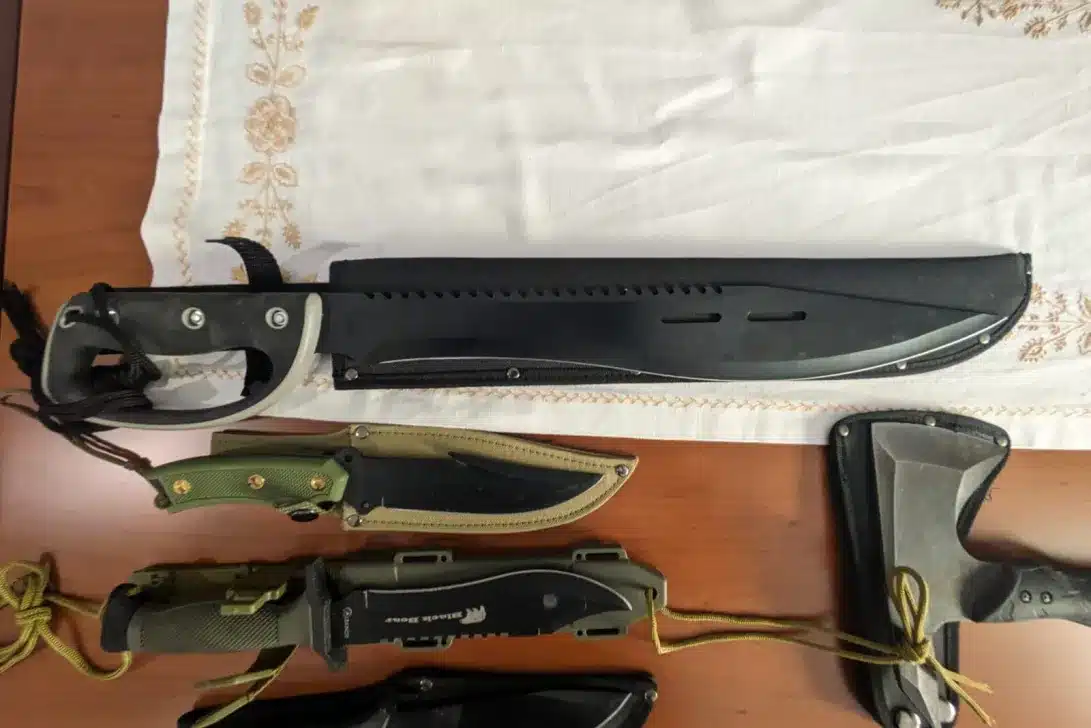
Earlier this month, PJ Judicial Police announced that they had dismantled a far-right armed militia, constituting the largest operation of its kind ever in Portugal, with hundreds of rounds of ammunition, military weapons and explosives seized.
“The quality and diversity of what we seized was surprising,” Manuela Santos, director of the National Counter-Terrorism Unit (UNCT) told a press conference.
Movimento Armilar Lusitano (acronym MAL) was arming itself, “recruiting people and carrying out actions,” said Santos, stressing that the seized material “has an origin, and everything is still open in that regard,” with “new lines of investigation.”
Authorities detained six people in the initial raid – including a PSP division chief assigned to Lisbon Municipal Police. Others taken into custody are said to be linked to private security groups.
Luís Fernandes, president of the Internal Security Observatory (OSI), tells Lusa that he thinks “it is more than evident today that removing the chapter was necessary to avoid drawing attention to the investigations that were underway at the time.”
“When we identify everything happening in RASI, anyone breaking the law and realising they are under investigation will obviously stop and cease their illegal activities,” he added. Therefore, “publication at that time made no sense.”
Parliament is to discuss the 2024 RASI today.
Source material: LUSA