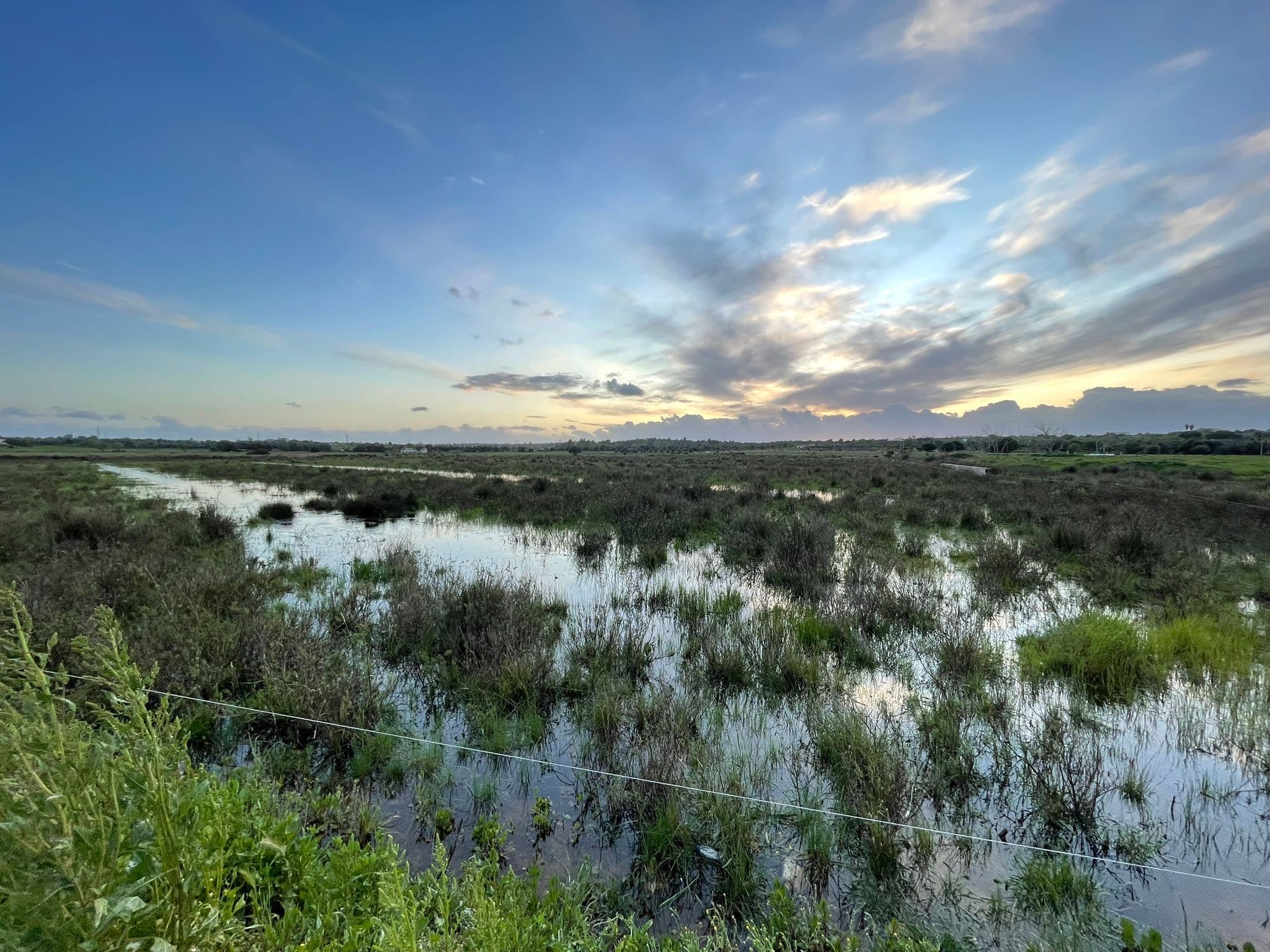
Portugal’s parliament has approved initiatives from Chega, PAN and Livre recommending that the government adopt measures to protect the Alagoas Brancas wetland in the municipality of Lagoa.
The proposals were approved during a plenary session on Friday, March 6, and call for steps to safeguard the ecologically sensitive area.
Chega’s draft resolution, approved with abstentions from the ruling Social Democratic Party (PSD), Liberal Initiative (IL) and the Portuguese Communist Party (PCP), recommends the government ensure the “effective safeguarding” of Alagoas Brancas and consider its possible classification as a protected area.
However, draft resolutions presented by the Socialist Party (PS) and the Left Bloc (BE) on safeguarding the ecosystem were rejected by parliament.
According to Chega MP Sandra Ribeiro, the wetland – covering around six hectares – is home to “more than 300 recorded species of fauna and flora, including rare and threatened species” in Portugal.
The sponsors of the proposal also stressed “the need for concrete measures that effectively and permanently ensure the protection, conservation and ecological improvement” of the ecosystem.
Chega’s parliamentary group further recommends that public funding allocated through the Environmental Fund “translate into concrete results in terms of protection and enhancement”, ensuring that ecological protection goals for the site are met.
A separate resolution from the People–Animals–Nature Party (PAN) was also approved by a majority of MPs, despite opposition from the PSD and the CDS–People’s Party (CDS-PP) and an abstention from IL.
PAN’s proposal calls for the preparation and implementation of a management and ecological restoration plan for the wetland, including measures to adapt to climate change.
PAN’s sole MP, Inês de Sousa Real, argued that the area should be officially classified as protected so that it can “finally move from being a threatened territory to an example of nature conservation in an urban environment.”
Meanwhile, the proposal from Livre – also approved by a majority – recommends that the government “ensure a technical project” involving civil society organisations, environmental groups and the local community.
The resolutions will now move to the parliament’s Environment and Energy Committee for detailed discussion.
Activists welcome decision but criticise municipality
Following the parliamentary vote, citizens’ movement Salvar as Alagoas Brancas (Save Alagoas Brancas) welcomed what it described as widespread recognition of the wetland’s ecological importance.
In a statement, the group said “all the parties that intervened recognised the importance of the Alagoas Brancas ecosystem and highlighted the natural values at stake.”
The activists said the recommendations contained in the resolutions from Livre, Chega and PAN represent “a source of hope” for the protection of the wetland and should now be communicated to local and regional authorities involved in the process.
However, the movement criticised the municipal council of Lagoa, arguing that it “has not fulfilled its role” in protecting and enhancing the area. According to the activists, the promised renaturalisation of the site “should already” have been carried out and served as “an example that fills us with pride and inspires the rest of the country.”
Environmental campaigners also rejected the term “Biopark of Alagoas Brancas,” recently used by Lagoa mayor Luís Encarnação, arguing that the priority should instead be the classification of the site as a Local Nature Reserve, where proper territorial management instruments can be applied, just like in other environmentally sensitive areas in the Algarve.
“A biopark could be anything, from a water park to a picnic park, and the examples known in Portugal are not the best in terms of nature protection,” they argued.
The movement said it will continue to campaign for the protection of the wetland and for the creation of a monitoring committee involving experts, technicians and members of environmental NGOs.
The Resident has contacted Lagoa council for comment.
Meanwhile, Socialist MP Luís Graça lamented that PSD had broken the “unanimity” that previously existed among political forces regarding the protection of the wetland, after the party voted against the PS recommendation to create a Local Nature Reserve.
Lighting criticised
The citizens’ movement also shared a photograph taken at the site on Friday night showing floodlights illuminating the wetland.
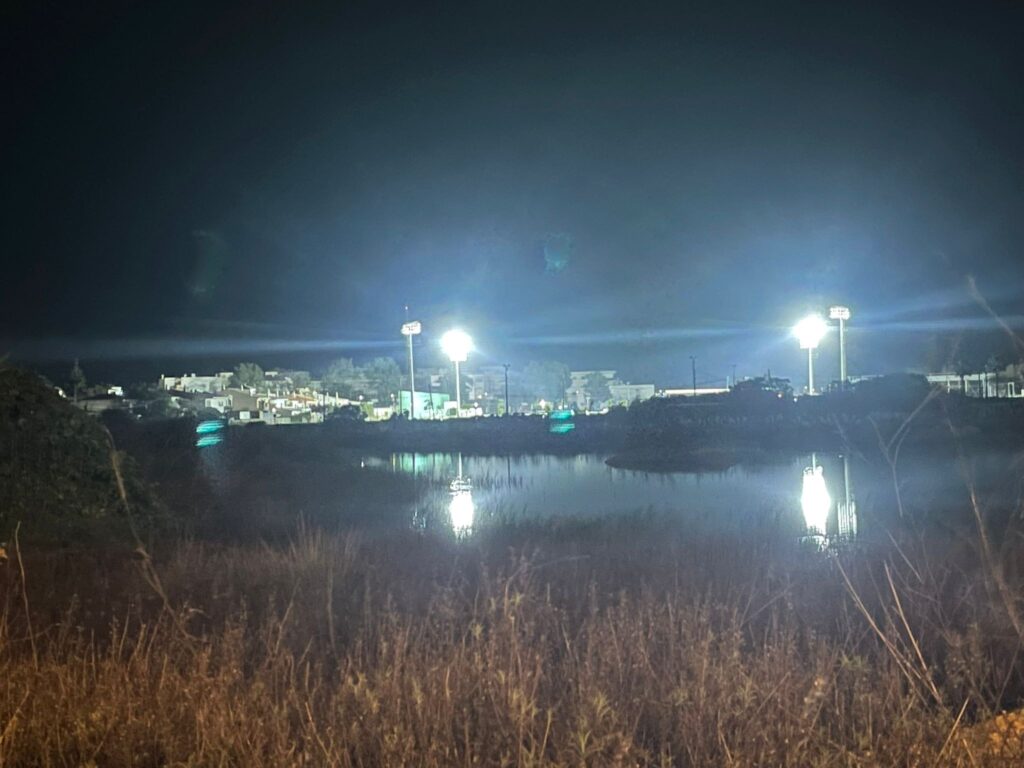
According to the group, the lighting was installed by the local council in 2024 at a nearby football pitch, after the municipality signed a protocol with the government and after it had received €3.7 million from the state’s Environmental Fund to acquire the land with a commitment to renaturalise the area.
The activists say the municipality was also expected to spend €760,000 on preparing a technical project and developing an environmental park but claim that these actions have not yet been carried out and are not mentioned in the 2026 municipal budget.
The group argues that the lighting may affect wildlife, particularly during the current breeding and nesting season for birds.
“How are animals supposed to rest, reproduce and nest under these conditions?” the activists asked.
Ecological importance
Alagoas Brancas is a freshwater wetland located above an alluvial aquifer and is home to around 300 recorded species of fauna and flora, including 146 species of birds.
The area also functions as a natural rainwater retention basin, helping protect the city of Lagoa from flooding.
The ecosystem is part of Portugal’s National Ecological Reserve (REN) and was under the threat of destruction for many years due to a commercial development which was moving forward before citizens stepped in to halt the process in what became a seven-year battle.