Prime Minister and PSD president Luís Montenegro has raised eyebrows again this weekend by suddenly throwing new promises into the arena.
As the country hurtles towards a general strike on Thursday, the PM “raised salary targets for the country”, says Lusa – “now mentioning a minimum wage of €1,600 and an average wage of €3,000, one day after mentioning lower figures.
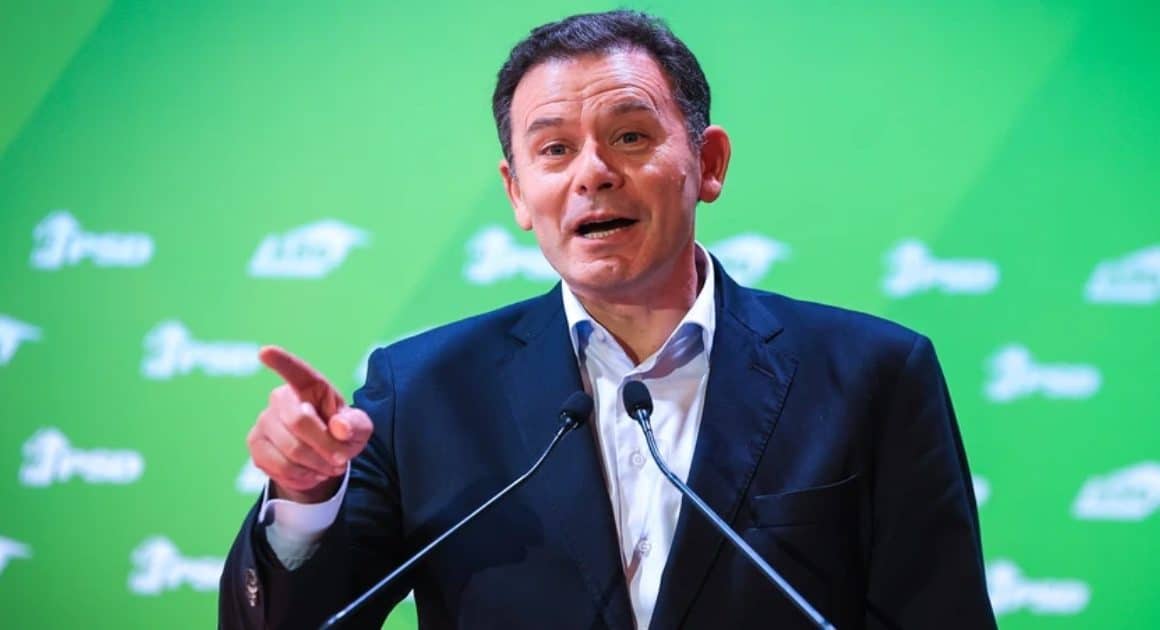
“We don’t want to grow 2% a year. We want to grow 3%, 3.5%, 4%. We want the minimum wage not to reach €1,100. That is the objective we have for this legislature, but we want more. We want it to reach €1,500 or €1,600,” he said as he closed the 10th National Congress of Social-Democratic Mayors (ASD), in Porto.
The thing with the PM’s ‘announcements’ at party fixtures (when the rest of the country is focused on something else entirely) is that they tend to fall by the wayside.
Readers may remember the remarks about Formula 1 returning to the Algarve, and the tender to be opened on the Algarve Central Hospital by October.
The latter still hasn’t happened, and the chances of Formula 1 ‘returning’ appear tenuous.
And in this weekend’s announcement, the PM actually changed the message he had given only the day before (when he mentioned the amount of €1500 and an average wage of €2,000 or €2,500)
Even the first figures acted as a red rag to Socialist leader José Luís Carneiro who accused Mr Montenegro of “throwing a carrot” to workers in an attempt to devalue the general strike.
These incidents are not helped by the fact that the prime minister does not seem to enjoy talking to the press. As journalists went to quiz him on his changing goalposts regarding the national minimum wage, he “declined to make any statements”, writes Lusa.
But his speech was definitely designed to enthuse the party faithful: “We want, effectively, to create the wealth that can combat poverty. We want a country that thinks about and executes a development project that can be lasting, that can be consistent, that can be robust enough to be increasingly exemplary, as it already is today, on a European scale,” he said.
“In a year’s time”, he stressed, his words “will make even more sense,” as they will in four years, at the end of the legislature and the local government mandates – both of which end in September 2029.
The transformation of the country “is in our hands, not anyone else’s,” he told his audience. “We don’t have to be afraid of this. We have to seize this opportunity and use it well…”
The PM also said he wanted those elected by the PSD to be with the party “because they are qualified, because they know how to do things well, because they represent what is good” in their communities: “to combat extremism, populism, and those with dictatorial and authoritarian tendencies, we really need to seek out the best, those who are good, and confront those who are less good.”
Mr Montenegro then returned to the need to “cut red tape” and “simplify procedures in the spirit of trust”.
To this end he pledged to review the Public Contracts Code (CCP) and “simplify licensing,” as well as expedite opinions and revise deadlines for pronouncements, Lusa concludes.
Source: LUSA