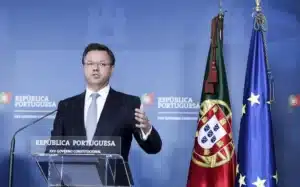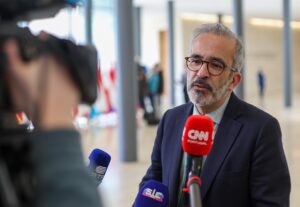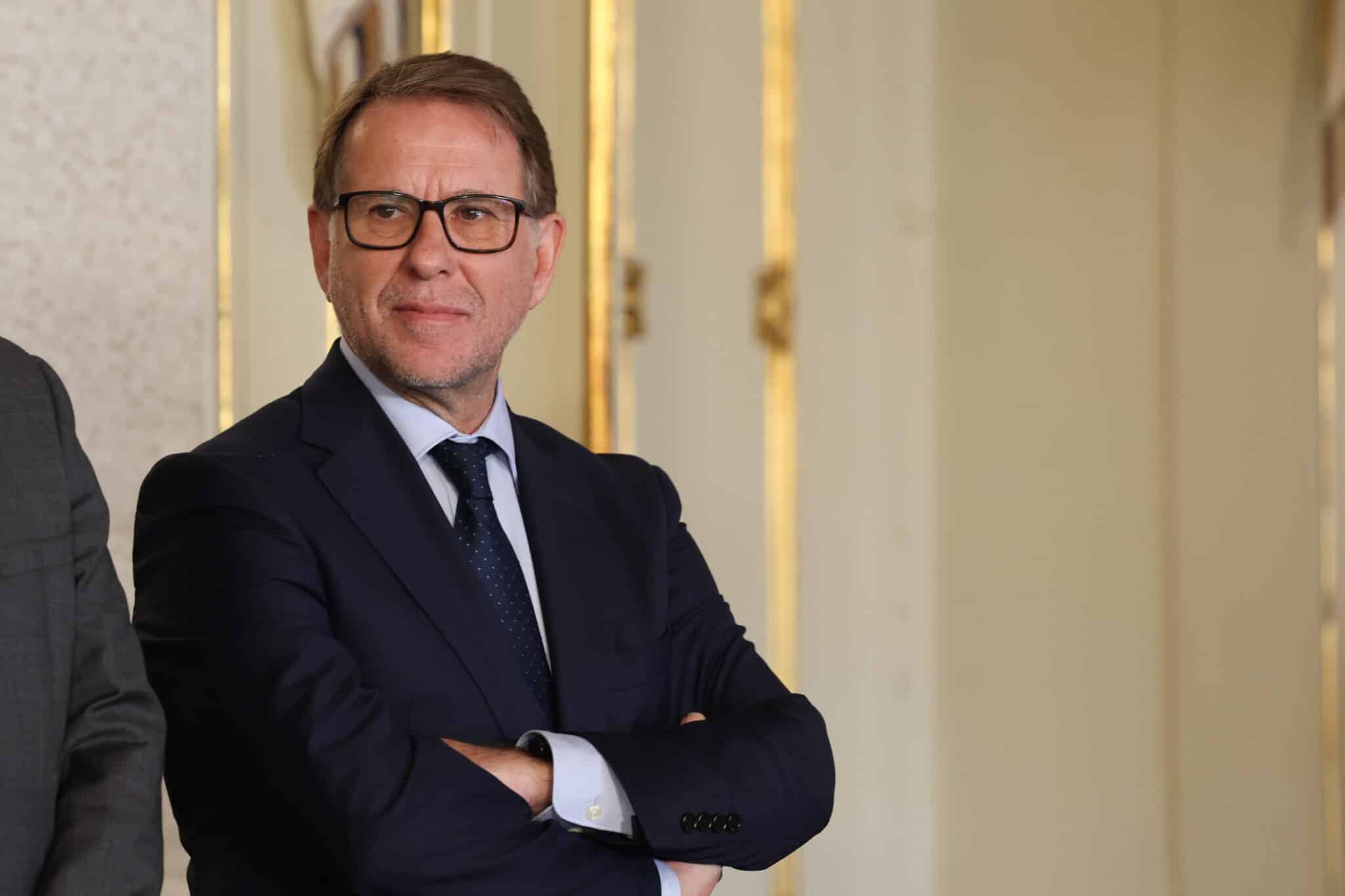
In a complete break with normal practice, Portugal’s government offered Luís Neves, director of the country’s Polícia Judiciária (PJ) criminal investigation police force for the last eight years, the role of Minister of Internal Administration – a job that has been the unmaking of so many predecessors that it could almost be seen as a poisoned chalice. But Neves has accepted, and has already been sworn into office, readily admitting the enormous challenges that lie ahead.
This is a ministry that – as one of the many leader writers discussing Neves’ appointment has pointed out – is “permanently exposed to crises and catastrophes”.
Luís Neves is being presented (by the government) as “the right figure to avoid a shipwreck”, writes Correio da Manhã’s Tânia Laranjo. But it is a choice that leaves the new incumbent more ‘at risk’ than the government, she ventures. The government, after all, has already failed twice in its nominations.
Neves, however, takes up the reins with an impeccable ‘curriculum’ behind him – and “a heavy ministry” ahead.
One of the few figures wary of the government’s choice of Luís Neves, former justice minister Fernando Negrão – himself an ex-PJ national director – has warned of the ‘great risk of confirmation that there are never two without three’.
Happily, Fernando Negrão’s reticence is not being widely shared.
The news that one of their own will now be leading negotiations on police pay and conditions has buoyed the country’s GNR and PSP police forces (both of which have been at loggerheads with previous incumbents).
Firefighters, too, are hoping Neves will make the ‘right decisions’ ahead of the wildfire season (in four months’ time) by giving them the autonomy they say they need to combat situations effectively. Last year’s firefighting scenario was visibly shambolic: mayors in various municipalities came out in desperation, criticising Civil Protection – one of the main agencies that Neves will now be overseeing.
If all this wasn’t enough of a tall order, there is also the whiff of suspicion of cronyism.
The minute Neves’ nomination was announced (last Saturday), talking heads were discussing whether this could be a ruse that the prime minister had ‘engineered’ to condition criminal investigations involving the PJ that have been going on around him (the ‘Spinumviva’ controversy, since dropped by public prosecutors, and more recently investigations into billing over the construction of his six-storey home in Espinho).
Neves was tackled on this possibility shortly after he was sworn in at Belém Palace on Monday morning. He ‘absolutely rejected’ the idea of any conflicts of interest.
As director of the PJ, he “never” investigated anyone, he told reporters. “The role of the National Director of the Judicial Police is to organise and provide resources for the institution. Fortunately, throughout the 80 years of the Judicial Police Institution, which celebrated its anniversary on October 20, its organisation and basic model allow information to remain confidential” (without going to the top).
“I have no reservations,” he added, stressing that he promises to do as a minister what he has always tried to do in his past in public service, which is “work to provide women and men and institutions with the best conditions” in which they can work.
Neves pledges dialogue, guaranteeing that “all positive proposals will be embraced and taken on board (…) Those that do not meet this standard will be discussed. Those that go against my conscience (…) will be rejected”.
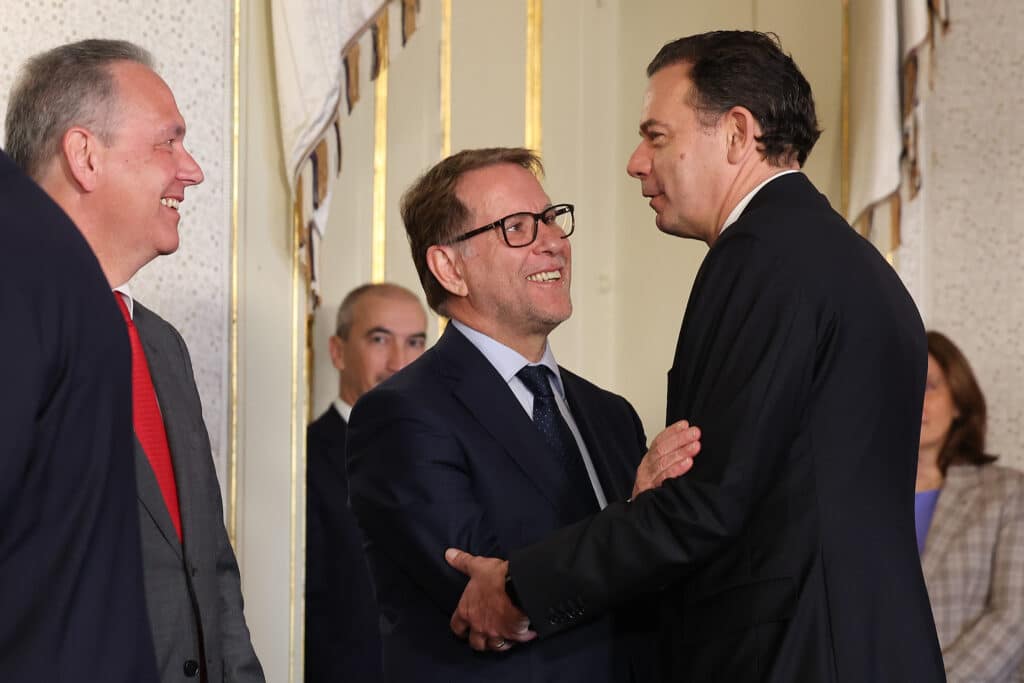
Bearing in mind that this is a man who only recently stressed in an interview with Rádio Renascença that police forces “must have better conditions” and that the low salaries paid to PSP police are “unacceptable”, Neves’ appointment shows how much the government’s back must be against the wall.
In the opinion of opposition leader, PS secretary-general José Luís Carneiro, Neves represents “a strong personality in an otherwise weak administration”.
Mr Carneiro chose his words carefully: “I have the best of impressions of Luís Neves – an excellent professional for whom I wish the very best. He is a strong personality in a government which, in spite of everything, is fragile. I hope he succeeds in this ministry which is one of the most important in the functions of sovereignty”.
Mr Carneiro also stressed Neves’ explanations, some months ago, that there is no correlation between immigration and ‘the perception of insecurity’ in Portugal. It could be that the government (whose ministry of the presidency António Leitão Amaro has alluded to this connection) “could learn a thing or two from Luís Neves”, the PS leader added.
Finally, Luís Neves has another ‘perceived’ challenge as he takes up his new responsibilities: he is inheriting all the previous secretaries of state, whose performances are generally seen as having been less than stellar. Whether this was because of their immediate hierarchy, or not, is what the former PJ director is about to find out.
Luís Neves’ 30 years in the PJ
Luís Neves, 60, a graduate in law and former lawyer himself, joined the Polícia Judiciária (PJ) in 1995, concentrating on investigations into terrorism.
He became known for his work in dismantling Spanish ETA cells in Portugal, for the detention of ‘skinheads’ and their far-right leader Mário Machado, for the running-to-ground in Italy of a secret services’ ‘spy’, and for the arrest of a delusional serial killer, in Portugal, known as ‘Rei Ghob’.
Promoted to the position of national director in 2018 (by the then prime minister António Costa), Neves ‘oversaw’ major PJ police ‘coups’ in dismantling drug trafficking networks in collaboration with outside police forces.
One of the Polícia Judiciária’s ‘great moments’ – the arrest, in his pyjamas, of fugitive bankster João Rendeiro in South Africa – was on Neves’ watch, as have been countless others.
The last eight years have seen several tonnes of cocaine apprehended in various heists that have put criminals behind bars, and which will have severely damaged South American cartels.
The big question now is who will fill Luís Neves’ shoes at the PJ police? But the man himself will barely have time to think about that one. He has far too much ahead of him. In the words of Correio da Manhã’s deputy editorial director Eduardo Dâmaso, “his life will not be easy, outside and inside the government”.