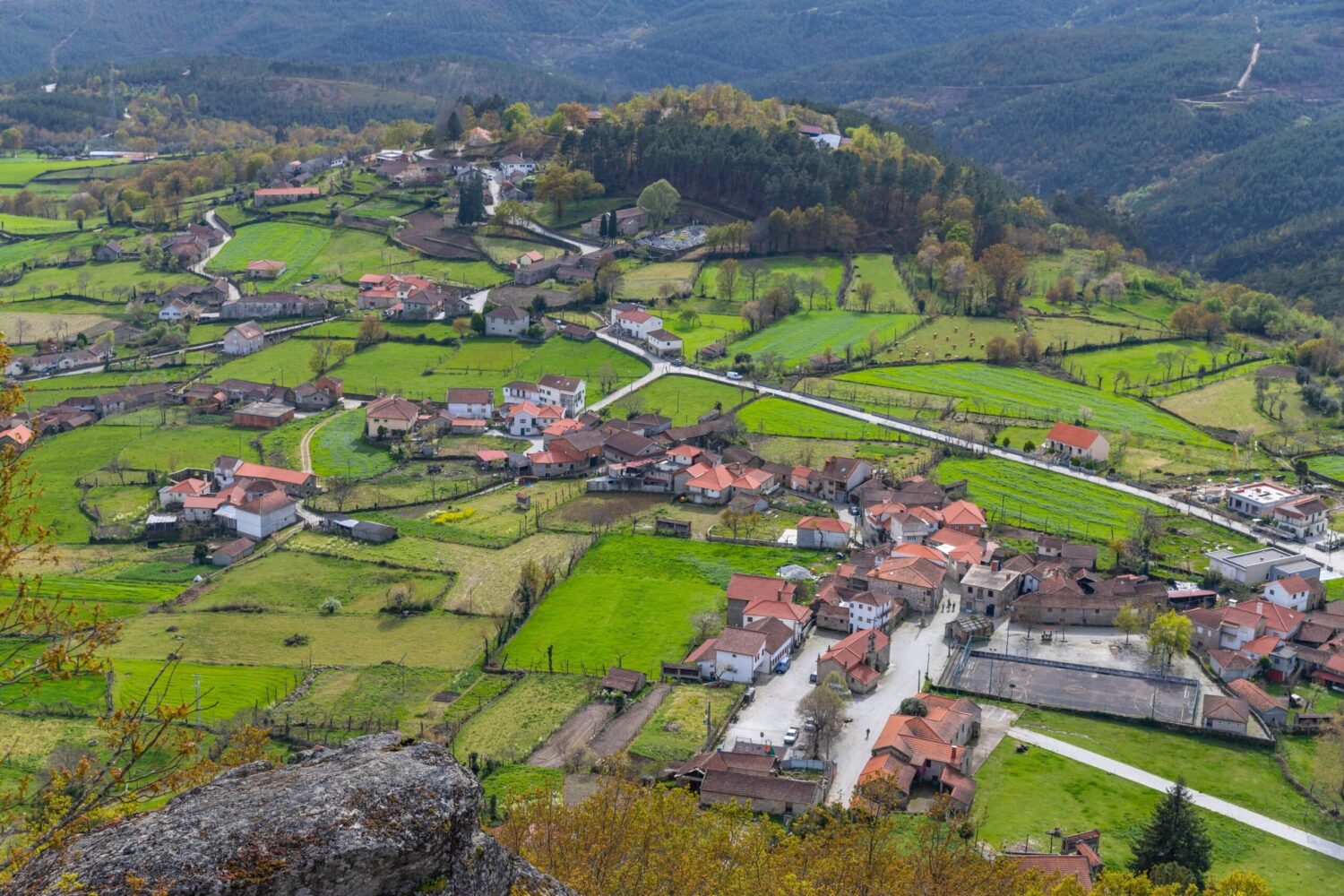
Portugal is once again in the crosshairs of the European ‘race to harness lithium’ for electric mobility. The president of the European Commission, Ursula von der Leyen, has called this week for the “removal of obstacles” that are delaying progress, just as one of the projects granted a European ‘fast-track permit’ for open-pit mining in northern Portugal announces that there is “much more lithium” in its Barroso prospecting area than originally estimated.
Before we go into any of the arguments presented by communities, environmentalists, engineers and scientists for not ploughing up vast swathes of heritage landscape for a so-called “critical mineral” that is found in far larger quantities in other parts of the world, here is the ‘latest news’.
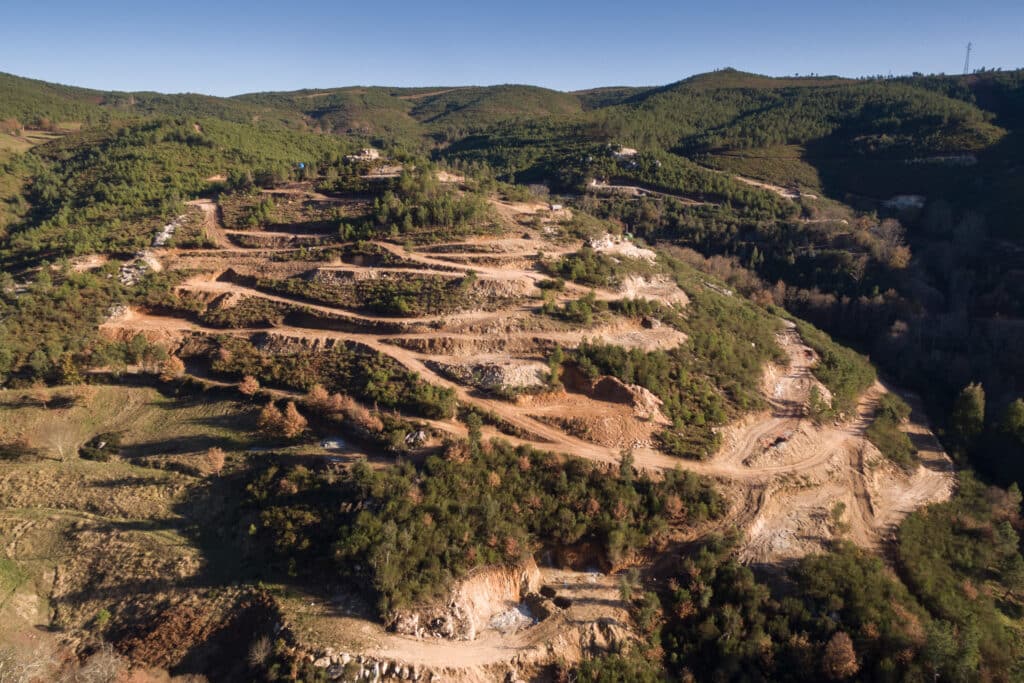
First, on Monday, Savannah Resources, the British-based company (that has no direct lithium mining experience but has amassed an impressive portfolio of investors) announces that prospecting in the municipality of Boticas (much of it done against wishes of local communities) has confirmed “major quantities of lithium” in the Barroso mine area.
The “confirmed resource has increased by 40% and now stands at 39 million metric tonnes” – but Savannah alludes to a “200% increase in estimated exploration targets” – taking the mine’s potential to a possible 62 million tonnes.
These figures mean that, as exploration work continues, there is the full potential for the Barroso lithium project to “exceed 100 million tonnes of lithium mineralisation over the years, enough to produce 47 million electric vehicles – the equivalent of eliminating the oil consumption of the entire car fleet circulating today in Portugal, France and the Netherlands combined”, says the note released.
Savannah has been declaring the largest lithium deposit in Europe for years (almost ever since the company changed its name in 2013 from ‘African Mining & Exploration plc’).
Over the years, ‘figureheads’ (several of which have since left the company) have increasingly ‘increased’ the estimated lithium deposits at the Barroso mine.
This week’s new estimate brings “clear benefits for all stakeholders”, says the company, which has added a number of heavy-hitting investors in recent years, including media mogul Mário Ferreira, and Grupo Lusiaves.
Since these Portuguese investors came onboard, Brussels too has shown an increased interest in Savannah.
In March this year, the European Commission flagged three lithium projects in Portugal as ‘strategic’: Savannah’s, as well as the project for the Romano mine in nearby Montalegre by Lusorecursos Lithium, and Lifthium Energy’s Lift One project in Estarreja (again, none of these companies have lithium mining or refining experience).
The decision, however, means that they can be ‘fast-tracked’ – benefitting from simplified licensing provisions “to ensure predictability for project promoters” and ensuring that processes for mining projects “will not exceed 27 months”.
As Lusa explained when the announcement was made earlier this year, “currently licensing projects in the EU can take between five and 10 years”.
These strategic projects were described by Brussels as “in line with its Critical Raw Materials Act, which aims to ensure that extraction, processing and recycling of strategic raw materials in Europe meets 10%, 40% and 25% of EU demand respectively by 2030”.
The narrative has always been that Europe must win “more independence from geopolitically dominant suppliers, like China”.
Clearly, Ursula Von der Leyen’s call on Tuesday for the removal of obstacles in this regard suggests plans are not moving at the speed that she would like.
Ms von der Leyen encouraged a “sense of urgency across the EU’s competitiveness agenda” to move forward with “urgent measures to address urgent needs” (talking also of other strategic projects, unrelated to lithium extraction).
At time of writing, Portugal’s government had not addressed either Savannah’s gung-ho announcement, nor Ms von der Leyen’s exhortation for urgent action.
A few weeks ago, environment minister Maria da Graça Carvalho conceded that “it is practically impossible to implement projects against the will of everyone around you”.
Ms Carvalho was explaining in the context that it is the current government’s intention “to listen to people and communities” before ploughing ahead regardless – albeit the time for listening when it comes to Savannah’s intentions would seem to be well and truly over.
In spite of the fact that last month a UN committee ruled that Portugal “failed to respect citizens’ rights to environmental information and public participation in the case of the Barroso lithium mine”, we are at this new watershed: ‘possible increased deposits’, and an EU leader calling for the removal of obstacles.
Thus, at this point, it may be useful to look at the undeniable facts. Facts like the ‘reality’ that Savannah has never mined for lithium before.
Facts like the efforts by ‘experts’ who have warned of the serious environmental, social and security impacts (all detailed by the Resident over the years) that will remain long after lithium reserves have been plundered.
And the fact that when it comes to those reserves, Portugal is a veritable tadpole.
Yes, this country may well have “the largest lithium resource in Europe” – but that is because Europe does not have much in the way of lithium… Accepting this is (or perhaps should be) accepting that Europe cannot have more independence in this area when it comes to geopolitically dominant suppliers.
As a former PSD environmental secretary and university professor Joaquim Poças Martins has stressed: “You cannot destroy a mountain in order to extract a few kilos of lithium.”
Or rather, one can, but at what cost?
Poças’ argument is clearly highly inconvenient. He told Lusa back in 2022 that “batteries won’t be the solution” as “it is simply not possible: there aren’t enough materials in the earth for this effect…
“Everything is pointing more towards hydrogen as a form of storing energy than batteries,” Poças explained – simplifying his argument suggesting that “in half a dozen years”, the lithium deposits ‘identified in Portugal’ may well have run dry.
Then “we will have a serious problem” – not least because of the destruction the lithium mining itself will have created.
“On the other hand, so called green hydrogen can be produced, and when it burns the final product is water, not carbon dioxide.”
All this being said, the largest lithium reserves in the world can be found in South America (where actual production is still minimal, but increasing), followed by Australia and China, where production is, in percentage terms, over 50% and 15% of the world’s supplies respectively.
Whereas these lithium world leaders hold reserves in the millions of metric tonnes (Chile: 9.3 million; Australia: 7; Argentina: 4; China: 3, and so on), Portugal has only 60,000 metric tonnes. That means this tiny country, with rich heritage landscapes that rural producers are trying to save from open-pit mining, comes in behind other countries like the United States (1.8 million metric tonnes of lithium), Canada (1.2 million), Brazil (390,000) and Zimbabwe (480,000).
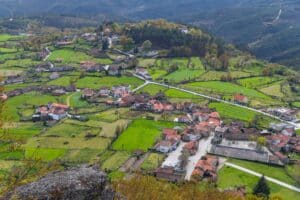
Sixty-thousand metric tonnes of lithium: that is what is ultimately being considered more important than rural ways of life that have sustained generations.
This is what Joaquim Poças Martins was referring to when he talked of “destroying entire hillside ranges, displacing people to extract a small quantity of lithium for private use”.
Is it truly a strategic ambition?
The communities living around Covas do Barroso do not think so, which is why they continue to fight against these ambitions with every means available, supported by the mayor and local authority.
Aida Fernandes is one of the many campaigners for the group known as United in the Defence of Covas do Barroso. She told Euronews how the struggle should serve as a warning of the social and environmental damage caused by “industries that claim to act in the name of climate protection… The people who create these illusions should be honest. When they say they create electric cars to avoid pollution, they should also mention everything that will be destroyed in the process”.
Former mayor Fernando Queiroga has always supported the sustainability of his community over the need to install an open-pit mine, and is particularly concerned over the issue of water. During the drought in 2022, he explained that “if the mine had been in operation this year, we would have had complete disaster. This year, Covas do Barroso is low on water. The immense amount of water for the company (to mine) is frightening. There are no rivers, no springs, no boreholes that could sustain it”.
Savannah Resources expects to begin extracting lithium in the Boticas borough in 2027.