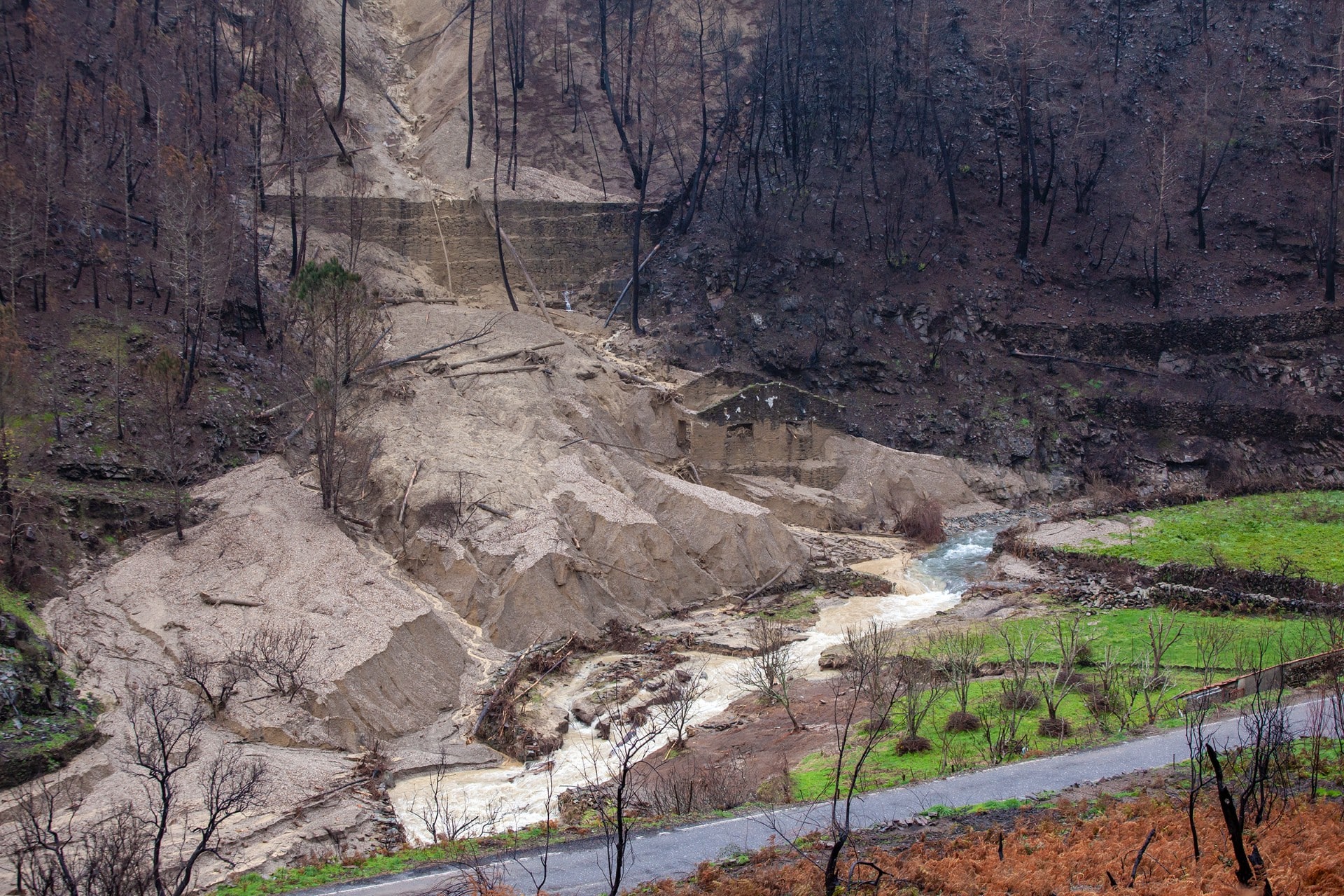
Following several days of intense rainfall, a new collapse of a mine tailings structure occurred last Thursday at the Panasqueira mining complex in central Portugal.
In the parish of São Jorge da Beira, municipality of Covilhã, large volumes of mining waste were released into the Cebola stream, a tributary of the Zêzere River, once again highlighting the vulnerability of aging and insufficiently remediated mine waste facilities in the region, say environmentalists.
In response to the incident, Empresa Portuguesa das Águas Livres (EPAL), the public company responsible for Lisbon’s drinking water supply, began water sampling operations yesterday, Tuesday, at multiple locations across the affected catchment.
The aim is to assess potential impacts on water quality – including at the Castelo de Bode reservoir downstream – which is the main source of drinking water for the Lisbon metropolitan area.
The move reflects growing concern that repeated pollution events at the Panasqueira site may pose risks beyond the immediate mining area.
This latest incident represents the third known failure of this tailings facility over the past decades. A quick online search can actually attest to concerns about “heavy metals in the Zêzere river” going back to 2006. In that year, SOL reported that “400-tonnes of senio-pyrite – a carcinogenic combination that poses a high risk to public health – which has been concentrated for decades in the village of Rio, near the Panasqueira Mines, is in danger of collapsing into the River Zêzere”.
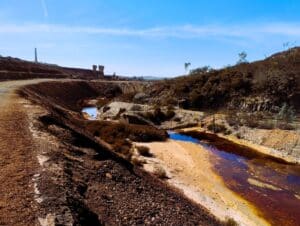
The Panasqueira mines are operated by Beralt Tin and Wolfram Portugal – subsidiary to the Canadian mining company Almonty Industries. Being one of Europe’s most important historical sources of tungsten and tin, the mines have generated enormous volumes of mining waste over more than a century of operation. Many of these tailings deposits, including those at Cabeço do Pião, remain poorly stabilised and are located directly adjacent to the Zêzere River, increasing the risk of contamination during periods of heavy rainfall.
Scientific studies have documented elevated concentrations of arsenic and other heavy metals in soils, sediments and water bodies downstream of the Panasqueira tailings. The contamination is linked to acid mine drainage processes and represents a persistent threat to ecosystems, agriculture and human health.
Despite this well-established body of evidence, no comprehensive remediation programme has been implemented, nor have efforts been made to recover valuable remaining materials such as tungsten from the tailings, which remain largely under the ownership of the project operator, says a press release from MiningWatch Portugal.
“At the same time, recurring discharges of untreated mining wastewater into the Bodelhão stream have been reported during winter months, contributing to the chronic degradation of water quality within the Zêzere basin.”
Challenged over similar issues by SIC Notícias last March, a source for Beralt claimed that discharges are inevitable and occur when there is heavy rainfall and the treatment plant does not have the capacity to treat the entire volume of water.
“When Beralt built the treatment plant, it was designed for 600 cubic metres per hour, 14 times more than its industrial water needs. Why? Because rainwater seeps in, the underground work area is very large, covering 550 square metres, and it is a mine that has been in operation for over 100 years. (…), causing a series of faults and discontinuities, and the water seeps into the mine like a bathtub, so the emergency discharge has to be opened because the treatment plant does not have the capacity to handle it,” António Corrêa de Sá, general manager of Beralt Tin and Wolfram, told SIC. But he stressed that “even with the drain open, all the parameters measured weekly in both the stream and the Zêzere River and delivered to the authorities show values that are perfectly within acceptable limits, within what the law requires.”
Corrêa de Sá added that the impact on the environment “is not significant at all”.
Environmental NGOs do not agree with that assurance. They argue that the accumulation of repeated accidents and ongoing non-compliance points to a long-standing incapacity of the operator and regulatory authorities.
The most recent collapse has directly affected nearby agricultural land, including olive groves and vineyards, says MiningWatch Portugal.
“Landowners are now demanding accountability and compensation from the mining company for environmental damage and economic losses. The released tailings are potentially acidic and may contain high levels of arsenic and other hazardous elements, raising concerns about soil contamination and long-term impacts on agricultural productivity.
“This incident reflects a clear gap between how mining risks are supposed to be managed under European and international standards and how they are actually handled on the ground,” says MiningWatch’s Nik Völker.
“Allowing unstable tailings facilities and untreated discharges to persist for decades is not compatible with modern mining governance. The result is repeated environmental damage and growing risks to agriculture and public water resources.”
MiningWatch Portugal warns that without a clear strategy to stabilise tailings facilities, halt illegal discharges and address legacy contamination, “further failures are inevitable”. The initiative adds that continued inaction “undermines public trust and exposes downstream populations and critical water infrastructure to unnecessary and avoidable risks.”
SIC Notícias said in its investigation last year that it had asked for clarifications on these issues from environmental agency APA, as well as IGAMOAT (the general inspectorate for the environment and territorial planning) “but did not receive a response”.
Source material: Mining Watch Portugal/ SIC Notícias