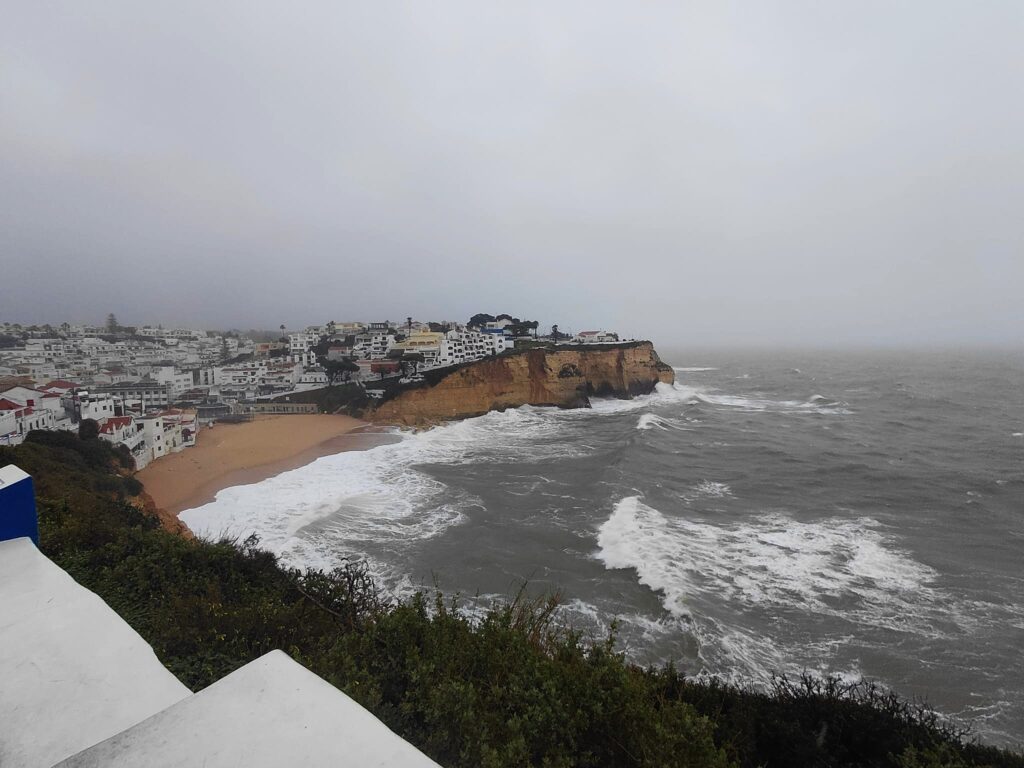
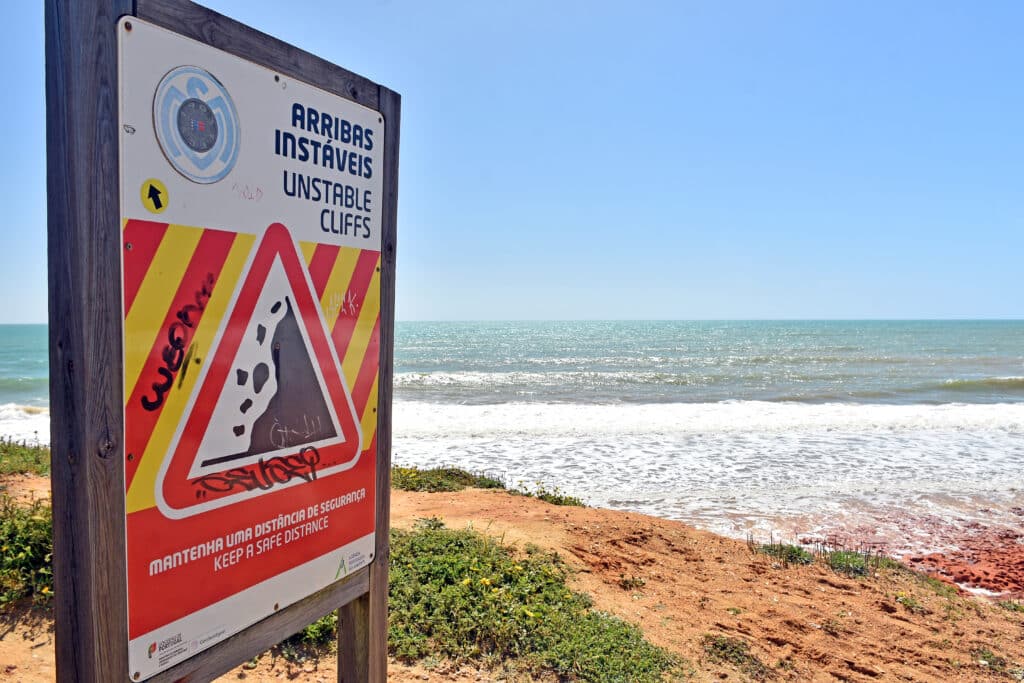
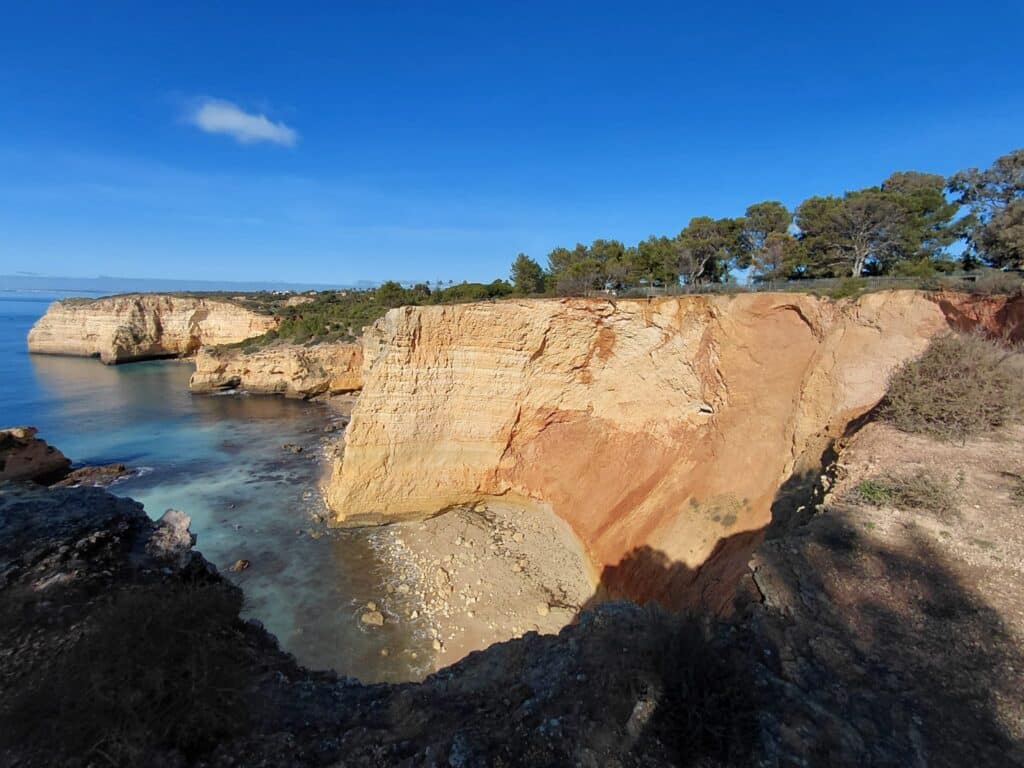
If nothing else, this story should serve as warning to anyone who loves lazy days on the beach to keep well away from cliffs this year: they have been massively compromised by the ‘carousel of storms’ that cut a swathe across the country over recent weeks, and are almost all liable to some degree of collapse.
Portuguese environment agency APA is already focused on a national survey of cliff damage so far this winter, and is expected to start controlled landslides in various locations ahead of the spring and summer season, in order to at least stabilise the situation of beach safety.
As experts have been telling Expresso in its article “Beaches disappeared in a few days”, the storms simply amplified a vulnerability that is inevitable with rising sea levels.
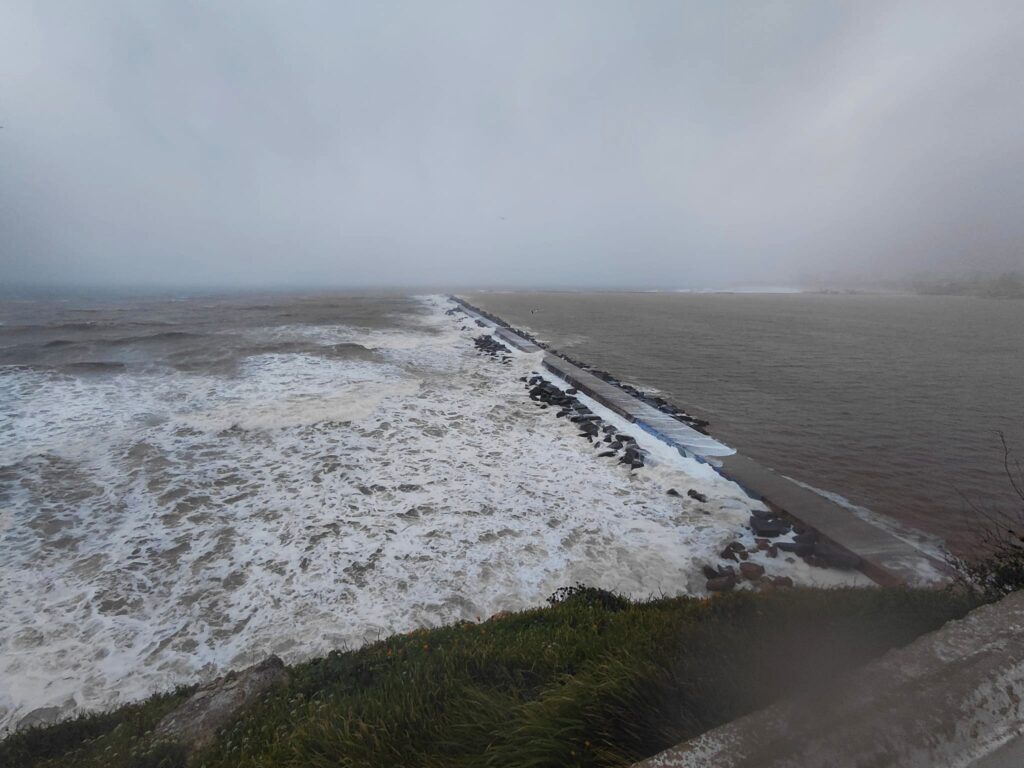
In some areas – mainly the north – beaches have literally “disappeared” as the force of the winter tides has ripped the sand away from them, taking it out to sea.
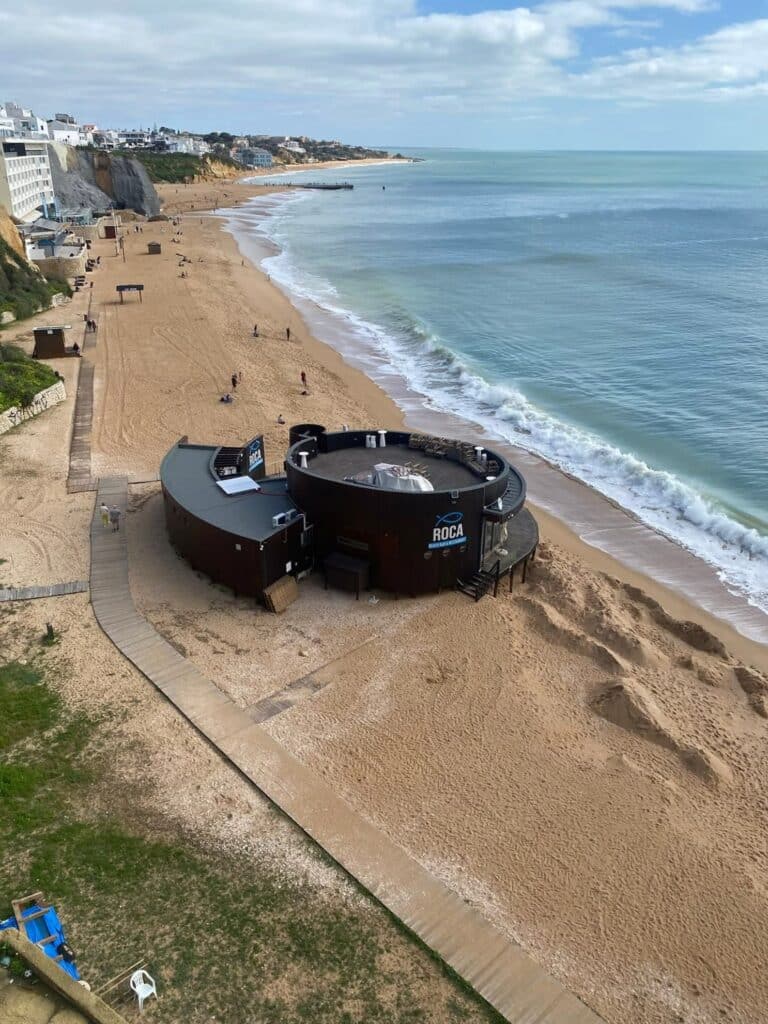
In the Algarve, stretches of coastline – particularly in Albufeira and Quarteira – have become almost unrecognisable.
It is not simply a question of needing sand replenishment – something that has already been planned for the stretch between Quarteira and Garrão – but of needing ‘urgent interventions’ to avoid potential tragedies in the near future.
SIC Notícias reported earlier this month how Albufeira mayor, Rui Cristina, is one of those calling for such ‘urgent interventions’ – stressing that his municipality has to “safeguard the safety of those who come to visit us” and who want to go to the beach, because with reduced areas of sand, people end up “getting closer to the cliffs”, which leaves them “at risk” in the event of a sudden landslide.
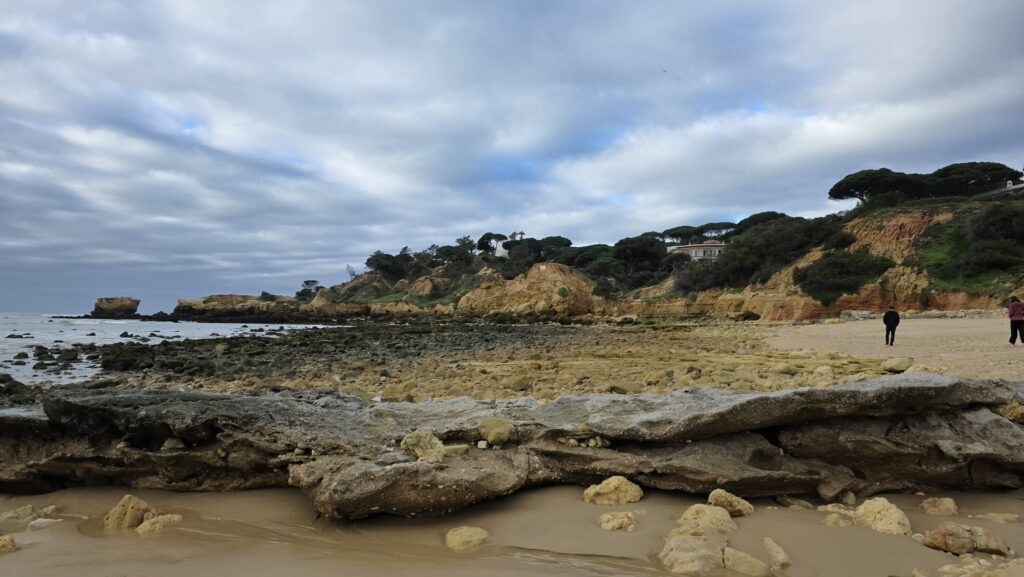
SIC adds that cliffs straddling numerous Albufeira beaches “are already fragile” – some because of the lack of sand at their bases, others by dint of their make-up and the steady erosion from winds and rain.
And while APA carries out its inspections, experts have been stressing that, in some cases, constructions (namely beach bars) will need to be relocated, rather than shored up or left in the hope that ‘next winter will be easier’ on them.
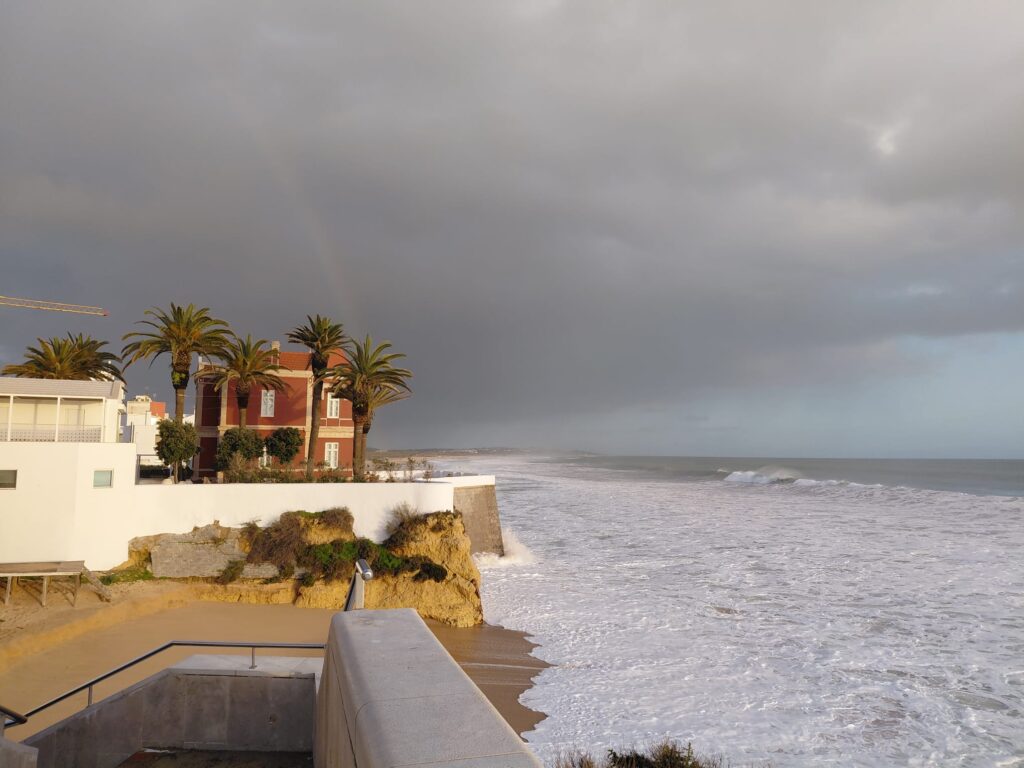
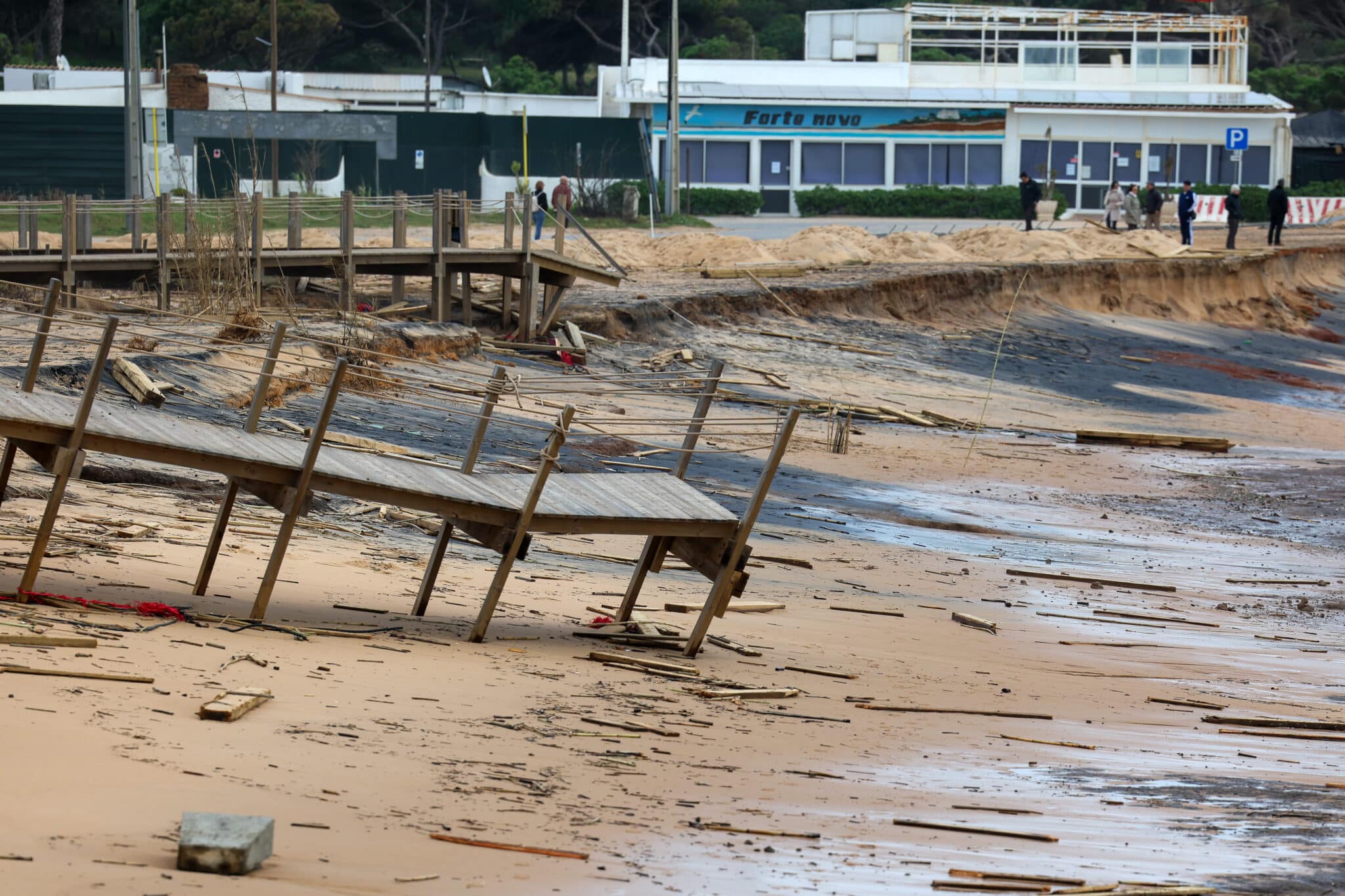
“We continue to occupy areas of risk as if it didn’t matter,” geologist Óscar Ferreira tells Expresso, indicating a residential property close to the Almargem river, and a new restaurant constructed out of concrete that is “now being lapped by the sea on Quarteira’s Forte Novo beach, where it should never have been authorised”.
A little like the experts who explained how some of the damages caused by recent flooding in areas of the north and centre were ‘completely avoidable’ had ‘planners’/authorities taken heed of natural geography, what is happening on beaches has already been well-predicted by science.
The reality is that ‘nothing ever stays the same’ – and in the Algarve, the coastline is receding by an average of three metres per year.
In some ‘more critical’ locations, the sea has advanced by as much as 15 metres per year – something that no multi-million-euro sand replenishment programme can effectively hold back.
SIC reported earlier this month how the residents around Forte Novo, in Quarteira, can see this for themselves. In the space of the recent storms, the sea advanced by two metres in some areas of the beach. A large part of the promenade was destroyed and even a section of the beachside carpark ‘gave way’ as the sea rolled in.
Elsewhere, Praia de Mira in Coimbra lost seven metres of beach area “in just five days”.
Further south at Guincho – the 9km beach adored by surfers – the storms ‘opened an escarpment within the sand’, exposing rocks “habitually covered”, and creating a kind of temporary river.
Cascais, Oeiras, Costa da Caparica and Sesimbra have all seen similar ‘damage’: beaches that used to bring thousands every summer are now “completely submerged at high tide; some even at low tide”, or otherwise hugely diminished.
For now, there are no accurate calculations on how much land the sea has taken away, as the persistent swell has prevented field measurements, experts explain – but images shared over social media serve as forms of “citizen science” to give a rough idea.
Coastal geologist Rui Taborda, from FCUL (Lisbon University’s Faculty of Sciences), adds that we now have to wait for the sand to return to the surface, as many of the stripped beaches function as “closed sedimentary systems”.
After Cyclone Hercules (2014) for example, “the region’s beaches recovered when the sea agitation calmed down”. But much of the damages wrought on beaches of Costa da Caparica are ‘outside this equation’, Taborda concedes, due to “structural deficiencies”.
Says Expresso: “Monitoring carried out by APA and the COSMO Programme quantified losses of 64,000 cubic metres of sand on Costa da Caparica between October 2025 and January 2026” (i.e., before even the start of the relentless pounding by recent storms).
“This is a very intense erosive process,” geographer José Carlos Ferreira, from NOVA University’s Faculty of Sciences and Technology, stresses – also pointing to “the sight of beach bars floating in the sea” as a sign that planning restrictions have to be better enforced.
Even ahead of APA’s current survey, the agency estimates that around 20% (180 km) of the nation’s coastline is eroding, and 14% of the population lives less than 2 km from the sea.
Studies from the COSMO programme have estimated a loss of 13.8 km2 of territory between 1958 and 2023, “reflecting the progressive worsening of coastal vulnerability”.
Scenarios projected by the ‘National Roadmap for Adaptation 2100’ indicate even greater recession by the end of this century, concludes Expresso: “Potentially reaching 200 metres in Costa Nova, in Aveiro, and up to 100 metres on Faro beach, in an extreme climate change scenario.
“From the middle of the century onwards, the rise in average sea level will become the main driver of erosion,” geophysicist Gil Lemos, also of FCUL, warns.
If anything, this is a moment to give thanks to the stunning stretches of coastline that we still have – and ‘stay safe’ as time marches relentlessly forwards.