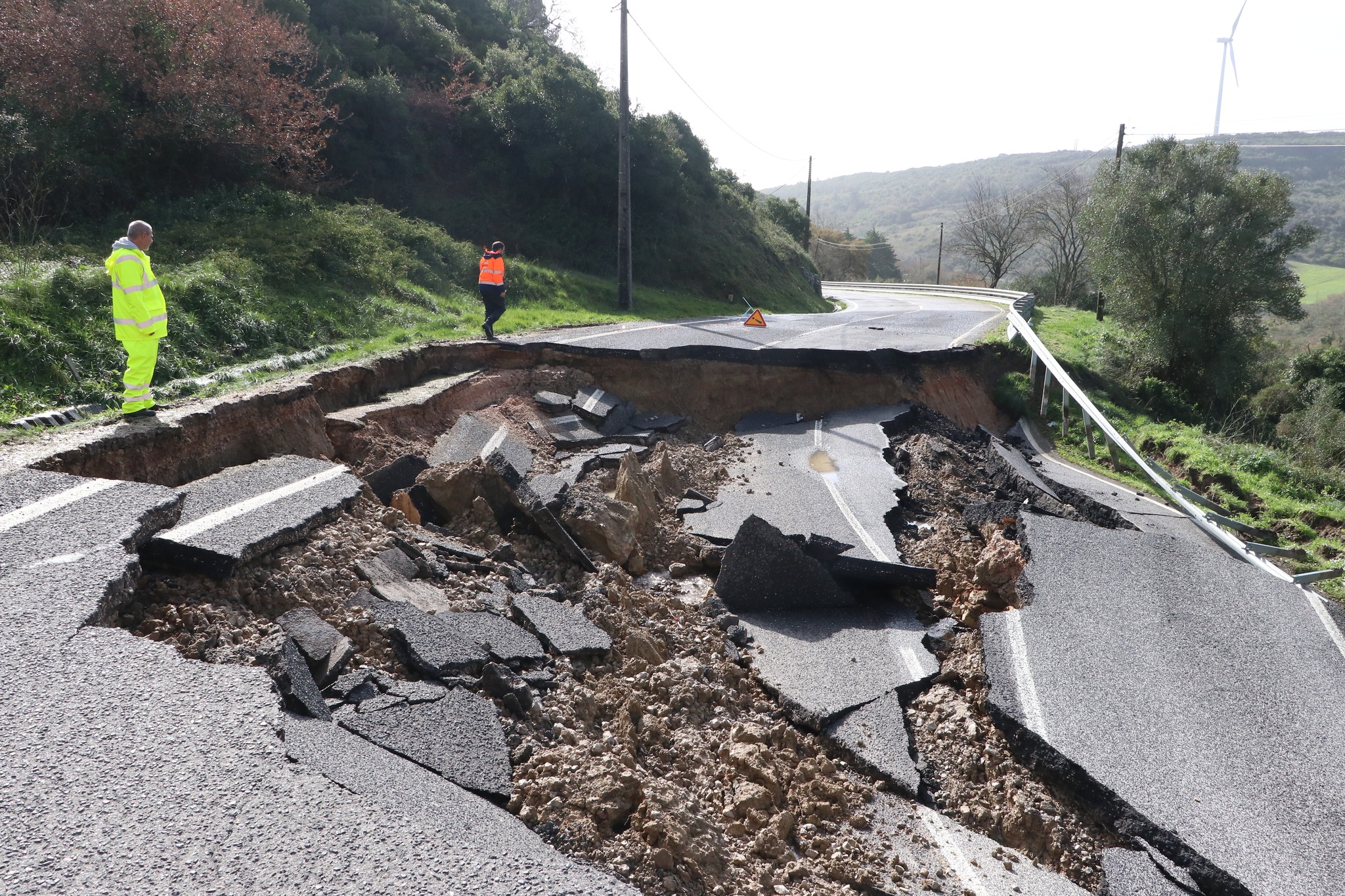
With weather forecasts showing no letup of persistent rain through the first part of the week, Portugal’s weather-related problems are piling up.
Aside from the rising death toll (at time of writing, this had reached 16) and the number of households still without electricity (and, in some cases, communications), there are the cracks appearing in the government’s narrative over how victims are to be supported.
The most alarming ‘crack’ has been in the ‘promise’ that all workers put on simplified lay-off (by dint of the fact that their businesses were so badly damaged they are unable to operate inside them) would receive 100% of their salaries, up to an amount of €2, 760. This does not appear to be the case.
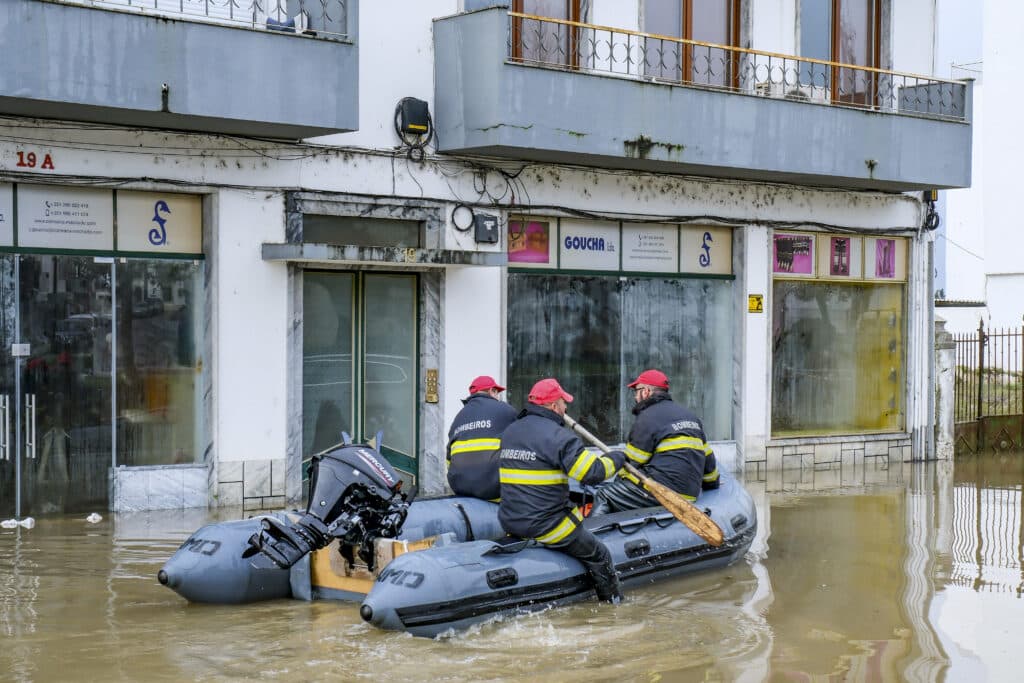
The decree-law passed after the prime minister made his announcement – and received all the press attention that it deserved – shows that workers are only entitled to receive ⅔ of their gross salaries, unless they are on the minimum wage of €920 (in which case they will receive their entire salary). Questions have been raised over this discrepancy – and at time of writing, they had not received answers.
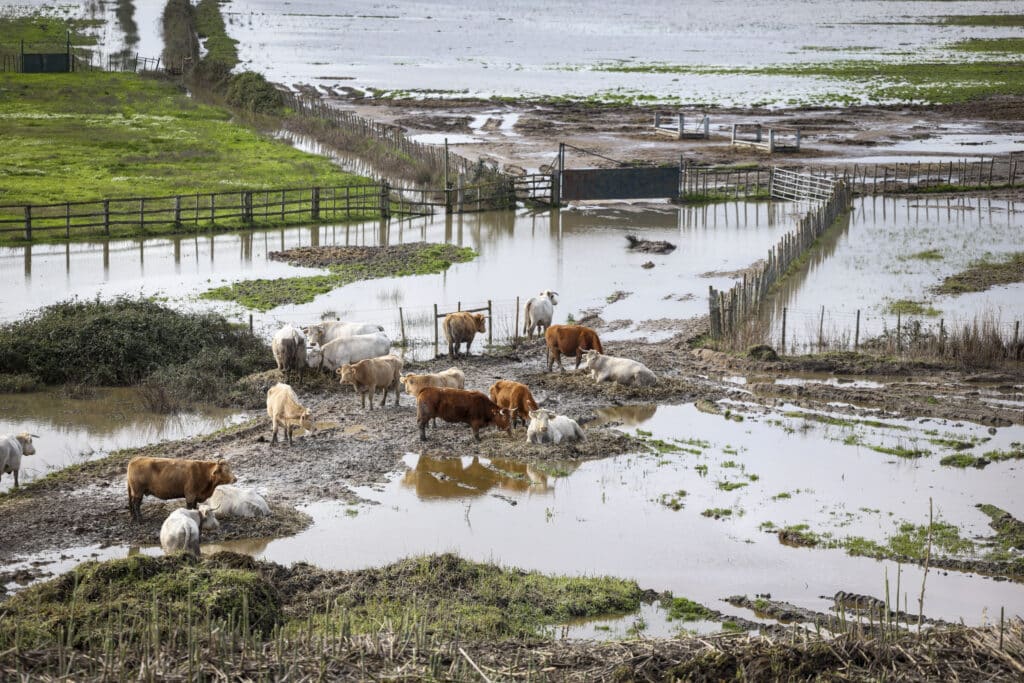
Tens of thousands of households are still without basic amenities (lack of electricity tends to imply lack of water – and in cases where water has been ‘returned’, populations have been advised not to drink it, cook or even bathe in it); river basins are still at risk of flooding; multiple schools are closed for various weather-related reasons (perhaps the school of Manique do Intendente in Azambuja having the most perilous reason: it is being threatened by a possible rupture of the nearby Barragem de Retorta).
In short, Portugal is a long way from recovering – albeit forecasts are for an improvement in weather conditions by the weekend.
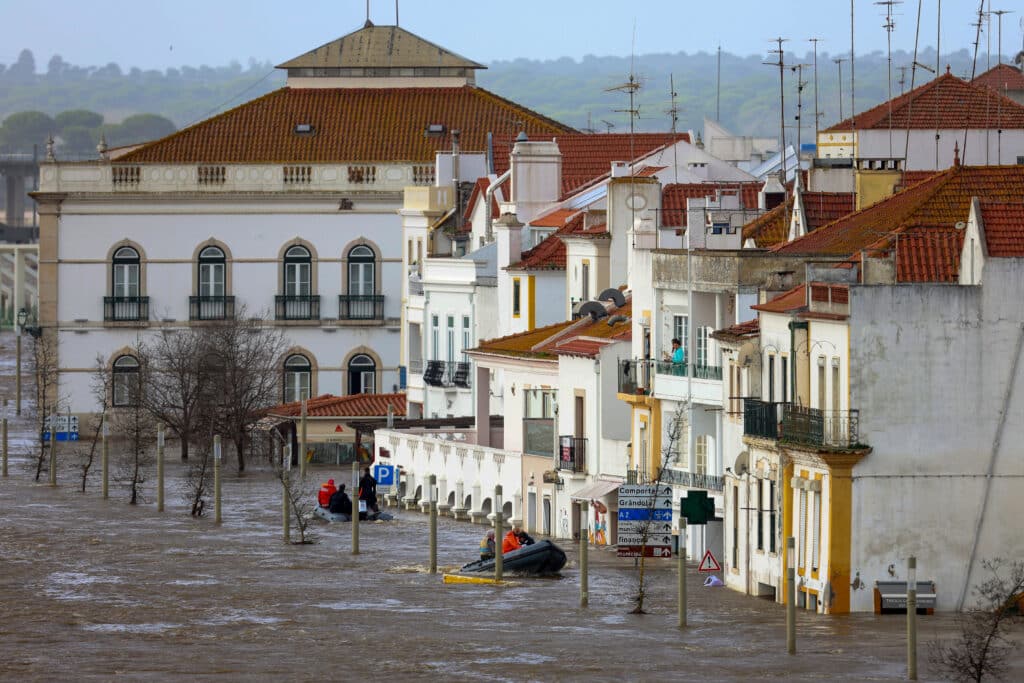
This may mean that the 35,000 households still ‘in the dark/cold’ – most of them for the last two weeks – will finally be able to get back to some sort of normality. The legacy of these last two weeks cuts deep – and has seen the exhausted mayor of Leiria (one of the municipalities worst hit by the initial Storm Kristin) frequently opine on how different things might be if they had happened in Lisbon.
Would homes in Lisbon really have been made to endure two weeks without power? It’s a very relevant question bearing in mind the ‘importance’ of the capital when it comes to business/the outside world.
As to the difficulties faced by network distribution company E-REDES in returning power to storm-battered communities, the questions return over how wise it was to sell-off (to foreign investors) infrastructure on which the nation depends – and how robust that infrastructure remains as a consequence.
In Leiria on Monday – with a new depression forecast for the coming days carrying a ‘river of rain’ to the north and centre – thousands gathered to remember the victims of Storm Kristin, both living and dead.
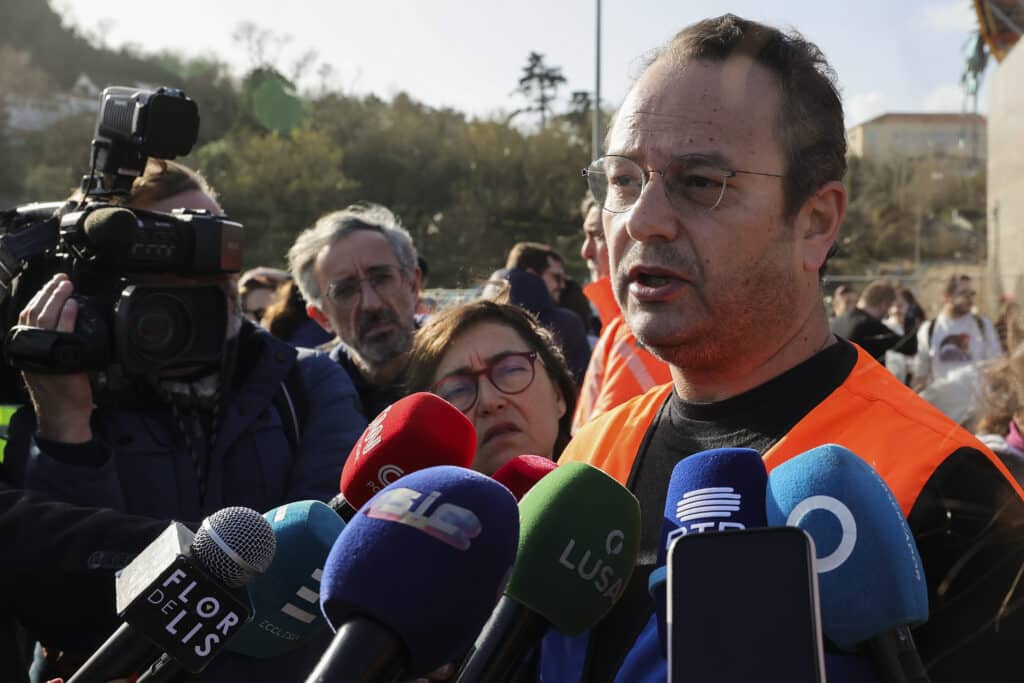
Mayor Gonçalo Lopes used the occasion to honour the latest fallen ‘hero’ – a young man employed by a company contracted by E-REDES to try and restore power to a local industrial estate. What appears to have happened is that while 37-year-old João Paulo Domingues was working high up on a medium tension electrical post, the power which should have been disconnected, reconnected and emitted a fatal electrical discharge.
Firefighters had to use an elevator platform to reach Domingues’ body and recover it. It will have been a horrible incident for everyone involved, again raising the questions voiced repeatedly by Leiria mayor, over the ‘resilience’ of E-REDES, which clearly has had to resort to the use of external labour to try and recover the power supply lost during the country’s battering by bad weather.
Another ‘hero’ remembered on Monday (because that was the day of his funeral) was part-time firefighter and full-time GNR officer José Valter Canastreiro who died in the Caia River on an operation to check on families who were ‘cut off’ due to floodwaters last Saturday.
Already something of a local hero, Canastreiro’s death has devastated his local community. He was a trained diver; a man whose life mission was to help people – and yet he died stepping into what appears to have been an ‘underwater hole’ that somehow sucked him down before his colleagues could retrieve him.
Canastreiro’s horrible death has also served as a warning of all the other dangers that lurk after so many weeks of sustained rain. Roads, hillsides, buildings (particularly abandoned buildings) are vulnerable.
In Senhora da Rocha (the Algarve’s Lagoa municipality), a man was walking early morning on steps leading to the beach which suddenly ‘gave way’, sending him tumbling into a deep, muddy crater. Luckily, he had his mobile phone on him and was able to call for help. But the incident is just another that indicates the vulnerability of infrastructure that people normally take for granted.
In Arruda dos Vinhos – a rural municipality near Lisbon – whole swathes of roadway suddenly ‘moved’ and twisted on themselves last week. Properties started to crack and tumble. This was a community that had side-stepped Kristin’s initial damage – but then suffered collateral damage of so much wet weather.
Portalegre has also been another casualty. Early one morning last week (thankfully when everyone was in bed), an avalanche of water, stones and mud invaded streets in the town – destroying dozens of cars and damaging various businesses.
Government measures announced to ‘build Portugal back’ from this awful period of bad weather amount to €2.5 billion – and it is quite clear already that every cent will be needed.
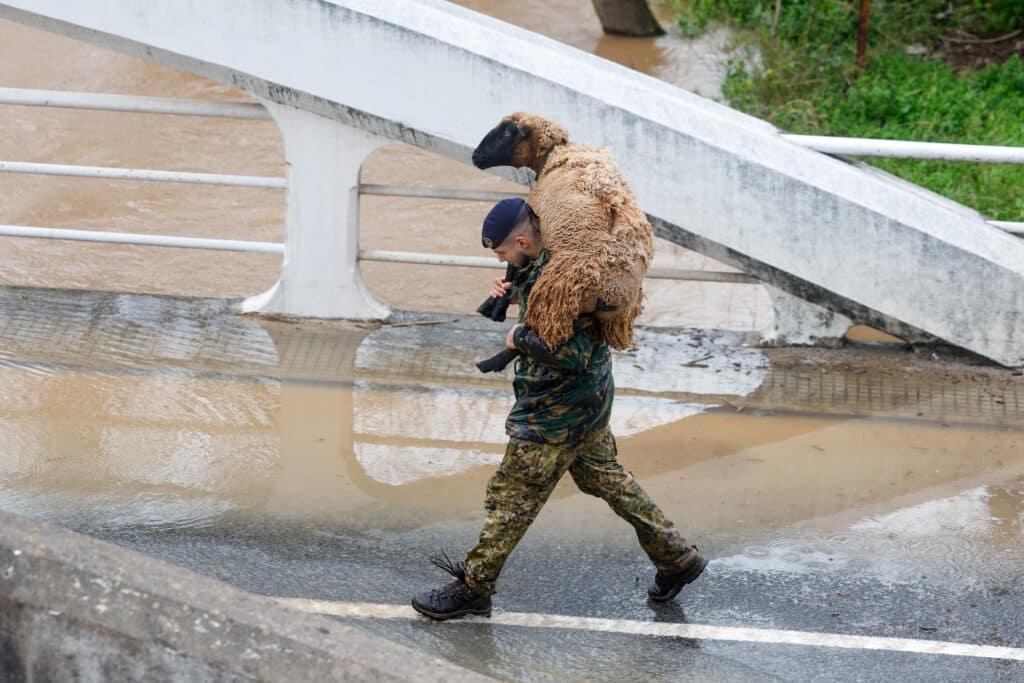
It is also quite clear how much the country relies on its Armed Forces in a catastrophe. The input of roughly 3,000 military personnel – particularly in flooded areas needing evacuations – has been invaluable. Images of young men in military fatigues repairing roofs, ferrying people to safety in boats, carrying elderly people on their backs, carrying sheep over their shoulders point to a service that we rarely hear about in civil life, but which makes all the difference in a tragedy.
In Correio da Manhã on Monday, former Admiral António Silva Ribeiro wrote that the military is always called upon to reinforce Civil Protection “when the challenge exceeds the capacity of other emergency services”, but that very few people are aware of this, and perhaps that is something that should change through ‘better publicity/promotion’.
It might also make people value much more the worth of these specialist services who arrive ready to help when everything is going horribly wrong.
Also read:
- Minister of Internal Administration resigns
- Armed Forces give surprise press conference
- Government to ‘redirect European funds’ to respond to storm damages
- Bad weather leaves Algarve beaches unrecognisable