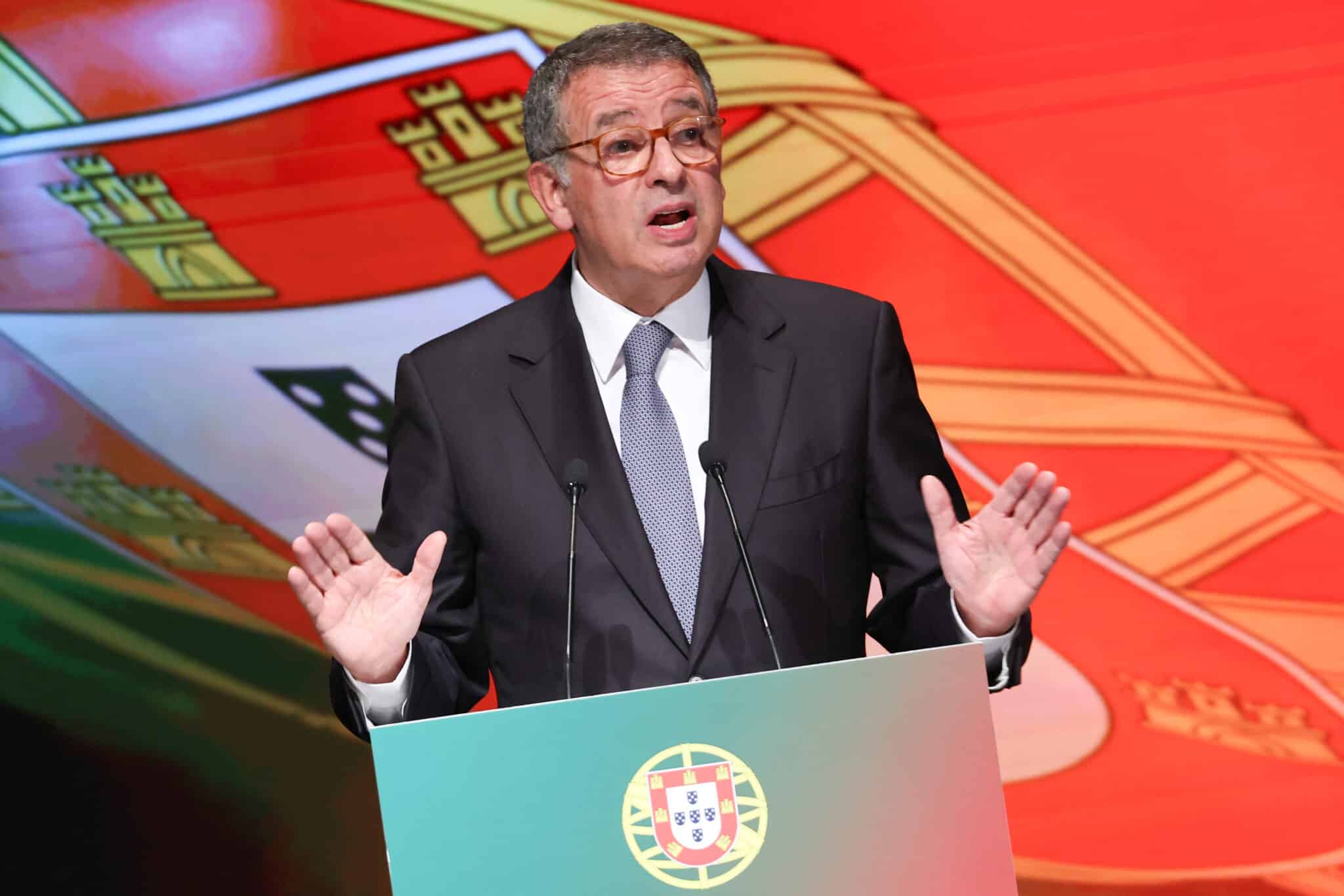
Portugal has a new president: António José Seguro – 63-years-old, former leader of the PS Socialist party, former Euro MP and now former university lecturer.
Mr Seguro polled more votes than any other president before him (3,482,481). He won in practically every area, scooping almost 67% of the total number of votes. His ‘adversary’ André Ventura (1,729,381 votes) won only the municipalities of Elvas, and São Vicente, in Madeira.
Some will ‘complain’ that António José Seguro is ‘a perpetuation of the system’; that he was only elected because all the traditional parties ‘ganged up’ against right-wing Ventura, and supported Seguro as a ‘lesser evil’. But this would be to minimise the quiet determination of this careful man who insists that, in spite of his ‘political past’, he is ‘free’ – and that his ‘freedom’ is his independence.
The PS Socialist party did not openly support Seguro until weeks after he had announced his bid for the presidency. In fact, a number of figures in the party were reported not to want to support his candidacy at all.
Readers may be hazy on the reason behind Seguro’s 10 years away from politics. It lay in a vicious internal campaign waged (among others) by his successor as leader of the party, António Costa. So, it is probably safe to imagine that António José Seguro is wise to the wiles of his party – and probably not that interested in any of them.
As for the support given to him in the second round from PSD ‘grandees’ (including former party leader Manuela Ferreira Leite), communist die-hards and sundry left-wingers, he will probably have his own reading on that too.
His victory speech on Sunday night was well-scripted. It will have sent a frisson of alarm up the spines of the government. He referred to his ‘opponent’ in the second round “no longer being an adversary: From tonight onwards, we will not be adversaries. We will have the shared duty of working towards a more developed, more fair Portugal”.
He began his speech lamenting the deaths associated with the last two weeks of terrible weather but stressing that the “solidarity of the Portuguese”, as “heroic” as it has been, “cannot substitute the responsibility of the state: I will not accept bureaucracies” (meaning he wants to see financial support reach victims quickly). “I will never abandon you,” he addressed communities affected.
Reports since have stressed that, in the intervening weeks before Seguro takes office (on March 9), he will be visiting stricken parishes and municipalities – several still suffering power outages – and hearing what they need, what they have been ‘promised’ and what has effectively reached them.
This will keep the government in check.
Correio da Manhã wrote on Tuesday that one of the first things the president-elect did after confirmation of the vote on Sunday was telephone the mayors of Leiria, Alcácer do Sal, Pombal, Montemor-o-Velho, Golegã and Arruda dos Vinhos, to hear what the situation was on the ground – before he had what ended up as a three-and-a-half hour meeting with President Marcelo Rebelo de Sousa.
Mr Seguro has also said a number of things during the presidential campaign that may see members of government clearing their throats a little nervously: first, he has confirmed that he too does not like the blueprint for labour reform: if the current ‘Trabalho XXI’ reaches him without changes, he will be vetoing it. Second, he defends cross-party collaboration to drag the national health service back from the brink.
In other words, Mr Seguro may well be the best choice emerging from the second round of voting – but that does not mean he will be ‘easy’ on arrogance or incompetence.
“We need to find long-lasting solutions for the serious problems that we have in Portugal. With me, things won’t stay the same,” he said on Sunday.
António José Seguro will not be living in the official residence of Belém Palace, in Lisbon, either. He has said he means to continue living ‘at home’ in Caldas da Rainha and only staying overnight in his official residence when his agenda demands.
Due to bad weather, several municipalities have postponed voting. Affected areas include Alcácer do Sal, Arruda dos Vinhos, Golegã, Santarém, Rio Maior, Leiria, Cartaxo, and Salvaterra de Magos, with a total of 36,852 voters set to cast their ballots on Sunday, February 15.