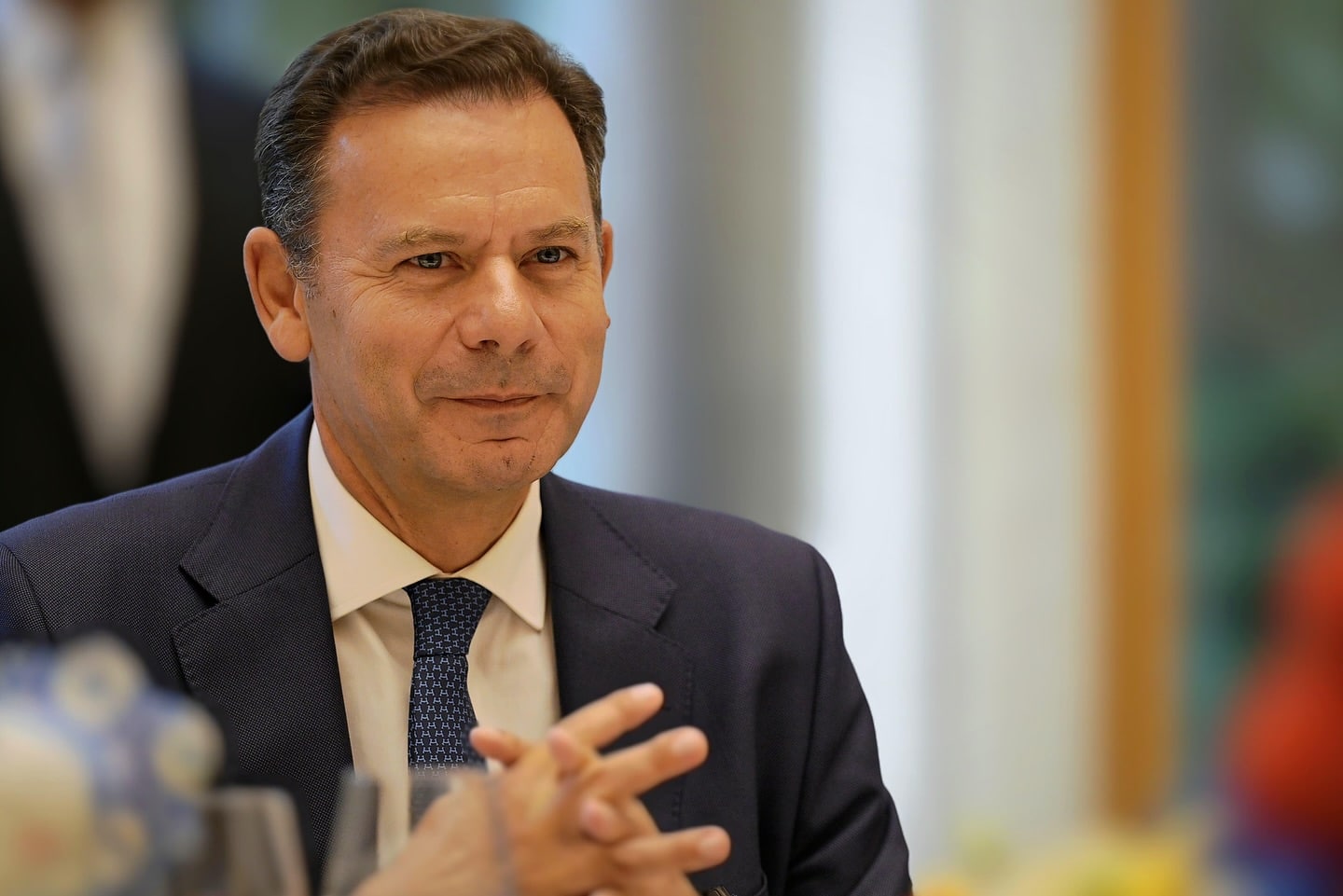
As much as the prime minister would like the probe into his involvement with his family business Spinumviva to end, it keeps lurching back into view like a dedicated pantomime party-pooper.
Today, media outlets are reporting that the public prosecutor’s office has requested ‘more documentation’ from Luís Montenegro.
Right now, the probe is simply ‘preventive’ – i.e. it is an investigation to see if any of the largely anonymous complaints about the PM’s potential conflicts of interest hold water, and could become the basis of a criminal inquiry.
Readers will recall that it was the endless brouhaha over Spinumviva that eventually led to the fall of Mr Montenegro’s first administration, after barely a year in office. Tabloid Correio da Manhã got the ball rolling by suggesting that the business was dedicated, among other activities, to buying and selling property – and from there, accusations and recriminations fired off in all directions, including a demand to know the identities of Spinumviva’s clients.
Now, Nascer do Sol has interviewed the Attorney General Amadeu Guerra who seems fairly vague about the state of play. He told the paper: “The information I have is that there is a lot of documentation and, this week, DCIAP (the Central Department for Investigation and Criminal Action) has asked for more papers”.
Next week, said Guerra, and ‘regarding various inquiries’, he will take stock of the situation with the director of DCIAP and ask for the reasons for the delay and the justification.
“I think that’s legitimate; in fact, it’s my duty. But I’ve already been criticised for it. Now, I don’t actually give concrete instructions in preventive inquiries, or in inquiries,” he added.
Amadeu Guerra also spoke about Operation Influencer, says Sol – the probe that prompted the fall of António Costa’s (absolute majority Socialist) government and the holding of snap parliamentary elections in March 2024 which brought in the tenuous centre-right government of Luís Montenegro.
“For my part, I’ve always said that to make a final judgement, you need to gather all the evidence. In Operation Influencer, there is a lot of documentation that was seized in the searches (in November of 2023), and it hasn’t all been analysed yet.
“Unlike in the past, when the evidence was essentially on paper, today, in these complex cases, it is almost all computerised. Sometimes it comes on magnetic media, other times we have to scan it and analyse it,” Guerra told Sol.
The attorney general recalled that four appeals (in the Influencer case) are pending a decision, one of which concerns access to digital evidence and computer equipment. Analysis of evidence depends on the decision of these appeals, he said.
And here, again, we get the feeling that all these important probes are clogged up in one very blocked system: “We don’t have the means to analyse all the evidence at the same time. Therefore, there has to be greater coordination with Portugal’s criminal investigation police agency, PJ in relation to digital search tools – and the Influencer case confirms what I’ve just said”, said Guerra: “The documentary evidence obtained in the searches and the other evidence obtained in the meantime through various requests to public bodies is being analysed.”
It is the kind of response everyday people get to requests on cases involving their interests. ‘Everything is still being analysed’ – and nothing on earth can be seen to hurry the process of analysis along.
Asked if António Costa is still under suspicion – now that he is so ‘long gone’, it could be argued that the whole concept of guilt as a possible ‘influencer’ seems somehow irrelevant – Amadeu Guerra said that he doesn’t speak of specific cases.
At issue in the Influencer case are suspicions of crime (in the form of cronyism/ influence peddling) in the construction of a data centre in Sines (Setúbal district), in lithium mining in Montalegre and Boticas (both in the Vila Real district), and in the production of energy from hydrogen, also in Sines.
On November 2023, five people were arrested and later released as part of Operation Influencer, including Vítor Escária, the chief of staff to former Prime Minister António Costa, who has recently clinched a top job, but is still waiting to receive the money ‘seized’ from his former office after it was found secreted in envelopes, inside books.
Adds Lusa, António Costa was considered a suspect without being charged, having stated at the time of the operation that he had a “clear conscience” about his actions”. This is exactly what Luís Montenegro has said, time and again, over his actions regarding Spinumviva.
Source material: LUSA