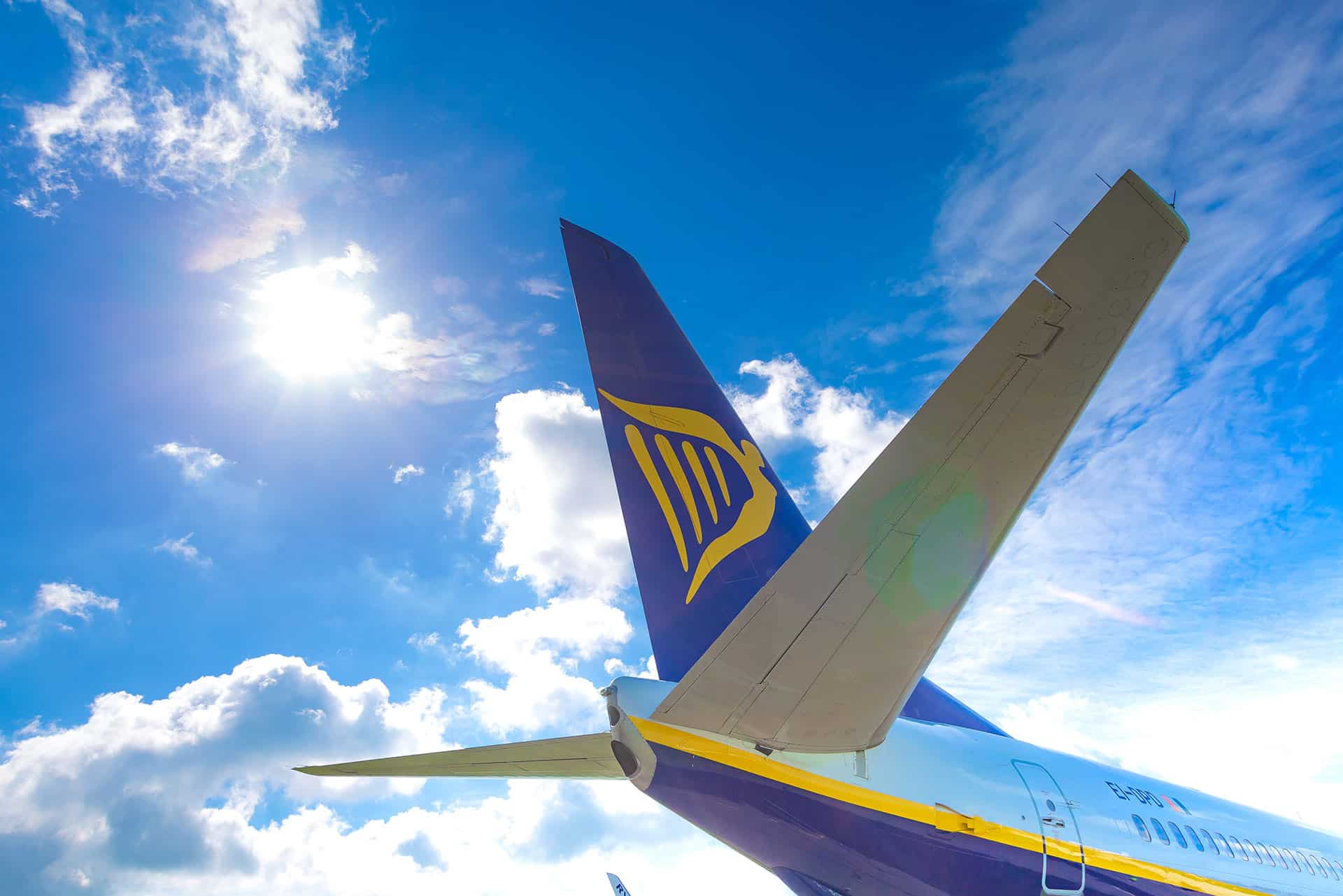
Ryanair has announced that it will end all flights to the Azores from March 2026, citing high airport charges and “government inaction”.
A statement that has sent the archipelago’s AL sector into a tailspin (not to mention upsetting ANA – Aeroportos de Portugal – the company that manages Portugal’s airports – and the government) cites a 120% post-Covid increase in air navigation charges and the introduction of a €2 travel tax “at a time when other European Union (EU) states are abolishing travel taxes to ensure capacity growth, which is scarce”.
The text adds that “unfortunately, the ANA monopoly has no plan to increase low-cost connectivity to the Azores” and “faces no competition in Portugal, which has allowed it to make monopoly profits by increasing Portuguese airport charges without any penalty, at a time when competing airports in other EU countries are cutting charges to stimulate growth”.
Ryanair argues that the government “must intervene and ensure” that national airports – “a critical part of the national infrastructure, especially in an island region like the Azores – serve to benefit the Portuguese people and not a French airport monopoly” (ANA being part of the French group VINCI).
“We view this announcement with great concern”, João Pinheiro of the Azores Short-Term Rent Association (ALA) has told Lusa. “We hope that this news is an attempt to put pressure on the government and not a clear action that will have a very serious impact on the economy of the Azores.”
As Pinheiro explained: “We live off our guests who make direct bookings (…) and Ryanair is an active partner of Short-Term Rents in the Azores”. Indeed, the vast majority of ALA’s guests apparently fly into the archipelago courtesy of Ryanair.
ANA airports authority has expressed ‘surprise’, telling Lusa that it is maintaining an open dialogue with Ryanair, while both the Azores regional government and central government in Lisbon have also used the word ‘surprised’. In fact the latter has prepared a ‘response’, noting that the airport taxes on this route is the lowest in Europe and that Ryanair ‘has received tens of millions of euros in incentives’.
For now, it looks like Ryanair means business (or rather, intends to pull out of this corner of its business) and thus expressing ‘surprise’ may not hack it. At least all surprised parties have been given a four-month heads-up. We will have to see how this situation pans out.
source : LUSA