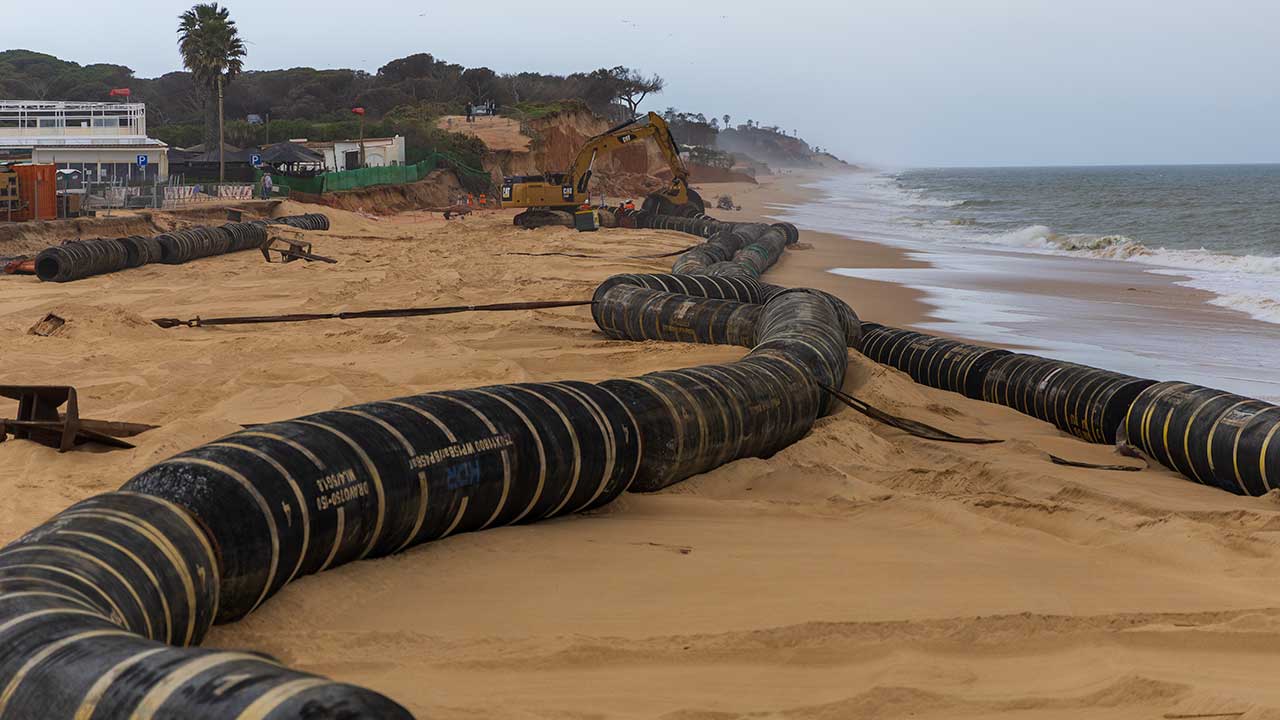
Work has begun to restore sand to some of the Algarve’s most vulnerable beaches, as authorities move to tackle coastal erosion after months of bad weather.
The project covers the stretch of coastline between Quarteira and Garrão in Loulé, where around 1.3 million cubic metres of sand will be added to counteract the effects of this winter’s storms.
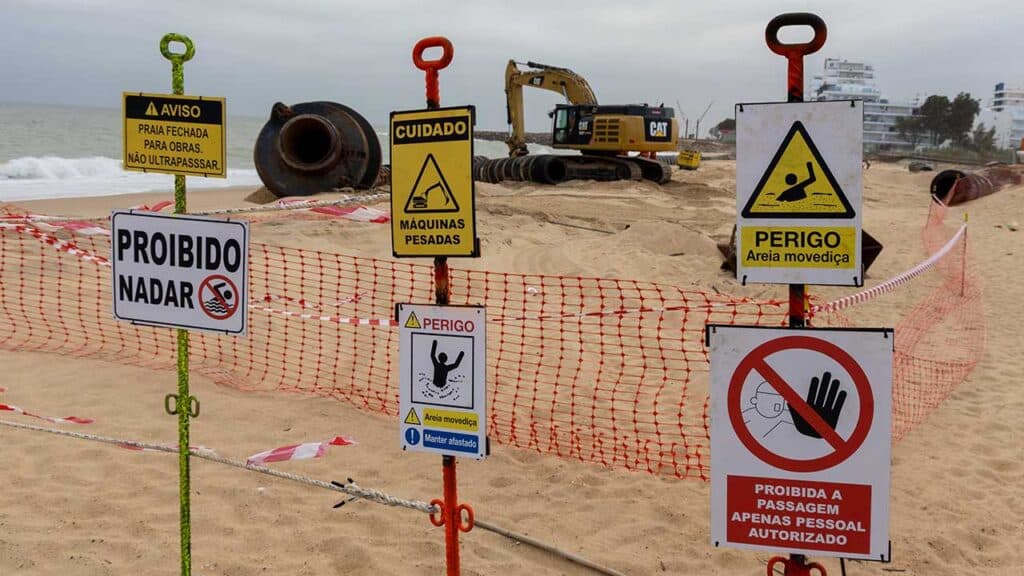
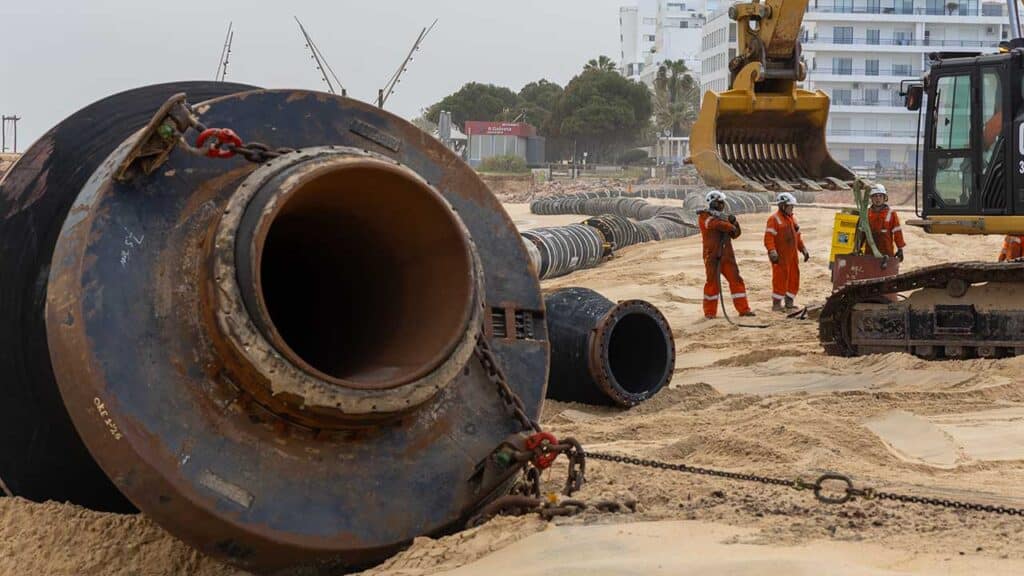
Preparatory works are already underway, including the installation of pipes and equipment needed for dredging and transporting sand.
Environmental boss José Pimenta Machado toldLusa news agency that the project is all part of the “sustainable coastal management strategy” created by APA (Portuguese Environmental Agency), aimed at mitigating the effects of coastal erosion and climate change.
The intervention follows a recent report by the agency, which identified the Quarteira-Garrão coast as one of the hardest hit by bad weather between October 2025 and early March 2026.
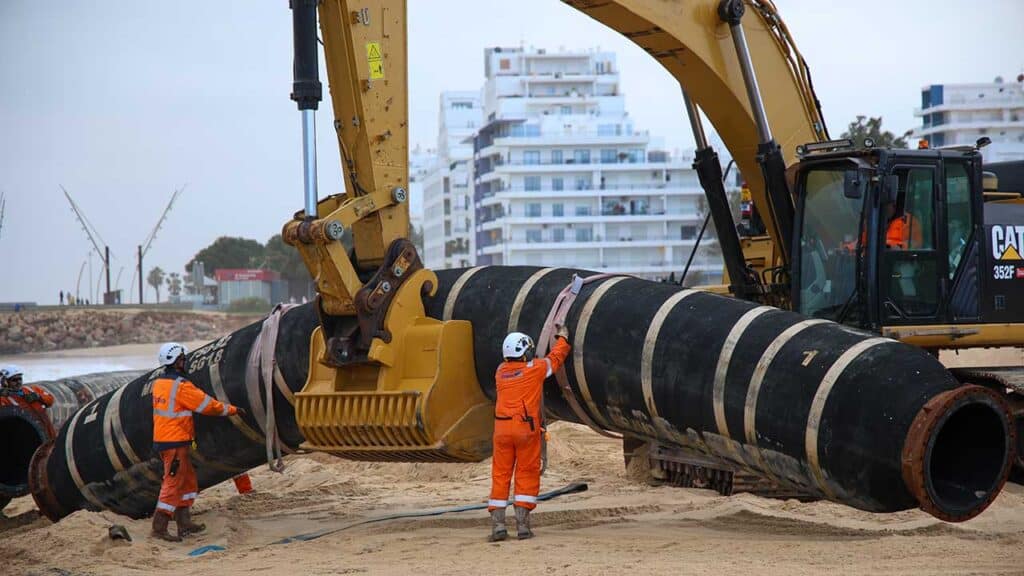
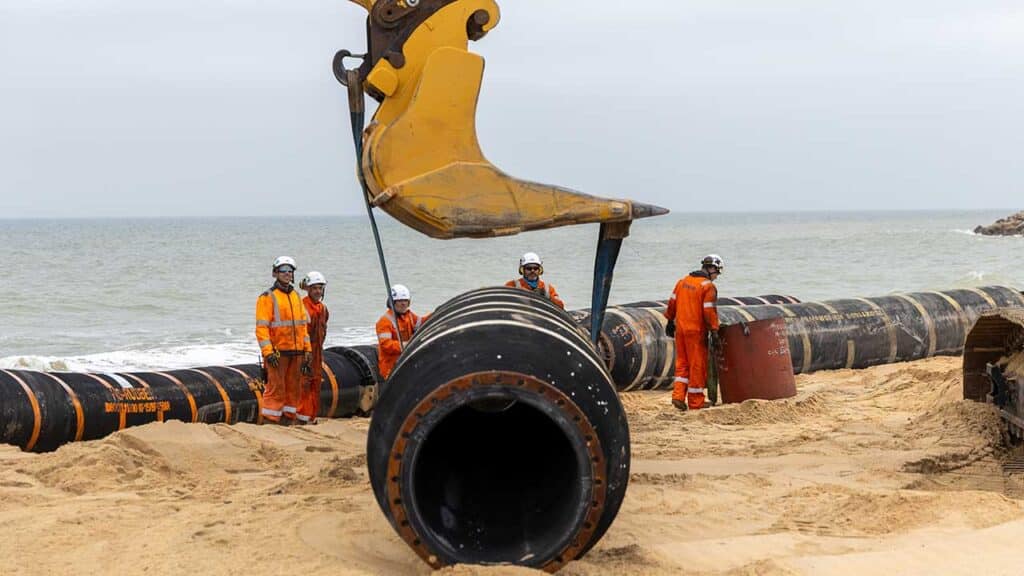
Across the Algarve, 35 beaches were significantly affected by successive storms. The worst-hit areas were in Albufeira, with nine beaches impacted, and Lagoa, with eight.
One of the most serious cases was at Praia do Peneco, where the beach retreated by up to 24 metres. Other affected areas include Loulé Velho–Trafal (15 metres), the Quarteira–Garrão stretch (14 metres), and Praia do Forte Novo, with a six-metre retreat.
The Algarve coastline has been the focus of major investment in recent years. In 2024, the government announced a €16.7 million plan to protect coastal areas in Loulé and Portimão, covering a total of eight kilometres.
The largest part of that plan is this Quarteira–Garrão stretch, with works spanning 6.6 kilometres and combining sand replenishment with cliff protection.
Specialist company brought in
The contract for the project was signed on January 10, 2026, following an international tender involving six companies. The work was awarded for €7.39 million, below the initial €10.5 million estimate, with a completion deadline of 238 days.
The project is being carried out by Dravo S.A., a specialist in maritime works and dredging.
The Spanish company will use suction dredging vessels to extract and transport sand, along with floating pipeline technology that allows work to be carried out in smaller sections. This means only 100 to 200 metres of beach will be occupied at any one time, keeping most areas open to the public.
Dravo has previously worked on several coastal and port projects across the country, including in Lisbon, Sines and Leixões, as well as beach restoration in Lagos.