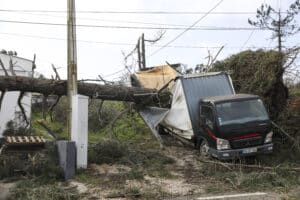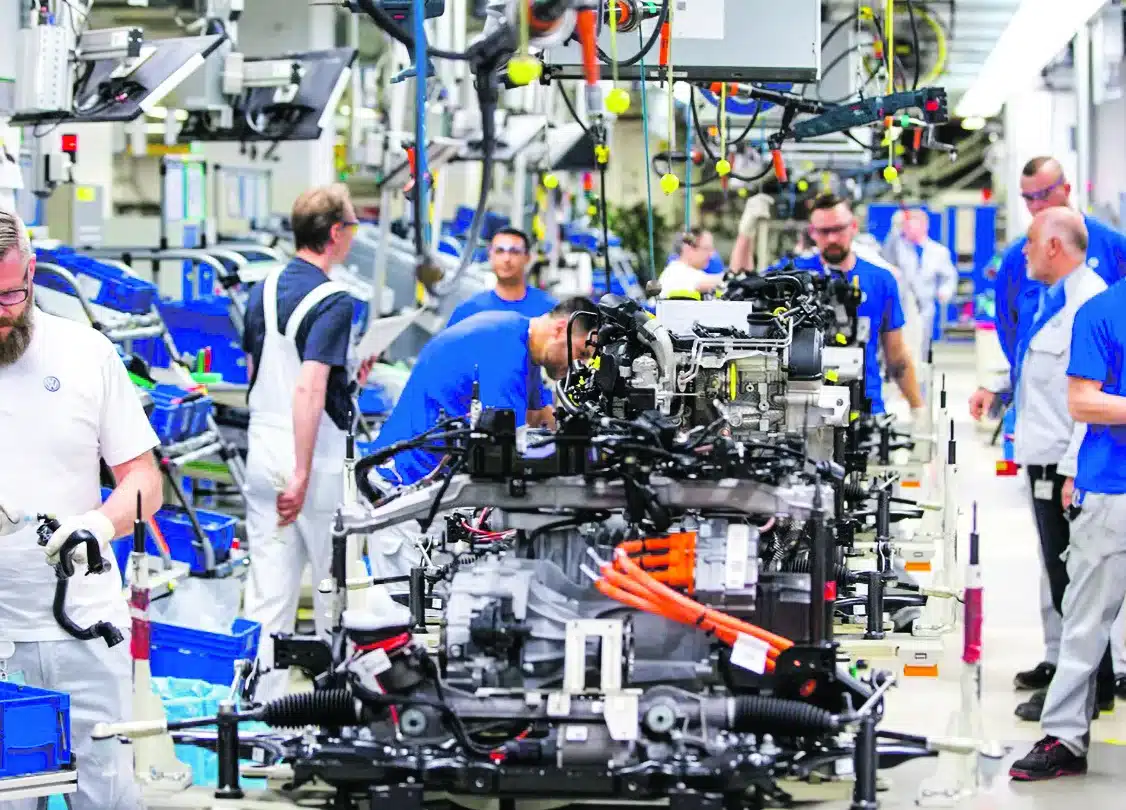
The swathe of damages across the country cut by Storm Kristin has led to the shutdown of several factories in the automotive sector.
Some have still not been able to resume production, José Couto, president of AFIA (association of auto manufacturers) has told Lusa, stressing this means there are now customers in Europe with production lines at a standstill.
The situation is “a total disaster”, Couto admits – as along with the lack of production is a race to save equipment that in many cases is being exposed to the elements.
Around 20 companies in the industry – located in the central region, between Aveiro and Alcobaça – were affected by Storm Kristin, which, says Couto, is “significant in a group of companies that numbers around 360”.
All these factories had customers in Europe who will be being affected by the Portuguese hiatus – with “some customers changing production plans”; even halting production lines.
“The total disaster has not yet been assessed,” Couto admitted, but things could clearly get a great deal worse.
Jornal Económica, for example, describes “a race against time to save these factories”
The largest customers left waiting are in Spain and Germany, where the impact of this suspension is likely to be felt most. But there are also customers in France and the UK, “experiencing production problems due to the stoppage in Portugal.”
“We have a slogan: 98% of vehicles produced in Europe have one or two components made in Portugal”, Couto explains.
Another stress factor is that some of these factories have projects under the auspices of the PRR (Brussels’ recovery and resilience programme). They are now worrying whether they will receive the money they were expecting (as the PRR has strict timelines that have to be met).
It is not all ‘doom and gloom’: there are factories in the sector that have already managed to restart production after being ‘paralysed for two, three or four days’ “because there was no power and they suffered minor damage to their structures”. Power now is almost restored, Couto believes.
Hopes are that “companies will quickly be able to resolve some of the problems they have – namely issues with roofs/ structural damage” because then they can get back to work (not lose funding, and not lose business).
According to Jornal Económico, “the automotive components sector sold €14.7 billion in 2024, with €12.2 billion coming from foreign sales. That year, Spain and Germany were the main destinations for exports, accounting for 28% and 23% of sales, respectively. Europe accounts for 88% of the components produced in the country.”
The sector employs more than 63,000 workers, accounting for 9% of national industry. It also accounts for 5% of Portugal’s GDP, and 15% of goods exports.
Source material: LUSA/ Jornal Económico