With the torrential rains of earlier this month now apparently over, authorities have ‘revealed’ that “the south of the country has enough water stored for two to three years”.
This is ‘marvellous’, obviously – but it is EXACTLY what was being said before the rains (in fact, before even the summer tourist season last year) when southern dams were nowhere near as full as they are now.
The fact that the assertion has been given at all prompts a number of queries: were authorities ‘wrong’ in May, 2025? Are they ‘playing safe’ in the hope that people don’t go back to washing their teeth with the taps running? Or are they keen to perpetuate the narrative that the south of the country is on its way to becoming a relative desert?
Whatever the case, this latest ‘revelation’ puts these regular announcements of exactly the same thing into a new perspective. There is, very probably, an agenda somewhere, but for now, this is the blurb:
“Continential Portugal has all its dams full – with 95% of total capacity reached. The south of the country has enough water for two to three years, with all dams literally full”.
José Pimenta Machado, president of Portuguese Environment Agency APA, stresses (again!): “I have no doubt that we are completely relaxed from the point of view of quantity of water for two to three years.”
Dams are only not 100% full because of the water let out of them, he added.
According to APA’s weekly reservoir bulletin, Monday saw mainland Portugal with 12,610 cubic hectometres of water stored – 95% of total capacity.
The reservoir with the least water, Arade (a river that flows into the sea at Portimão), was at 74%.
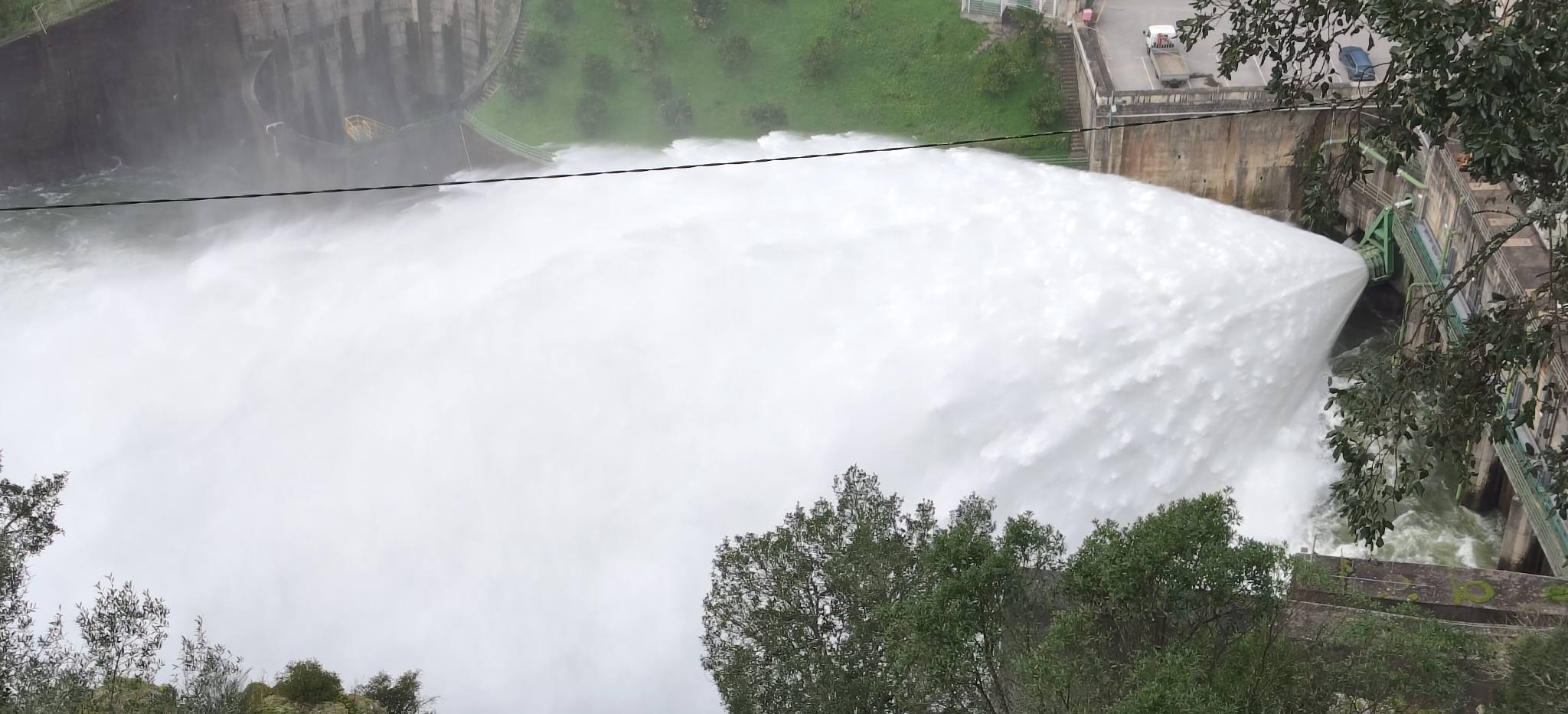
Pimenta Machado was at pains to point out that the country experienced a ‘truly exceptional situation’ this year: “It was the whole country. I don’t remember all the river basins being full” before, he said – recalling that “the south is (normally) very different from the north” when it comes to rainfall. For example, the Monte da Rocha dam (Lower Alentejo) is well known for “having no water”, yet last week it had to discharge water because it was “completely full”. In fact, the last time Monte da Rocha was at full capacity was in 2011. Six years later, in 2018, levels had plummeted to just 8%.
The same scenario goes for the Campilhas dam (also in the Alentejo) and many of those in the Algarve which only two years ago were at critically low levels.
Pimenta Machado also cited the extraordinary transformation of Santa Clara dam (a dam visibility drained by monocultures on the Costa Vicentina) – which now sits proudly full once more; and the west Algarve’s Bravura dam, which was one of the ‘saddest’ dams in the Algarve until this exceptionally wet winter.
They have all recovered – but the south continues to have ‘only’ two to three years in hand.
Source: SIC Notícias/ LUSA