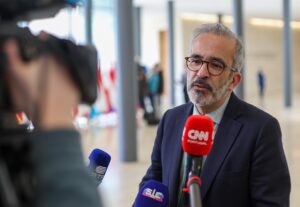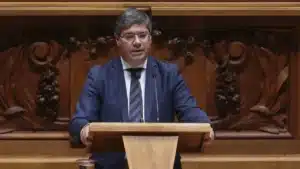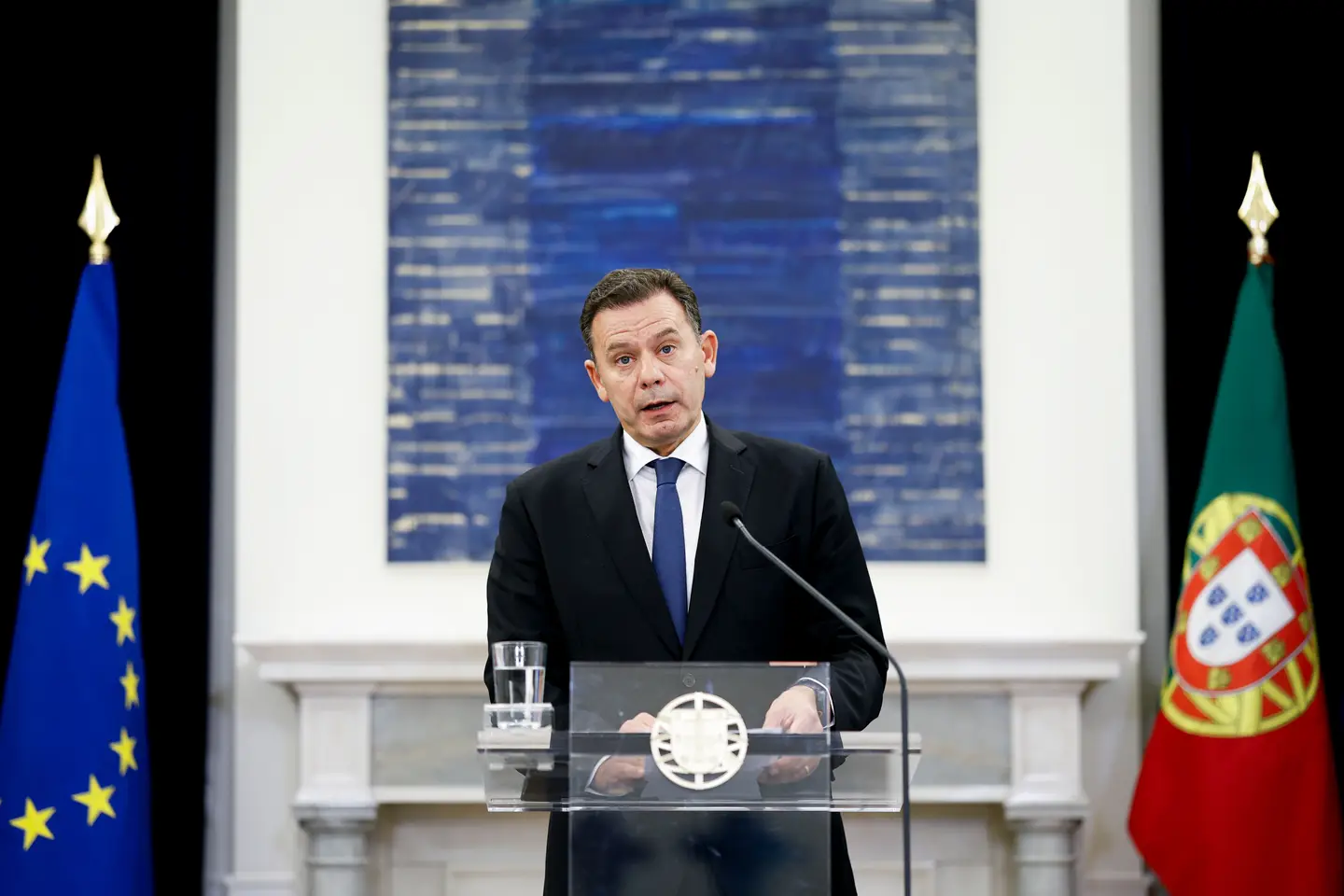
The extraordinary Council of Ministers ended early this afternoon with the prime minister announcing a raft of measures – including the extension, to February 8, of the ‘situation of calamity’ already decreed in around 60 municipalities. “This means that all areas of operational coordination remain in effect, as well as the measures that streamline procedures to deal with adverse weather situations that we still face,” Luís Montenegro told reporters – reiterating the risks throughout this week of flooding in low-lying areas of some districts.
“It is expected that with the levels of precipitation we can anticipate, some flooding situations will arise. We know that the soils are saturated and we know that several infrastructures are affected, which will complicate the situation. We also know that some riverside areas will face more serious situations, which may even lead to the need for evacuation,” he said, appealing to everyone to respect “the guidelines of the authorities in the time and manner” in order to minimise risks as much as possible “to avoid further losses, including losses of human lives, but also material losses that could be exacerbated by not heeding these guidelines.”
As to the measures of support emerging from the meeting, the PM described an effort by the government amounting to €2.5 billion which will be coordinated by a Mission Structure to be led by the former mayor of Fundão, Paulo Fernandes.
The PM began by saying the government will support the reconstruction of primary and permanent housing in projects up to €10,000 “without the need for documentation” in cases where there is no insurance coverage, he said.
The same amount will be available for situations related to agriculture and forestry, in exactly the same amount.
According to the Prime Minister, this support for the reconstruction of houses will be accompanied by inspections from the Regional Coordination and Development Commissions and the Municipal Councils.
The Prime Minister also announced that a meeting with the Construction Industry Association will take place in Leiria on Monday so that “urgent interventions can be planned in an even more organised way.”
Mr Montenegro explained that this meeting will focus on the restoration of buildings and “in particular the serious situation concerning the roofs and coverings of houses,” which “completely compromise living conditions and habitability.” These are problems that, if left unresolved, will accumulate losses with the increased rainfall forecast for the coming days, he said.
Other measures outlined fall into two brackets: families and businesses.
For the former, families in a “situation of need, or loss of earnings” can receive help from Social Security amounting to €537 per person, or €1,075 per household.
For businesses: there will be a credit line of €500 million; six months’ social security contribution exemption for companies affected in critical areas, as well as a simplified layoff scheme for three months.
A credit line of €1 billion for the recovery of business structures without insurance coverage was also announced, along with a 90-day moratorium on loans to companies and credit for the purchase of owner-occupied housing.
For local authorities and infrastructure, the PM announced €200 million for regional development committees ‘to provide local authorities with the most necessary and urgent funding’; the transfer of €400 million from the State Budget to Infraestruturas de Portugal with the aim of carrying out ‘urgent interventions’, and €20 million for the restoration of cultural heritage.
The Council of Ministers meeting, which began around 10am and ended shortly after 1pm, was attended by all ministers of the XXV Constitutional Government, 15 in person and the Minister of National Defence, Nuno Melo, via video connection.
The passage of Storm Kristin through mainland Portugal on Wednesday caused at least five deaths, according to Civil Protection, as well as several injuries and displaced households. Marinha Grande City Council also reported a fatality – and then on Saturday, two further deaths were registered of men falling from roofs they were repairing: one in the municipality of Batalha, the other in Alcobaça. In the early hours of this morning too, a man died in the municipality of Leiria from carbon monoxide poisoning originating from a generator – bringing the death toll from last week’s ‘weather bomb’ so far to nine.
Fallen trees and structures, road closures and disruptions to transport services, especially railways, the closure of school closures, power, water, and communication outages are the main material consequences of the storm. Leiria, where it entered national territory, Coimbra and Santarém are the districts that registered the most damages.
By coincidence, the extended situation of calamity comes to an end on the same day as the second round of voting in the presidential elections.
Source: LUSA